
Shielding your outdoor HVAC unit from the high winds and storms in North Admiral
North Admiral sits on Seattle’s West Seattle bluff with direct exposure to Puget Sound winds. The bluff-top location creates wind tunnels that can push 40-60 mph gusts through residential streets during fall and winter storms. These sustained winds batter outdoor HVAC units causing vibration damage, refrigerant line stress, and efficiency losses that drive up your energy bills.. Read more about Where to place your outdoor AC unit without ruining your Sunset Hill view.
Your outdoor condensing unit faces unique threats in North Admiral. The exposed hillside properties along Southwest Admiral Way experience stronger winds than inland neighborhoods. Salt air from Puget Sound combined with wind-driven debris can corrode coils and damage fan blades. Without proper wind protection your system works harder, costs more to operate, and may fail during the coldest months when you need it most.. Read more about Protecting your Alki Beach HVAC system from salt air corrosion and rust.
Why Seattle winds pose a threat to your HVAC system
Wind creates multiple failure points for outdoor HVAC equipment. High-velocity airflow across condenser coils disrupts the heat exchange process. When wind prevents proper airflow through the coil fins, your system cannot reject heat effectively. This forces the compressor to run longer cycles, increasing wear and energy consumption.. Read more about Protecting your outdoor HVAC unit from theft and damage in Dunlap.
Wind-blown debris represents another major threat. During storm events, branches, leaves, and even patio furniture can strike your unit. The impact can bend coil fins, crack the compressor housing, or damage the fan assembly. North Admiral’s mature trees along residential streets create additional debris risks during high winds.
Refrigerant line vibration becomes severe in exposed locations. Wind causes the entire unit to rock and shift on its pad. Over time this movement stresses copper refrigerant lines, creating micro-fractures that lead to leaks. A single refrigerant leak can cost hundreds in repairs and reduce system efficiency by 30% or more.
The Seattle Department of Construction and Inspections requires all outdoor mechanical equipment to meet specific stability standards. Seattle Municipal Code Section 22.900F.020 mandates that rooftop and ground-mounted units must withstand wind loads appropriate to their location. North Admiral properties often require additional anchoring due to the bluff-top exposure.
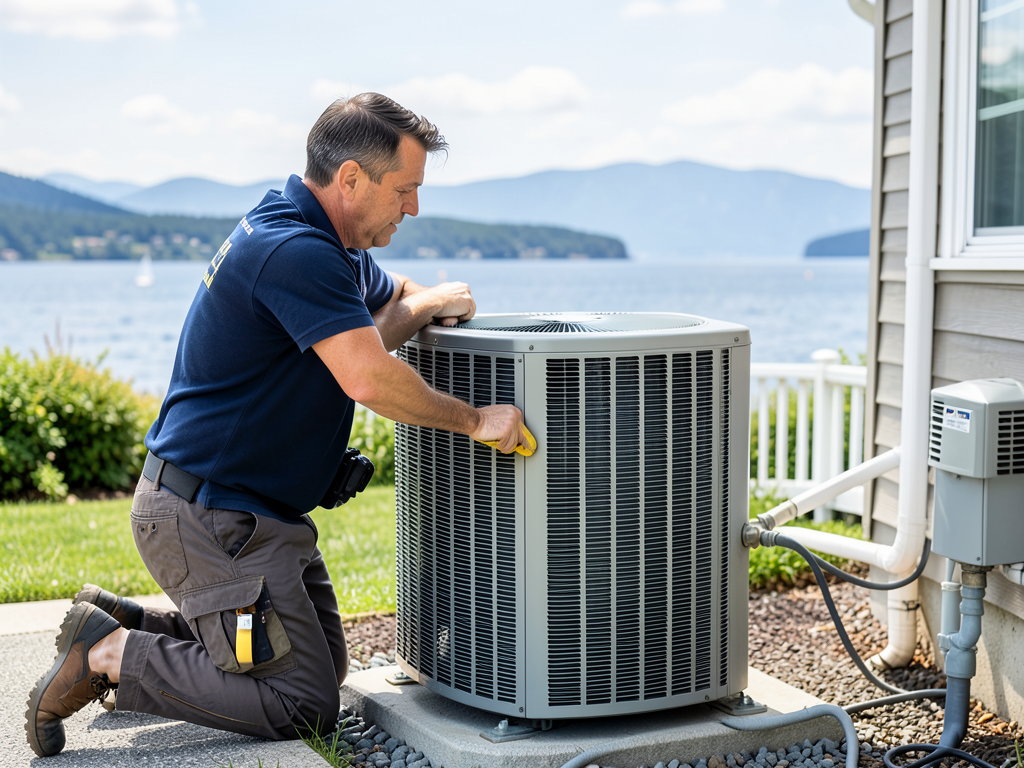
Top 4 wind-proofing solutions for heat pumps and ACs
Wind baffles and protective screens
Wind baffles redirect airflow around your condensing unit. These angled barriers mount to the ground or building wall and create a protected zone on the protected side. Quality baffles reduce wind velocity by 50-70% while maintaining necessary airflow for proper heat exchange.
Professional wind baffles use powder-coated aluminum or galvanized steel frames with UV-resistant mesh screens. The mesh blocks debris while allowing air movement. Installation requires precise spacing calculations based on your unit’s BTU rating and local wind patterns. Incorrect spacing can actually reduce efficiency by restricting airflow.
Cost factors for wind baffles range from $300-800 depending on size and material. Premium systems include adjustable panels that you can reposition seasonally. During summer you want maximum airflow for cooling efficiency. In winter you might angle panels to block the strongest wind directions.
Hurricane straps and tie-down systems
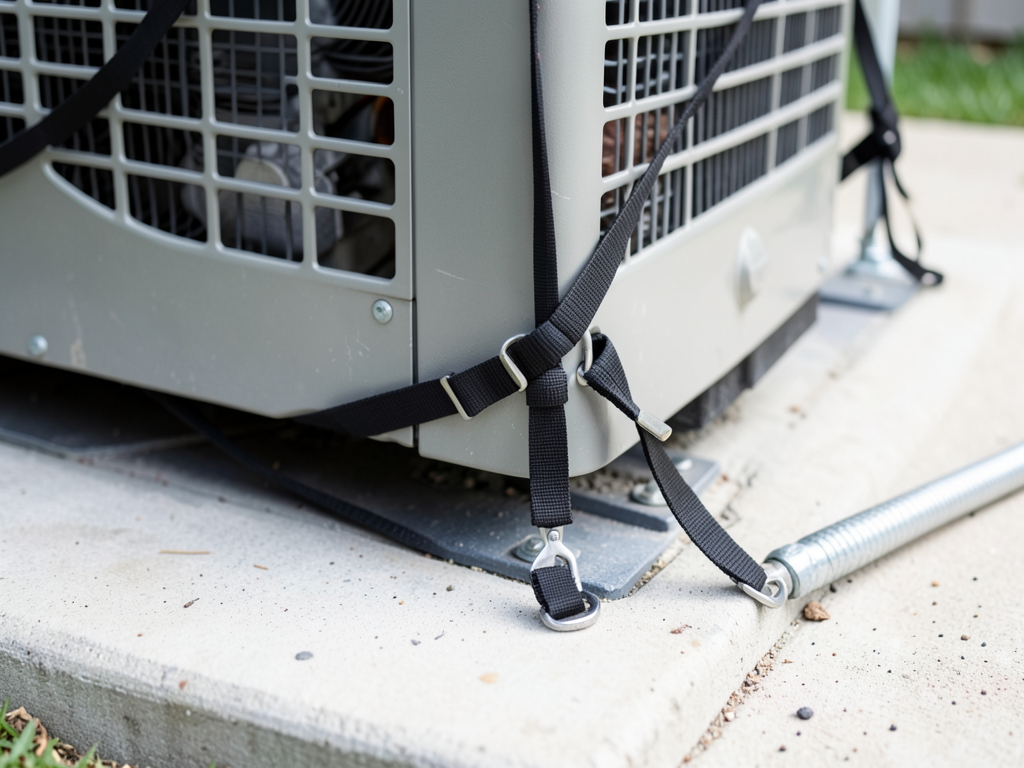
Hurricane straps anchor your unit to its concrete pad or mounting brackets. These heavy-duty steel straps prevent the entire assembly from lifting or shifting during wind events. The straps connect to anchor bolts embedded in the pad or to wall-mounted brackets for rooftop units.
Professional installation requires calculating the proper strap tension and anchor spacing. Over-tightened straps can cause vibration issues. Loose straps provide no protection. The straps must accommodate thermal expansion of the copper lines while maintaining stability.
Standard tie-down kits cost $150-400. Premium systems include vibration isolation mounts that absorb movement while maintaining secure positioning. These mounts use rubber or spring elements to prevent metal-to-metal contact that causes noise and wear.
Protective fencing and screening
Decorative fencing around your HVAC unit provides both wind protection and aesthetic improvement. The fence must maintain proper clearance from the unit – typically 24-36 inches on all sides. This spacing allows service access and prevents airflow restriction. Weekend HVAC Service.
Material choices include pressure-treated lumber, vinyl fencing, or powder-coated aluminum panels. The fence height should extend 12-18 inches above the top of the unit. Lower heights provide minimal wind protection while excessive height can create dangerous wind traps.
Professional installation includes proper post anchoring and gate placement for service access. The fence should include removable panels or a hinged section for technician access. Average fencing projects cost $600-1,500 depending on materials and complexity.
Vibration isolation pads
Vibration isolation pads mount between your unit and the concrete pad. These rubber or composite pads absorb movement and reduce noise transmission. During high winds the pads allow slight movement without stressing refrigerant lines or electrical connections.
Quality pads use multiple density layers to handle different vibration frequencies. The top layer contacts the unit frame while the bottom layer grips the concrete pad. This design prevents the unit from walking across the pad during operation.
Standard isolation pads cost $50-150 per unit. Premium systems include leveling adjusters that compensate for settling concrete or sloped installations. Proper leveling prevents oil migration in the compressor and maintains optimal oil return to critical bearings.
The impact of wind on energy efficiency
Wind significantly impacts your HVAC system’s Seasonal Energy Efficiency Ratio (SEER) rating. A unit rated at 16 SEER might operate at 12-13 SEER during high wind conditions. This efficiency loss translates directly to higher utility bills from Seattle City Light or Puget Sound Energy.
Wind creates short-circuiting of airflow across condenser coils. Instead of air moving through the coil fins, wind pushes air around the sides and over the top. This reduces the temperature difference between the refrigerant and ambient air, forcing the compressor to work harder.
Heat pumps face additional challenges during the defrost cycle. Wind can prevent proper ice melt from the outdoor coil, causing the system to run defrost cycles more frequently. Each defrost cycle uses electric resistance heat, dramatically increasing energy consumption during winter months.
Professional wind protection can improve efficiency by 15-25%. This translates to $100-300 in annual energy savings for typical Seattle homes. The improvement becomes more significant for older units or systems in highly exposed locations like North Admiral bluff properties.
Seattle building codes and wind load requirements
The Seattle Mechanical Code requires all outdoor HVAC equipment to meet specific stability standards. SMC 22.900F.020 mandates that units must withstand wind loads based on their location and mounting height. North Admiral properties often require higher wind load ratings due to the bluff-top exposure.
Washington State Energy Code Section 1305.1.3 requires minimum clearance around outdoor equipment. This clearance ensures proper airflow and service access. For most residential units, this means 24 inches on sides and 36 inches in front. Rooftop installations may require additional clearance for maintenance access. Preventative HVAC maintenance plans that actually save money for Redmond families.
Electrical code requirements add another layer of protection. Washington Administrative Code 296-46B-800 mandates specific grounding and bonding for outdoor equipment. Proper grounding prevents static discharge damage during wind storms and protects against lightning strikes.
North Admiral’s hillside properties face unique code considerations. The steep terrain can affect unit placement and drainage requirements. Improper drainage around your HVAC pad can lead to water accumulation, freezing, and foundation damage during winter storms.
Professional installation vs. DIY solutions
DIY wind protection often creates more problems than it solves. Homeowners frequently install barriers too close to the unit, restricting airflow and reducing efficiency. Others use inadequate materials that deteriorate quickly in Seattle’s wet climate. Professional installation ensures proper spacing, material selection, and code compliance.
Refrigerant line protection requires specialized knowledge. Copper lines must flex slightly during wind events but not enough to create stress points. Professional technicians use specific bending radii and support spacing based on line size and length. DIY installations often create sharp bends that restrict refrigerant flow.
Warranty protection depends on proper installation. Most manufacturers void warranties for units damaged by improper wind protection. Professional installation includes documentation showing compliance with manufacturer specifications and local codes. This documentation proves invaluable if warranty claims arise.
Cost comparison shows professional installation’s value. DIY materials might cost $200-500 but often require replacement within 2-3 years. Professional installation costs $800-2,500 but includes quality materials, proper engineering, and warranty protection. The professional solution typically pays for itself through improved efficiency and prevented damage.
Time investment represents another factor. Professional installation takes 4-8 hours with proper tools and experience. DIY projects often stretch into multiple weekends as homeowners learn through trial and error. During this time your system remains unprotected from approaching storms.
Maintenance considerations for wind-protected units
Wind protection systems require regular maintenance to remain effective. Baffles and screens collect debris that reduces airflow over time. Annual cleaning prevents this buildup and maintains system efficiency. Professional maintenance includes checking mounting hardware tension and inspecting for corrosion or damage. Commercial Duct Cleaning.
Winter preparation becomes critical in North Admiral. Before storm season, check all mounting hardware for tightness. Loose bolts can work free during wind events, compromising the entire protection system. Replace any rusted or damaged components before winter arrives.
Spring maintenance includes cleaning debris from screens and checking for winter damage. Wind storms can bend baffles or crack mounting brackets. Early detection prevents minor damage from becoming major failures during the next storm.
Professional maintenance intervals should align with your system’s age and exposure level. New units in protected locations might need annual checks. Older units or those in highly exposed North Admiral properties benefit from semi-annual inspections. These inspections catch problems before they cause system failures.
Insurance implications for wind-protected HVAC systems
Insurance companies recognize the value of proper wind protection. Some carriers offer premium discounts for homes with professionally installed wind protection systems. These discounts can offset 10-15% of the installation cost over time.
Documentation becomes crucial for insurance claims. Professional installation includes detailed records of materials, methods, and code compliance. These records prove invaluable if wind damage occurs and you need to file a claim. DIY installations often lack this documentation, complicating the claims process.
Replacement cost coverage may increase with proper wind protection. Insurance companies base replacement values on the likelihood of damage. Protected systems have lower damage probability, potentially increasing your coverage limits without raising premiums.
Flood and water damage coverage intersects with wind protection. Proper unit elevation and drainage prevent water accumulation that can freeze and damage components. This protection may reduce claims related to freeze damage or water infiltration during storm events.
Choosing the right wind protection for your North Admiral home
Your specific location within North Admiral affects protection needs. Properties along the bluff edge face stronger, more consistent winds than those tucked into hillside pockets. The direction your unit faces also matters – south and west exposures catch the strongest winter winds. Why your Ballard home needs professional furnace repair before the first freeze.
Unit age influences protection strategy. Newer high-efficiency units often have better coil designs that resist wind disruption. Older units benefit more from comprehensive wind protection. The cost-benefit analysis changes based on your system’s age and efficiency rating.
Aesthetic considerations matter in residential neighborhoods. North Admiral features many architecturally significant homes where visible HVAC protection must blend with the property’s character. Professional designers can create protection systems that enhance rather than detract from your home’s appearance.
Budget constraints affect your options. Basic tie-down systems cost less but provide minimal protection. Comprehensive baffle and screening systems cost more but offer better efficiency improvements and longer equipment life. Consider your expected ownership duration when making this investment decision. The best air conditioning options for bungalows and cottages around Green Lake.
Professional assessment provides the best starting point. A qualified HVAC technician can evaluate your specific conditions, recommend appropriate solutions, and provide accurate cost estimates. This assessment should include wind measurements at your property and an evaluation of your unit’s current condition.
Frequently Asked Questions
How much does professional wind protection cost for a typical North Admiral home?
Professional wind protection for a typical North Admiral home ranges from $800-2,500 depending on the system complexity. Basic tie-down systems start around $800 while comprehensive baffle and screening installations can reach $2,500. The investment typically pays for itself through improved efficiency and prevented damage within 3-5 years.
Can I install wind protection myself to save money?
DIY installation often creates more problems than it solves. Most homeowners install barriers too close to the unit, restricting airflow and reducing efficiency. DIY systems also lack proper engineering for local wind loads and may void your equipment warranty. Professional installation ensures code compliance and optimal performance.
How long does professional wind protection installation take?
Professional installation typically requires 4-8 hours for a complete system. This includes site assessment, material preparation, installation, and final testing. Complex installations on steep North Admiral properties may require additional time for proper anchoring and drainage considerations.
Will wind protection affect my HVAC warranty?
Professional wind protection installed according to manufacturer specifications will not void your warranty. In fact, many manufacturers recommend specific wind protection measures for units in high-wind areas. DIY installations or improper protection methods can void warranties if they cause damage to the equipment.
How often should I maintain my wind protection system?
Wind protection systems require annual maintenance at minimum. North Admiral properties benefit from semi-annual inspections due to the harsh bluff-top conditions. Maintenance includes cleaning debris from screens, checking mounting hardware tension, and inspecting for corrosion or damage. Professional maintenance ensures optimal performance and early problem detection.
Protect your investment before the next storm hits
North Admiral’s bluff-top location makes your HVAC system vulnerable to strong winds and storm damage. The combination of Puget Sound exposure, mature trees, and hillside terrain creates perfect conditions for wind-related failures. Without proper protection, you risk costly repairs, reduced efficiency, and potential system failure during the coldest months.
Professional wind protection provides peace of mind and financial protection. Quality systems improve efficiency by 15-25%, prevent costly damage, and extend your equipment’s lifespan. The investment pays for itself through energy savings and avoided repairs while protecting your home’s comfort during Seattle’s storm season.
Don’t wait for the next big storm to discover your system’s vulnerabilities. Call (564) 220-5899 today to schedule your professional wind protection assessment. Our experienced technicians understand North Admiral’s unique wind patterns and can recommend the right protection for your specific property. Protect your comfort and your investment with professional wind protection that works.
Pick up the phone and call (564) 220-5899 before the next storm hits. Your HVAC system works hard to keep your North Admiral home comfortable – make sure it’s protected from the winds that can take it down when you need it most.
- Schedule Professional Assessment
Have a qualified HVAC technician evaluate your specific wind exposure, unit condition, and protection needs. This assessment should include wind measurements at your property and an evaluation of your current system’s vulnerability.
- Choose Appropriate Protection Level
Select wind protection based on your unit’s age, efficiency rating, and exposure level. North Admiral bluff properties typically require more comprehensive protection than inland locations. Consider both immediate protection needs and long-term efficiency improvements.
- Install Professional Wind Protection
Have wind baffles, tie-downs, or fencing installed by qualified technicians who understand local codes and wind patterns. Professional installation ensures proper spacing, material selection, and code compliance while protecting your equipment warranty.
- Maintain Protection System
Schedule annual maintenance to clean debris, check mounting hardware, and inspect for damage. North Admiral properties benefit from semi-annual inspections due to harsh bluff-top conditions. Regular maintenance prevents minor issues from becoming major failures.
{
“@context”: “https://schema.org”,
“@type”: “BlogPosting”,
“headline”: “Shielding your outdoor HVAC unit from the high winds and storms in North Admiral”,
“description”: “Protect your HVAC system from Seattle’s strong winds and storms. Learn about wind-proofing solutions, local codes, and professional installation for North Admiral homes.”,
“wordCount”: 2569,
“datePublished”: “2026-04-29T07:21:00.000Z”,
“dateModified”: “2026-04-29T07:21:00.000Z”,
“inLanguage”: “en-US”,
“mainEntityOfPage”: {
“@type”: “WebPage”,
“@id”: “https://peakhvacseattle.com”
},
“publisher”: {
“@type”: “LocalBusiness”,
“name”: “Peak HVAC Seattle”,
“url”: “https://peakhvacseattle.com”
},
“author”: {
“@type”: “Organization”,
“name”: “Peak HVAC Seattle”,
“url”: “https://peakhvacseattle.com”
},
“image”: {
“@type”: “ImageObject”,
“url”: “https://peakhvacseattle.com/wp-content/uploads/2026/03/shielding-your-outdoor-hvac-unit-from-the-high-win-1.png”
}
}
{
“@context”: “https://schema.org”,
“@type”: “HVACBusiness”,
“name”: “Peak HVAC Seattle”,
“url”: “https://peakhvacseattle.com”,
“address”: {
“@type”: “PostalAddress”,
“addressLocality”: “Seattle”
},
“areaServed”: {
“@type”: “City”,
“name”: “Seattle”
}
}
{
“@context”: “https://schema.org”,
“@type”: “FAQPage”,
“mainEntity”: [
{
“@type”: “Question”,
“name”: “How much does professional wind protection cost for a typical North Admiral home?”,
“acceptedAnswer”: {
“@type”: “Answer”,
“text”: “Professional wind protection for a typical North Admiral home ranges from $800-2,500 depending on the system complexity. Basic tie-down systems start around $800 while comprehensive baffle and screening installations can reach $2,500. The investment typically pays for itself through improved efficiency and prevented damage within 3-5 years.”
}
},
{
“@type”: “Question”,
“name”: “Can I install wind protection myself to save money?”,
“acceptedAnswer”: {
“@type”: “Answer”,
“text”: “DIY installation often creates more problems than it solves. Most homeowners install barriers too close to the unit, restricting airflow and reducing efficiency. DIY systems also lack proper engineering for local wind loads and may void your equipment warranty. Professional installation ensures code compliance and optimal performance.”
}
},
{
“@type”: “Question”,
“name”: “How long does professional wind protection installation take?”,
“acceptedAnswer”: {
“@type”: “Answer”,
“text”: “Professional installation typically requires 4-8 hours for a complete system. This includes site assessment, material preparation, installation, and final testing. Complex installations on steep North Admiral properties may require additional time for proper anchoring and drainage considerations.”
}
},
{
“@type”: “Question”,
“name”: “Will wind protection affect my HVAC warranty?”,
“acceptedAnswer”: {
“@type”: “Answer”,
“text”: “Professional wind protection installed according to manufacturer specifications will not void your warranty. In fact, many manufacturers recommend specific wind protection measures for units in high-wind areas. DIY installations or improper protection methods can void warranties if they cause damage to the equipment.”
}
},
{
“@type”: “Question”,
“name”: “How often should I maintain my wind protection system?”,
“acceptedAnswer”: {
“@type”: “Answer”,
“text”: “Wind protection systems require annual maintenance at minimum. North Admiral properties benefit from semi-annual inspections due to the harsh bluff-top conditions. Maintenance includes cleaning debris from screens, checking mounting hardware tension, and inspecting for corrosion or damage. Professional maintenance ensures optimal performance and early problem detection.”
}
}
]
}
{
“@context”: “https://schema.org”,
“@type”: “HowTo”,
“name”: “How to Protect Your HVAC from Wind Damage”,
“step”: [
{
“@type”: “HowToStep”,
“position”: 1,
“name”: “Schedule Professional Assessment”,
“text”: “Have a qualified HVAC technician evaluate your specific wind exposure, unit condition, and protection needs. This assessment should include wind measurements at your property and an evaluation of your current system’s vulnerability.”
},
{
“@type”: “HowToStep”,
“position”: 2,
“name”: “Choose Appropriate Protection Level”,
“text”: “Select wind protection based on your unit’s age, efficiency rating, and exposure level. North Admiral bluff properties typically require more comprehensive protection than inland locations. Consider both immediate protection needs and long-term efficiency improvements.”
},
{
“@type”: “HowToStep”,
“position”: 3,
“name”: “Install Professional Wind Protection”,
“text”: “Have wind baffles, tie-downs, or fencing installed by qualified technicians who understand local codes and wind patterns. Professional installation ensures proper spacing, material selection, and code compliance while protecting your equipment warranty.”
},
{
“@type”: “HowToStep”,
“position”: 4,
“name”: “Maintain Protection System”,
“text”: “Schedule annual maintenance to clean debris, check mounting hardware, and inspect for damage. North Admiral properties benefit from semi-annual inspections due to harsh bluff-top conditions. Regular maintenance prevents minor issues from becoming major failures.”
}
],
“image”: “https://peakhvacseattle.com/wp-content/uploads/2026/03/shielding-your-outdoor-hvac-unit-from-the-high-win-1.png”
}
{
“@context”: “https://schema.org”,
“@type”: “BreadcrumbList”,
“itemListElement”: [
{
“@type”: “ListItem”,
“position”: 1,
“name”: “Home”,
“item”: “https://peakhvacseattle.com”
},
{
“@type”: “ListItem”,
“position”: 2,
“name”: “Blog”,
“item”: “https://peakhvacseattle.com/blog”
},
{
“@type”: “ListItem”,
“position”: 3,
“name”: “Shielding your outdoor HVAC unit from the high winds and storms in North Admiral”
}
]
}
{
“@context”: “https://schema.org”,
“@type”: “Service”,
“serviceType”: “HVAC”,
“provider”: {
“@type”: “LocalBusiness”,
“name”: “Peak HVAC Seattle”,
“url”: “https://peakhvacseattle.com”
},
“areaServed”: {
“@type”: “City”,
“name”: “Seattle”
},
“description”: “Protect your HVAC system from Seattle’s strong winds and storms. Learn about wind-proofing solutions, local codes, and professional installation for North Admiral homes.”
}