




Menu

SEER Ratings Explained in Seattle | Your Complete Guide to Air Conditioner Efficiency

Understanding SEER ratings helps Seattle homeowners select the right air conditioning system for our mild summers and rising energy costs, ensuring maximum comfort without overpaying on monthly utility bills.

Slider Image 1
Slider Image 2
Slider Image 3
Slider Image 4
Slider Image 5
Slider Image 7
Slider Image 8
Slider Image 9
Slider Image 10
Slider Image 11

What Is SEER Rating and Why It Matters in Seattle's Climate

SEER stands for Seasonal Energy Efficiency Ratio. The SEER rating definition refers to how efficiently an air conditioner or heat pump converts electricity into cooling power over an entire cooling season. A higher SEER number means lower operating costs.

Seattle's unique climate creates a specific challenge for homeowners. Our summers are mild compared to Phoenix or Houston, with average July highs around 76 degrees. You might think this means efficiency does not matter much here. You would be wrong.

Because Seattle residents use air conditioning intermittently rather than continuously, understanding SEER ratings becomes critical for different reasons than in hotter climates. When your system cycles on and off frequently during those warm weeks in July and August, a higher-efficiency unit reaches target temperature faster and uses less energy per cooling cycle.

The meaning of SEER in HVAC directly impacts your wallet in the Puget Sound region. A 16 SEER unit uses approximately 60% of the electricity that an old 10 SEER system requires to produce the same cooling. Over a typical 15-year lifespan, that difference adds up to thousands of dollars in Seattle's above-average electricity rates.

The seasonal energy efficiency ratio meaning also extends to environmental impact. Seattle homeowners take sustainability seriously. A higher SEER rating reduces carbon footprint while maintaining comfort during our increasingly frequent heat events. The 2021 heat dome proved that even temperate climates need efficient cooling systems.

Understanding SEER ratings helps you make an informed decision when replacing an aging air conditioner or installing cooling for the first time. The initial price difference between a 14 SEER and 18 SEER system typically pays for itself within five to seven years through reduced electricity bills.

What Is SEER Rating and Why It Matters in Seattle's Climate
How SEER Ratings Actually Work in Your Home

How SEER Ratings Actually Work in Your Home

The SEER rating represents the total heat removed from your home during a typical cooling season divided by the total electric energy consumed in watt-hours. This creates a ratio that manufacturers test under controlled laboratory conditions.

A 16 SEER air conditioner removes 16 BTUs of heat for every watt-hour of electricity it consumes. That measurement happens across varying outdoor temperatures from 65 to 104 degrees, mimicking real-world conditions throughout an entire summer.

Here's what most contractors will not tell you. The SEER rating on the box represents maximum efficiency under ideal conditions. Your actual performance depends on several factors specific to Seattle installations.

Ductwork condition matters enormously. Leaky ducts in your crawl space or attic waste 20-40% of cooled air before it reaches your living spaces. Even a 20 SEER system performs like a 12 SEER unit when half the cold air escapes through gaps and disconnected joints.

Proper refrigerant charge affects efficiency dramatically. Undercharged systems work harder and longer to reach set temperature. Overcharged systems short-cycle and waste energy during startup. Both scenarios reduce your real-world SEER performance by 15-25%.

Airflow across the indoor coil determines how effectively your system transfers heat. A dirty filter, blocked return vents, or undersized ductwork forces the compressor to run longer cycles. This reduces the seasonal energy efficiency ratio you actually experience in your Ballard bungalow or Queen Anne Victorian.

Installation quality determines whether you get the efficiency you paid for. Proper equipment sizing, meticulous refrigerant charging, and thorough airflow testing separate professional installations from amateur work. Peak HVAC Seattle verifies these critical factors on every installation to ensure your SEER rating translates into real energy savings.

How We Help You Choose the Right SEER Rating

SEER Ratings Explained in Seattle | Your Complete Guide to Air Conditioner Efficiency
01

Load Calculation Analysis

We perform a Manual J load calculation to determine your home's actual cooling requirements. This engineering-based assessment accounts for window orientation, insulation levels, air infiltration, and Seattle's specific climate data. The calculation reveals the exact BTU capacity you need, preventing oversized equipment that wastes energy and undersized systems that struggle during heat waves. This foundation ensures your SEER rating delivers promised efficiency in your specific home.
02

Cost-Benefit Comparison

We calculate payback periods for different SEER levels based on your cooling habits and local electricity rates. A 16 SEER system costs less upfront but runs more expensive over time. An 18 SEER unit requires higher initial investment but reduces monthly bills significantly. We show you exactly when each option breaks even and which delivers better long-term value. This analysis removes guesswork and aligns your purchase with your financial goals and home occupancy timeline.
03

System Matching

We pair your outdoor condensing unit with the correct indoor air handler or furnace to achieve rated SEER performance. Mismatched components reduce efficiency by 10-30% even when each piece carries a high individual rating. We verify compatibility through AHRI certification numbers, ensuring your complete system delivers the seasonal energy efficiency ratio you expect. This attention to technical details protects your investment and maximizes comfort throughout Seattle's cooling season.

Why Seattle Homeowners Trust Peak HVAC for SEER Guidance

Understanding SEER ratings requires more than reading manufacturer specifications. It demands local climate knowledge and real-world installation experience.

We work exclusively in the Seattle metro area. This focus means we understand how marine air affects system performance, how typical home construction in neighborhoods from Magnolia to Rainier Valley impacts cooling loads, and which SEER levels make financial sense given our short but intense cooling season.

Many national chains push the highest SEER systems regardless of local conditions. Their sales scripts ignore an important truth. In Seattle's mild climate, the incremental benefit of a 20 SEER system over a 16 SEER unit often does not justify the price premium. You pay thousands more for efficiency gains you will never realize during our brief summer.

We provide honest SEER recommendations based on your specific situation. A retiree aging in place for 20 years benefits from maximum efficiency. A young family planning to move in five years should invest differently. Someone adding cooling to a bedroom wants a different solution than someone conditioning an entire Craftsman home.

Seattle's energy codes require minimum 14 SEER for new installations. We explain what that baseline performance means and when upgrading makes sense. Our recommendations consider planned home improvements, ductwork condition, and realistic usage patterns rather than theoretical maximum efficiency.

Peak HVAC Seattle technicians receive ongoing training on variable-speed compressor technology, refrigerant charging protocols, and airflow diagnostics. This expertise ensures your high-SEER system performs as designed rather than underdelivering due to installation errors.

We have installed hundreds of air conditioning systems throughout King County. This experience reveals which manufacturers deliver reliable performance, which models handle our voltage fluctuations well, and which systems prove easiest to maintain over their 15-year lifespan. That knowledge protects your investment and eliminates buyer's remorse.

What to Expect When Selecting Your SEER Rating

Consultation Timeline

Your SEER selection consultation takes 45-60 minutes. We measure your existing system, inspect ductwork accessibility, photograph your electrical service, and document home details affecting cooling loads. This information feeds our load calculation software and cost analysis. You receive a written proposal within 24 hours showing three SEER options with total installed cost, projected annual operating expenses, and payback calculations. This transparency helps you make an informed decision without pressure or artificial urgency. Schedule your consultation during our slower winter months for maximum flexibility and attention.

Efficiency Assessment

We evaluate factors beyond the SEER number that affect real-world efficiency. Ductwork condition, insulation levels, window quality, and air sealing all impact cooling performance. A 14 SEER system in a well-sealed home with quality ducts often outperforms an 18 SEER unit fighting leaky construction. We identify efficiency improvements that complement your new equipment investment. Sometimes adding duct sealing or attic insulation delivers better comfort and savings than jumping from 16 SEER to 18 SEER. This holistic approach maximizes your return and ensures your high-efficiency system operates in an optimized environment.

Performance Guarantee

Your new system undergoes startup verification testing after installation. We measure refrigerant pressures, superheat, subcooling, airflow across the coil, and supply air temperature drop. These diagnostics confirm your equipment operates at rated efficiency. You receive a commissioning report documenting these measurements. This quality control separates professional installations from quick installations focused on volume rather than performance. Proper startup procedures ensure you actually receive the SEER rating you purchased. Peak HVAC Seattle stands behind this verification process because we understand that efficiency on paper means nothing if installation errors reduce real-world performance.

Maintenance Planning

High-SEER systems require consistent maintenance to preserve efficiency. A dirty outdoor coil reduces capacity by 15%. Low refrigerant charge drops SEER performance by 20%. Restricted airflow from clogged filters forces longer run times. We offer annual maintenance plans that protect your efficiency investment through professional cleaning, refrigerant verification, and airflow optimization. Spring tune-ups prepare your system for Seattle's cooling season. Fall checkups transition to heating mode and catch small problems before they become expensive failures. Maintenance costs less than the efficiency losses from neglected equipment. Your SEER rating remains constant only when someone actively maintains that performance level.

Frequently Asked Questions

You Have Questions,
We Have Answers

What is the $5000 rule for HVAC? +

The $5000 rule is a repair-versus-replace guideline. Multiply the age of your HVAC system by the estimated repair cost. If the total exceeds $5000, replacement usually makes more financial sense than repair. For example, if your 15-year-old furnace needs a $400 repair, that equals $6000, so replacement is smarter. Seattle homeowners should factor in rising energy costs and mild climate when applying this rule. A new high-efficiency system often pays for itself faster here through lower utility bills, especially during wet winters when humidity control matters.

How much more efficient is a 20 SEER vs 18 SEER? +

A 20 SEER system is approximately 11 percent more efficient than an 18 SEER unit. This translates to about $55 to $110 in annual savings for an average Seattle home, depending on usage patterns and local electricity rates. The efficiency gain is modest but meaningful over the system's 15- to 20-year lifespan. Seattle's mild summers mean cooling loads stay lower than in hotter climates, so the payback period for upgrading from 18 to 20 SEER can stretch longer. Weigh the upfront cost difference against your expected timeline in the home.

What is the minimum SEER for tax credit 2025? +

For the 2025 federal Energy Efficient Home Improvement Credit, central air conditioners must meet 16 SEER2 and 13 EER2 minimums. Heat pumps require 16 SEER2 and 9 HSPF2. Note the industry shifted to SEER2 ratings in 2023, which are slightly different from older SEER measurements. The credit covers 30 percent of costs up to $2000 for qualifying equipment. Seattle homeowners benefit because heat pumps work exceptionally well in our temperate climate, providing both heating and cooling while qualifying for the maximum credit when paired with proper installation.

Is it worth upgrading from 14 SEER to 16 SEER? +

Upgrading from 14 SEER to 16 SEER delivers roughly 14 percent efficiency improvement, saving Seattle homeowners $75 to $150 annually on cooling costs. The upgrade also qualifies for federal tax credits, recovering some upfront expense. Given Seattle's mild summers and low cooling demand compared to hotter regions, the payback period runs longer here, typically eight to 12 years. However, improved humidity control and quieter operation add non-financial value. If your current system needs replacement anyway, the marginal cost difference between 14 and 16 SEER makes the upgrade worthwhile for long-term homeowners.

What is the 2 foot rule for HVAC? +

The 2-foot rule requires at least two feet of clearance around outdoor condenser units for proper airflow and service access. Vegetation, fencing, debris, and stored items must stay outside this zone. Seattle's wet climate encourages rapid plant growth, so homeowners need to trim back ferns, blackberry vines, and shrubbery regularly. Blocked airflow forces your system to work harder, reducing efficiency by 10 to 20 percent and shortening equipment life. Keep the area clear and hose down the condenser coils twice yearly to remove moss, pollen, and Pacific Northwest grime that accumulates quickly.

Is a new HVAC system tax deductible in 2025? +

New HVAC systems are not tax deductible as a business expense for most homeowners in 2025, but they may qualify for the Energy Efficient Home Improvement Credit. This is a tax credit, not a deduction, covering up to 30 percent of qualifying equipment costs with a $2000 cap. The system must meet specific efficiency thresholds. Seattle residents benefit because qualifying heat pumps work year-round here for heating and cooling. Consult a tax professional to confirm eligibility based on your specific installation, as credits apply only to principal residences and require manufacturer certification statements.

What is a good SEER rating for a 2025? +

For 2025, aim for a minimum 16 SEER rating to qualify for federal tax credits and meet current efficiency standards. Seattle's climate makes 16 to 18 SEER ideal for most homes, balancing upfront cost with long-term savings. Higher ratings like 20 SEER offer diminishing returns here because our mild summers generate lower cooling loads than southern climates. Focus on proper sizing and installation quality over chasing the highest SEER number. A correctly sized 16 SEER system outperforms an oversized 20 SEER unit every time, especially in our humid spring and fall seasons.

How cool should my house be if it's 100 outside? +

Your home should reach 75 to 78 degrees when outdoor temps hit 100 degrees, assuming your system is properly sized and maintained. HVAC systems typically deliver a 20-degree temperature differential between indoor and outdoor air. Seattle rarely sees triple-digit heat, so if your home struggles during rare heat waves, check air filters, close blinds on south-facing windows, and run ceiling fans to improve circulation. Do not push your thermostat below 72 degrees during extreme heat. This overworks the compressor without achieving comfort and can cause system failure when you need cooling most.

Why are 14 SEER being phased out? +

The Department of Energy phased out 14 SEER units starting January 2023 in northern regions, including Washington State, requiring 15 SEER as the new minimum for split systems. This change aims to reduce energy consumption nationwide and lower carbon emissions. Seattle homeowners benefit because the efficiency jump reduces electricity usage during cooling season, even though our climate demands less AC than other regions. The phase-out also aligns with federal tax credit minimums of 16 SEER, pushing the market toward higher-performing equipment. Existing 14 SEER systems can still operate and be repaired legally.

Can I write off a new air conditioner on my taxes? +

You cannot write off a new air conditioner as a standard tax deduction, but you may claim the Energy Efficient Home Improvement Credit worth up to 30 percent of equipment costs, capped at $2000. Your system must meet 16 SEER2 and 13 EER2 minimums. Keep the manufacturer certification statement and itemized invoice for IRS documentation. Seattle homeowners installing qualifying heat pumps can maximize this credit since heat pumps provide year-round comfort here. The credit applies only to principal residences, not rental properties or second homes. Consult a tax advisor to confirm your specific eligibility and filing requirements.

Why Seattle's Mild Climate Demands Smart SEER Choices

Seattle experiences approximately 15-20 days above 80 degrees in a typical summer. This intermittent cooling demand creates different economics than year-round hot climates. A Phoenix homeowner runs their air conditioner 180 days per year, making a 20 SEER system a clear winner. A Seattle resident uses cooling 30-45 days annually, changing the payback calculation dramatically. The seasonal energy efficiency ratio meaning shifts when you factor in our marine climate and evening temperature drops that often eliminate overnight cooling needs. Smart SEER selection matches equipment investment to actual usage patterns rather than pursuing maximum efficiency that never pays for itself.

Seattle's electrical rates run above the national average at 11-12 cents per kilowatt-hour. This pricing makes efficiency valuable but not at any cost. Local building codes updated in 2021 require proper equipment sizing and duct testing for new installations. These regulations ensure contractors cannot cut corners that undermine your SEER rating performance. Peak HVAC Seattle participates in Seattle City Light rebate programs that reduce upfront costs for high-efficiency equipment. Our familiarity with local utility incentives, permit requirements, and inspection procedures streamlines your installation and maximizes available rebates. This local expertise saves time and money while ensuring code compliance.
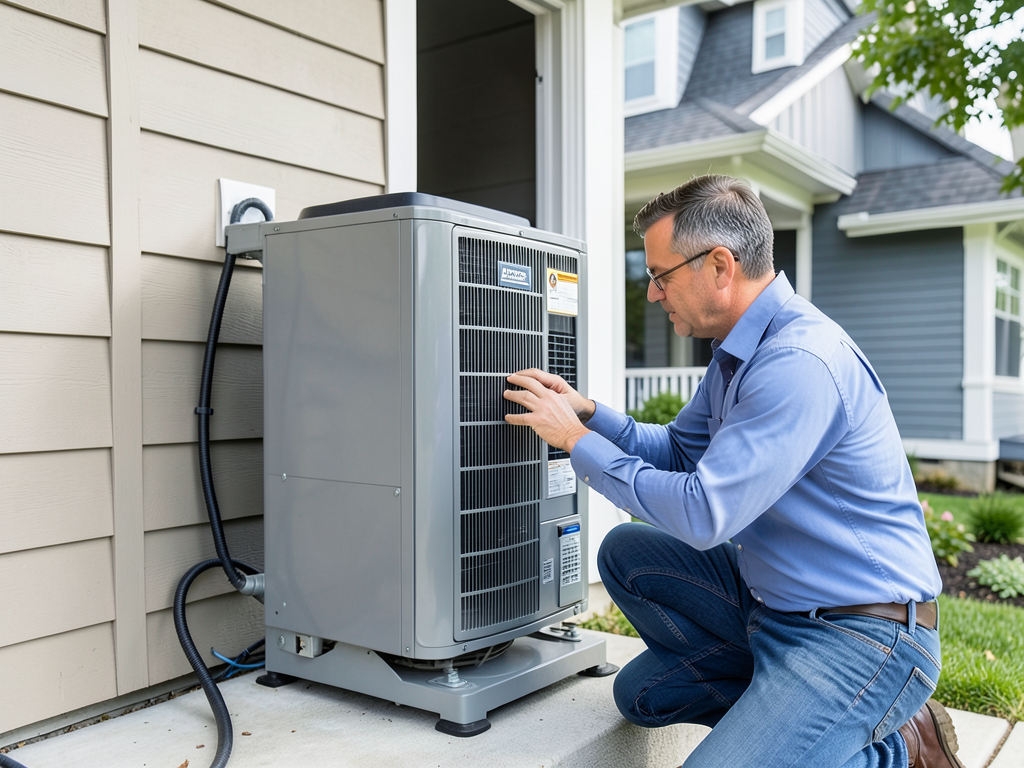
HVAC Services in The Seattle Area

Conveniently located to serve the greater Seattle area, Peak HVAC Seattle is dedicated to providing reliable and prompt services to our community. Our local presence ensures we can respond quickly to your needs, delivering expert heating and cooling solutions right to your doorstep. Whether you’re a homeowner or business owner, we’re committed to being your trusted, neighborhood HVAC partner for a perfectly comfortable indoor environment.

Address:
Peak HVAC Seattle, 401 Broadway E, Seattle, WA, 98102

Additional Services We Offer

Our news updates

Latest Articles & News from The Blogs

The difference between standard filters and HEPA filtration for your Bitter Lake home Standard HVAC filters and HEPA filtration systems…

The difference between standard filters and HEPA filtration for your Bitter Lake home

The difference between standard filters and HEPA filtration for your Bitter Lake home Standard HVAC filters and HEPA filtration systems…

How to hide your outdoor AC unit with landscaping in Olympic View without breaking it

How to hide your outdoor AC unit with landscaping in Olympic View without breaking it If you live in Olympic…

Protecting your expensive hardwood floors in Hunt's Point from seasonal warping

Protecting your expensive hardwood floors in Hunt’s Point from seasonal warping Seattle’s maritime climate creates a silent threat to your…

Contact Us

Stop guessing about air conditioner efficiency. Call Peak HVAC Seattle at (564) 220-5899 for a no-pressure consultation. We explain SEER ratings in plain language and recommend the right efficiency level for your home and budget.