




Menu

Outdoor Unit Not Spinning in Seattle – Fast Diagnosis and Expert Repair

When your outdoor unit fan stops working, you need technicians who understand Seattle's unique climate challenges and can diagnose condenser fan failures quickly to prevent compressor damage.

Slider Image 1
Slider Image 2
Slider Image 3
Slider Image 4
Slider Image 5
Slider Image 7
Slider Image 8
Slider Image 9
Slider Image 10
Slider Image 11

Why Your Condenser Fan Stopped Spinning

You walk outside and notice your AC condenser fan not working. The compressor hums, but the outside AC fan is not turning. This is not normal.

Seattle's wet spring and fall seasons create specific problems for outdoor units. Moisture seeps into fan motor bearings and capacitors. Debris from Douglas fir and cedar trees clogs the unit. Moss growth on shaded units creates electrical shorts. The constant dampness accelerates corrosion on electrical connections.

When your air conditioner outdoor fan is not running, the refrigerant cannot release heat. The compressor works harder. Internal temperatures spike. Without airflow, the system overheats and shuts down. You are left without cooling during those unexpected 85-degree days Seattle throws at you in June.

The condenser fan not spinning usually points to five issues. A failed capacitor cannot provide the electrical jolt needed to start the motor. A burned-out fan motor seized from moisture damage. A tripped safety switch from an electrical surge. A faulty contactor that fails to send power to the fan. Or a failed control board that cannot signal the fan to start.

Seattle's 150 days of measurable rainfall per year means your outdoor unit sits in damp conditions half the year. That constant exposure breaks down components faster than in dry climates. The outdoor unit fan stopped because something failed, and ignoring it damages the compressor. That turns a $300 repair into a $2,000 replacement.

You need someone who can diagnose the actual problem, not guess.

Why Your Condenser Fan Stopped Spinning
How We Diagnose Condenser Fan Failures

How We Diagnose Condenser Fan Failures

We do not show up and randomly replace parts. We follow a diagnostic sequence that identifies the root cause.

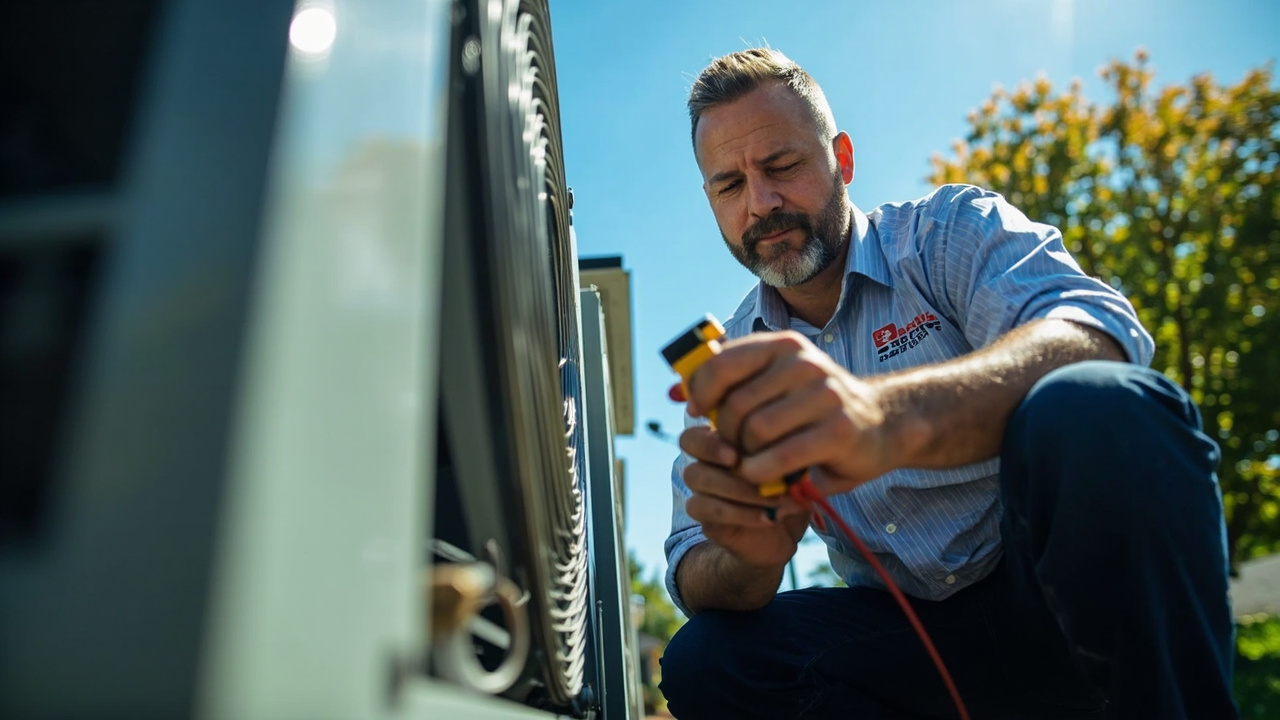
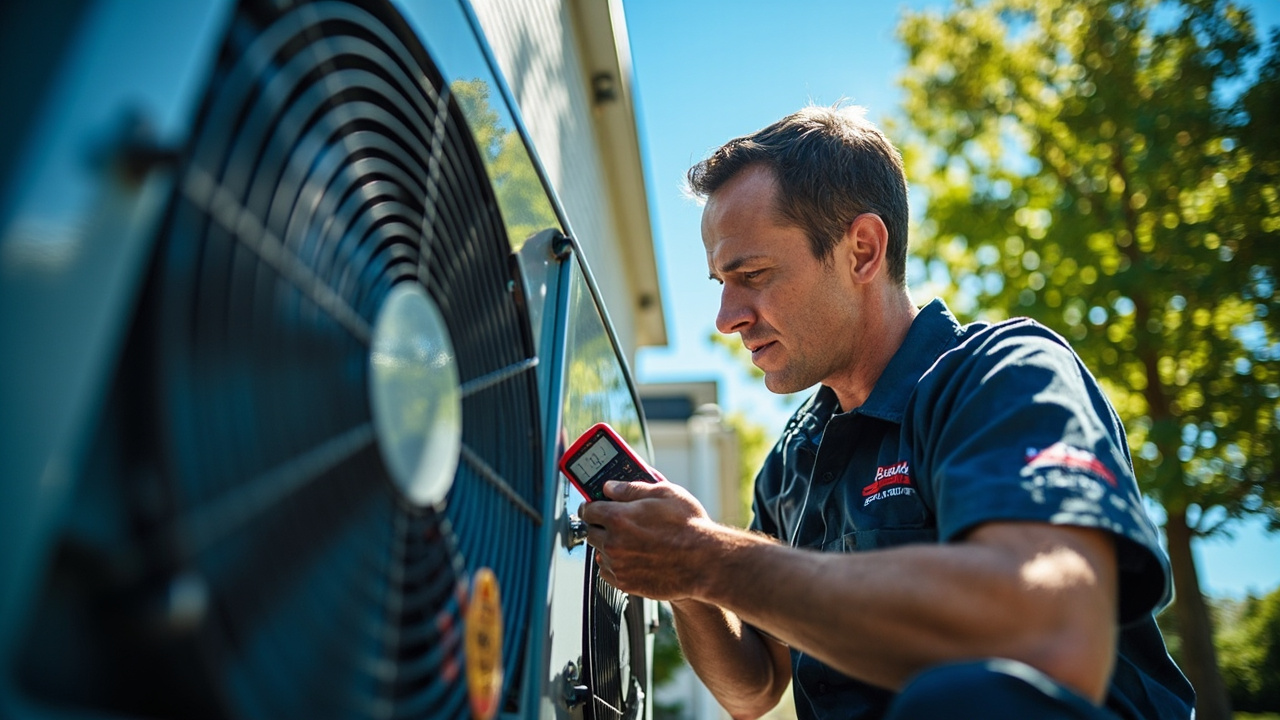
First, we test the capacitor with a multimeter. The capacitor stores electrical charge and releases it to start the fan motor. Seattle's humidity degrades capacitors faster. We measure microfarads against the rated capacity. A reading 10% below spec means replacement.

Second, we check voltage at the contactor. The contactor is an electrical relay that sends power from your thermostat to the outdoor unit. We verify 24 volts at the coil and 240 volts across the contacts. No voltage means a wiring issue or failed control board. Voltage present but no fan spin points to the motor.

Third, we manually spin the fan blade. If it spins freely, the motor shaft is not seized. If it binds, the bearings failed. We then check motor windings for continuity and ground faults using an ohmmeter. An open winding or short to ground means motor replacement.

Fourth, we inspect the fan blade itself. Cracks or imbalance create vibration that damages the motor over time. We check the set screw that secures the blade to the motor shaft. A loose blade wobbles and strains the motor bearings.

Fifth, we trace back to the thermostat and control board. A failed board cannot signal the outdoor unit to run. We verify the call for cooling reaches the outdoor unit and measure amperage draw on the common wire.

Peak HVAC Seattle uses this systematic approach because Seattle's climate creates multiple failure points. We isolate the problem, explain what failed and why, then fix it correctly.

What Happens When You Call About a Non-Spinning Fan

Outdoor Unit Not Spinning in Seattle – Fast Diagnosis and Expert Repair
01

Same-Day Dispatch

You call (564) 220-5899 and describe the problem. We ask specific questions about what you hear and see. Is the compressor running? Do you hear humming? We schedule a technician to arrive within hours, not days. Seattle summers are short, and you cannot afford to wait three days for someone to show up. We stock common capacitors and motors on every truck.
02

On-Site Testing

Our technician arrives and performs the five-step diagnostic. We show you the failed component. If the capacitor is bulging or leaking, you see it. If the motor winding is open, we show you the meter reading. We explain what caused the failure and whether other components are at risk. You get a flat-rate price before we start any work.
03

Repair and Testing

We replace the failed part and test the entire system. We measure airflow, refrigerant pressures, and amperage draw. We verify the fan spins at the correct RPM and the system cools properly. Before we leave, we clean debris from the condenser coils and check refrigerant levels. You get a system that works, not a quick patch that fails in two weeks.

Why Seattle Homeowners Choose Peak HVAC Seattle

Seattle's climate is hard on HVAC equipment. The wet winters and dry summers create expansion and contraction cycles that stress components. Most national chains send technicians who learned their trade in Arizona or Texas. They do not understand how moss growth shorts out contactors or how Douglas fir needles clog condenser fins.

We work in Seattle year-round. We know the difference between a capacitor failure from age and one caused by voltage spikes during winter storms. We understand that homes in Ballard near the water face more corrosion than homes in Maple Leaf. We stock parts that fail in this climate, not generic inventory.

Peak HVAC Seattle technicians carry high-torque motors rated for damp environments. We use capacitors with higher tolerance ranges for temperature swings. We apply dielectric grease to electrical connections to prevent corrosion. These are small details that extend equipment life.

We also understand Seattle building codes. Homes built before 1990 often have undersized electrical service. Adding a modern high-efficiency AC system requires load calculations and sometimes panel upgrades. We coordinate with electricians when needed and pull permits for major work.

You are not just getting a fan motor replacement. You are getting someone who understands why it failed and how to prevent it from happening again. We have worked on Craftsman homes in Queen Anne with original wiring and modern townhouses in South Lake Union with smart thermostats. We adapt our approach to your specific situation.

When your outdoor unit stops working, you need it fixed right. Not temporarily patched. Not sold a new system you do not need. Fixed correctly by someone who has seen this problem a hundred times in Seattle's unique conditions.

What to Expect When We Repair Your Condenser Fan

Rapid Response Time

We dispatch same-day for condenser fan failures. Most repairs take 60 to 90 minutes once we arrive. If we need to order a specialty motor, we provide a temporary solution to keep you cool while parts arrive. Seattle's brief summer means you cannot sit without AC for a week. We stock the most common failure parts on every service truck. You call in the morning, you have cold air by afternoon.

Transparent Diagnostic Process

You watch the entire diagnostic. We explain what each test reveals and show you the failed component. If your capacitor is bad, we show you the bulge or leak. If the motor is seized, we demonstrate the locked shaft. You get a detailed explanation of what failed, why it failed, and what happens if you ignore it. We provide a flat-rate price before starting repairs. No surprises, no upselling.

Complete System Verification

After replacing the failed component, we test the entire system. We measure superheat and subcooling to verify proper refrigerant charge. We check airflow at the indoor registers. We measure voltage and amperage to confirm the system operates within specs. We inspect the condensate drain and check for other potential issues. You get a system that cools efficiently, not just a spinning fan.

Preventive Maintenance Guidance

We explain how Seattle's climate affects your equipment. We show you how to clean debris from around the outdoor unit and where to check for signs of trouble. We recommend a maintenance schedule based on your system age and usage patterns. Most condenser fan failures are preventable with annual inspections. We offer maintenance plans that include capacitor testing, electrical connection cleaning, and coil cleaning to prevent future breakdowns.

Frequently Asked Questions

You Have Questions,
We Have Answers

Why is my outside AC unit not spinning? +

Your outdoor AC unit fan may stop spinning due to a blown capacitor, failed fan motor, tripped breaker, or frozen coil. The capacitor gives the motor the electrical boost it needs to start. When it fails, the motor hums but cannot turn. A burned-out motor will not respond at all. In Seattle's mild summers, dirty coils from pollen and debris can also freeze over, blocking airflow and stopping the fan. Check your breaker panel first. If the breaker is fine, call a technician. Running your system with a non-spinning fan risks compressor failure, which costs thousands to replace.

What is the problem if the fan is not spinning? +

A non-spinning fan means your condenser cannot release heat. Your compressor continues running, but the refrigerant cannot cool down. This forces your system to overheat and shut down on the safety limit switch. Common causes include a bad capacitor, seized motor bearings, or a failed contactor. In Seattle, where moisture and seasonal pollen accumulate, corroded wiring connections can also prevent the motor from receiving power. You will notice warm air from your vents, rising energy bills, and unusual sounds from the outdoor unit. This is not a DIY fix. A qualified HVAC technician must diagnose and repair the issue.

Is the AC unit outside supposed to spin? +

Yes. The outdoor AC unit fan must spin to expel heat from your refrigerant. The condenser coil wraps around the fan housing. As refrigerant flows through the coil, the fan pulls air across it, cooling the refrigerant before it returns indoors. Without this airflow, your system cannot complete the cooling cycle. The fan should start within seconds of your thermostat calling for cooling. If it does not spin, your system will struggle, overheat, or shut down completely. In Seattle's temperate climate, a non-spinning fan often signals capacitor failure or motor damage, both requiring professional repair.

Why is my AC unit humming but not spinning? +

A humming sound without spinning usually points to a failed capacitor. The capacitor stores electrical charge and releases it to start the fan motor. When it degrades, the motor receives power but lacks the torque to turn. You hear the hum of electricity but see no movement. Another cause is seized motor bearings. Moisture from Seattle's wet winters can corrode bearings, causing them to lock up. A stuck fan blade from debris is also possible. Turn off your system immediately. Continuing to run it will overheat the compressor and lead to expensive damage. Call an HVAC technician to test and replace the capacitor or motor.

Should I turn off my AC if the fan isn't spinning? +

Yes. Turn off your AC immediately if the outdoor fan is not spinning. Running the system without a working fan traps heat in the condenser. This causes refrigerant pressure to spike, forcing your compressor to work harder and overheat. Compressors can fail within hours under these conditions, and replacement costs range into the thousands. Flip the thermostat to off and switch the breaker for your outdoor unit. This protects your system until a technician can diagnose the problem. In Seattle's mild climate, you can often wait a day or two for service without discomfort, but do not delay the call.

What is the $5000 rule for AC? +

The five thousand dollar rule is a guideline for deciding between AC repair and replacement. Multiply the cost of the repair by the age of your system in years. If the result exceeds five thousand, replace the unit instead of repairing it. For example, a one thousand dollar repair on a six-year-old system equals six thousand, suggesting replacement. A failed compressor on a twelve-year-old system almost always triggers this rule. In Seattle, where AC units experience less annual stress than hotter climates, systems can last fifteen to twenty years with proper maintenance. Always get a second opinion before committing to a major expense.

How do I know if my fan motor is blown? +

A blown fan motor shows clear symptoms. The fan will not spin even when power is confirmed at the contactor. You may hear no sound at all, or a faint hum with no movement. Use a multimeter to test for continuity across the motor windings. No continuity means the motor is dead. Check for burn marks, a burnt smell, or rust on the motor housing. In Seattle, condensation and moisture can corrode motor windings over time. If the motor shaft does not turn freely by hand when power is off, the bearings are seized. Either condition requires motor replacement by a licensed technician.

How to get a fan to spin again? +

Do not attempt to manually spin your AC fan. If the fan is not turning on its own, forcing it can damage the motor or injure you. The issue is electrical or mechanical, not a stuck blade. First, turn off power at the breaker. Inspect the fan for visible obstructions like leaves, sticks, or animal nests. Remove any debris. Restore power and test the system. If the fan still does not spin, the capacitor or motor has failed. These components require professional tools and knowledge to replace safely. In Seattle, where pollen and moisture are common, regular coil cleaning helps prevent fan issues before they start.

Does putting ice in front of a fan work? +

No. Placing ice in front of a fan does not cool a room efficiently and wastes water. The ice absorbs heat from the air, but the fan motor generates heat as it runs, offsetting the cooling effect. You get a brief cool breeze directly in front of the fan, but room temperature barely changes. This trick does nothing to fix a broken AC system. If your outdoor unit fan is not spinning, you need refrigerant circulation and heat exchange, not a makeshift ice setup. In Seattle, open windows during cool evenings for natural ventilation while you wait for your AC repair appointment.

How to tell if your outside AC unit is bad? +

Signs of a failing outdoor AC unit include no fan movement, loud grinding or squealing sounds, frequent cycling on and off, and warm air from your vents. Ice buildup on the refrigerant lines or coil indicates airflow problems or a refrigerant leak. A bad compressor makes a hard-start clicking sound or hums without starting. Check the age of your unit. Systems older than fifteen years with major component failures are often not worth repairing. In Seattle, rust or corrosion on the cabinet from constant moisture exposure signals aging equipment. A technician can test electrical components, refrigerant levels, and compressor health to confirm the diagnosis.

How Seattle's Marine Climate Accelerates Outdoor Unit Failures

Seattle sits between Puget Sound and Lake Washington. That marine influence keeps humidity high even during summer. Your outdoor unit sits in 70% to 80% relative humidity for most of the year. Moisture penetrates fan motor housings and corrodes windings. Electrical connections oxidize. Capacitors degrade faster in damp conditions. The constant wet-dry cycles from Seattle's weather patterns create the perfect environment for component failure. A condenser fan that lasts 15 years in Phoenix fails in 10 years here. Understanding this climate-specific wear pattern is critical to proper diagnosis and repair.

Peak HVAC Seattle has repaired outdoor units from Magnolia to Rainier Valley. We understand the microclimate differences across Seattle neighborhoods. Homes near the water face more salt air corrosion. Properties under dense tree canopy deal with moss and debris. We apply corrosion-resistant coatings to electrical connections in high-moisture areas. We recommend more frequent filter changes for homes near construction zones in South Lake Union. Local expertise matters because a one-size-fits-all approach fails in Seattle's diverse conditions. You need technicians who have worked in your specific neighborhood and understand the challenges your equipment faces.
HVAC Services in The Seattle Area

Conveniently located to serve the greater Seattle area, Peak HVAC Seattle is dedicated to providing reliable and prompt services to our community. Our local presence ensures we can respond quickly to your needs, delivering expert heating and cooling solutions right to your doorstep. Whether you’re a homeowner or business owner, we’re committed to being your trusted, neighborhood HVAC partner for a perfectly comfortable indoor environment.

Address:
Peak HVAC Seattle, 401 Broadway E, Seattle, WA, 98102

Additional Services We Offer

Our news updates

Latest Articles & News from The Blogs

How a modern HVAC system helps your Mercer Island home sell faster during a staging Buyers walking through your Mercer…

How a modern HVAC system helps your Mercer Island home sell faster during a staging

How a modern HVAC system helps your Mercer Island home sell faster during a staging Buyers walking through your Mercer…

Safe ventilation for woodworking and metal shops in Georgetown garages

Georgetown’s industrial heritage and maker culture mean many Seattle residents have converted their garages into woodworking or metal shops. But…

Integrating your security system with your HVAC for a safer Somerset home in 2026

Integrating your security system with your HVAC for a safer Somerset home in 2026 Smart home technology is evolving fast…

Contact Us

Your outdoor unit needs immediate attention. Every hour the fan does not spin puts stress on your compressor. Call Peak HVAC Seattle at (564) 220-5899 now. We will diagnose the problem today and have you cooling tonight.