




Menu

24/7 Emergency AC Repair in Seattle – Technicians Dispatched in Under 60 Minutes

When your air conditioner fails at 2 AM or during a heatwave, you need urgent air conditioner service now. Our emergency HVAC repair teams are standing by around the clock, ready to restore your cooling fast with fully stocked trucks and expert diagnostics.

Slider Image 1
Slider Image 2
Slider Image 3
Slider Image 4
Slider Image 5
Slider Image 7
Slider Image 8
Slider Image 9
Slider Image 10
Slider Image 11

Why Seattle Air Conditioners Fail Without Warning

Your AC stopped working. The house is heating up. You are panicking.

Seattle's unique climate stresses cooling systems in ways most homeowners do not anticipate. The Pacific Northwest humidity creates condensation that corrodes electrical connections inside your air handler. When temperatures spike suddenly after weeks of mild weather, compressors strain under the load. Salt air from Puget Sound accelerates capacitor failure. These failures do not happen during business hours.

Emergency air conditioning repair calls spike between 6 PM and midnight, when systems pushed hard all day finally quit. You might hear a grinding noise from the outdoor unit, smell burning plastic near the air handler, or just feel warm air blowing from your vents. The evaporator coil might be frozen solid. The contactor could be welded shut. The reversing valve might be stuck.

You need 24 hour ac repair from someone who understands how Seattle's marine layer affects refrigerant pressures, how the clay soil around foundations shifts and crimps refrigerant lines, and how the electrical grid fluctuations in older neighborhoods like Fremont or Ballard damage control boards.

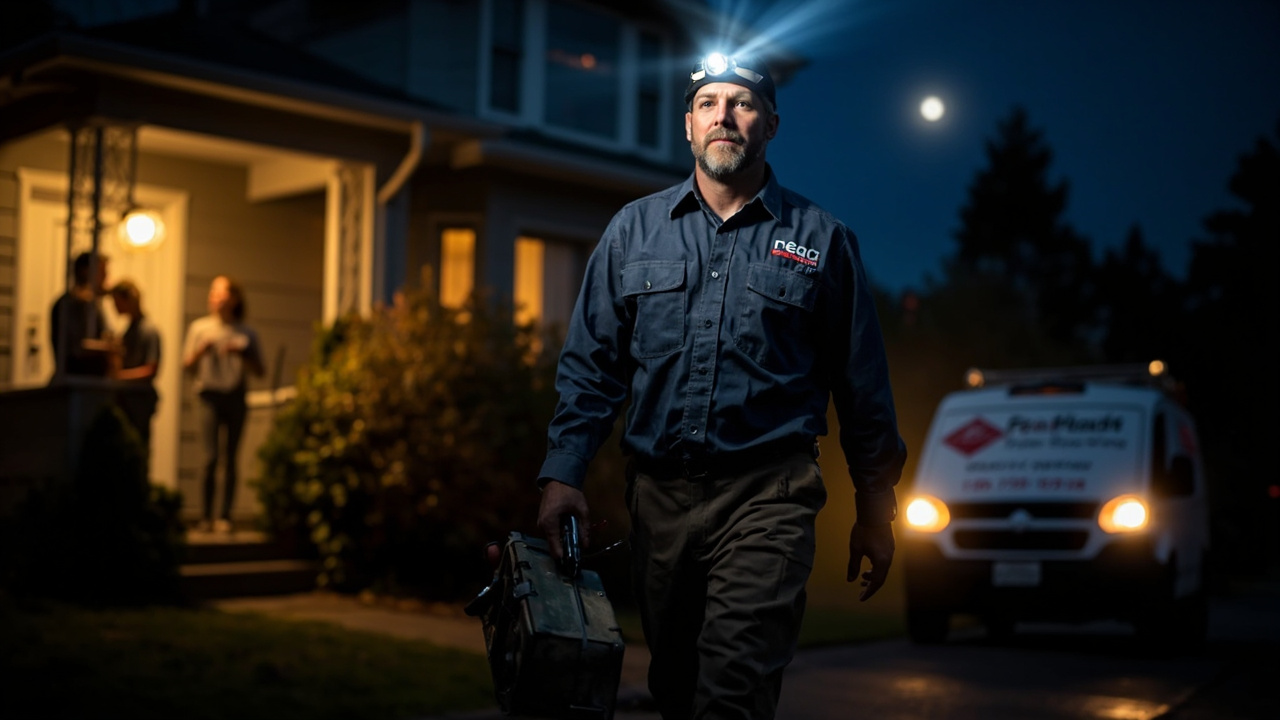
Peak HVAC Seattle runs emergency HVAC repair trucks loaded with the parts that fail most often in Western Washington. We do not tell you to wait until morning. We dispatch a technician to your door in under 60 minutes, because every hour without cooling in July puts your family at risk for heat exhaustion and your home at risk for secondary damage.

Why Seattle Air Conditioners Fail Without Warning
How We Diagnose and Repair AC Failures in the Middle of the Night

How We Diagnose and Repair AC Failures in the Middle of the Night

After hours ac repair is not the same as scheduled maintenance. Our technicians arrive prepared for the worst.

We start with a refrigerant pressure test using manifold gauges. Low suction pressure points to a restriction in the liquid line or a failing thermostatic expansion valve. High head pressure indicates a condenser coil clogged with cottonwood seeds, common in Seattle neighborhoods near Green Lake or Discovery Park. We check voltage at the contactor, the run capacitor, and the compressor terminals to isolate electrical failures.

If the evaporator coil is frozen, we know the blower motor is underperforming or the filter is completely blocked. We measure static pressure across the air handler to confirm airflow. If the compressor hums but does not start, we test the hard start kit and capacitor with a multimeter. If the condenser fan is not spinning, we check the motor windings for an open circuit.

Most emergency air conditioning repair jobs in Seattle fail because of three components: capacitors degraded by humidity, contactors pitted from power surges, and refrigerant leaks at brazed joints stressed by ground shifting. We carry all three on every truck.

We do not guess. We do not tell you to replace your entire system at 11 PM. We find the failed component, explain what happened in plain language, replace it, and test the system under load to confirm the repair holds. If your compressor is locked up and cannot be saved, we tell you the truth and help you understand your options for morning. But most calls we resolve the same night.

What Happens When You Call for Emergency AC Repair

24/7 Emergency AC Repair in Seattle – Technicians Dispatched in Under 60 Minutes
01

Immediate Dispatch

You call our emergency line at (564) 220-5899. We answer, not a voicemail. You describe the symptoms. We ask targeted diagnostic questions while dispatching the closest available technician. You get a name, a photo, and an estimated arrival time sent to your phone within five minutes. Our trucks are GPS tracked so you know exactly when help arrives.
02

On-Site Diagnostics

The technician arrives with a fully stocked truck and diagnostic tools. We perform a complete system evaluation, testing electrical components, measuring refrigerant pressures, inspecting the condensate drain, and checking airflow. We isolate the failure point and explain what caused it, what it will take to fix it, and what happens if you wait. You get a flat rate price before any work begins.
03

Repair and Testing

We complete the repair using OEM or better parts, then run the system through a full cooling cycle. We measure the temperature drop across the evaporator coil to confirm proper heat exchange. We check amp draw at the compressor to ensure it is running efficiently. Before we leave, your home is cooling again, and you understand what failed and how to prevent it next time.

Why Seattle Homeowners Trust Peak HVAC for Middle-of-the-Night AC Failures

When your air conditioner dies at midnight, you cannot afford to call someone who shows up unprepared or tries to sell you a new system on the spot.

Peak HVAC Seattle runs emergency HVAC repair operations 365 days a year because we know Seattle summers are unpredictable. The heatwave that hits in late June does not wait for business hours. Neither do we.

Our technicians train specifically on the brands installed most often in Seattle homes: Lennox, Carrier, Trane, and Rheem. We understand how split systems installed in crawl spaces under Capitol Hill bungalows develop drainage problems. We know how packaged units on rooftops in South Lake Union fail differently than ground-mounted condensers in Ballard backyards.

We stock parts for the failures we see most often in Western Washington. Capacitors rated for high humidity. Contactors that handle the voltage fluctuations common in older Seattle electrical panels. Blower motors sized correctly for the ductwork constraints in 1920s homes. When we say we can fix it tonight, we mean it.

You will not get an upsell pitch at 2 AM. You will get an honest diagnostic, a fair price, and a technician who respects your home. We wear boot covers. We clean up. We explain the repair in language you understand.

Seattle building codes require proper refrigerant handling and disposal. We follow EPA Section 608 protocols on every job, even emergency calls. We pull permits when code requires it. We do not cut corners because you are desperate.

Local HVAC companies that do urgent air conditioner service right earn trust one middle-of-the-night call at a time. We have been doing this long enough to know your comfort and safety come first.

What You Can Expect During an Emergency AC Service Call

Response Time and Availability

We dispatch a technician to your location within 60 minutes of your call, any time of day or night. Our emergency line is staffed by people, not answering services. You speak directly to someone who understands HVAC and can triage your situation. We serve all Seattle neighborhoods, from West Seattle to Northgate, Magnolia to Rainier Valley. During peak heat events, we prioritize homes with vulnerable residents, but we do not leave anyone waiting longer than necessary. You get real-time updates via text so you know exactly when the technician will arrive.

Diagnostic Process and Transparency

Our technician will spend 20 to 40 minutes diagnosing your system before recommending any repair. We test electrical components with calibrated meters, measure refrigerant pressures with manifold gauges, and inspect mechanical parts for wear or damage. You are welcome to watch and ask questions. We explain what failed, why it failed, and what we need to do to fix it. You receive a written estimate with a flat rate price before we start any work. No hidden fees, no surprise charges for after hours service.

Quality of the Repair

We use OEM parts or equivalent quality replacements. We do not install cheap capacitors that fail again in six months or universal contactors that do not fit correctly. After completing the repair, we run your system through a full cooling cycle and measure performance. We check the temperature split across the evaporator coil, verify correct amp draw at the compressor, and confirm the condensate drain is flowing properly. Your system will be cooling efficiently before we leave. If we cannot complete a permanent repair the same night, we will stabilize your system and schedule a follow-up.

Follow-Up and Maintenance Recommendations

Emergency repairs fix the immediate failure, but they often reveal underlying issues. We will point out other components showing wear, explain how long they might last, and recommend maintenance that prevents the next breakdown. If your air filter is filthy or your condenser coil is clogged, we tell you. If your ductwork is undersized or your refrigerant charge was incorrect from the original installation, we document it. You are not obligated to address these issues immediately, but you deserve to know. We will follow up within a week to make sure the repair is holding and your system is still performing as expected.

Frequently Asked Questions

You Have Questions,
We Have Answers

What is considered an emergency for AC? +

An AC emergency means your health or safety is at risk. Complete system failure during Seattle's rare heat waves (90°F+) qualifies, especially for elderly residents or households with infants. Refrigerant leaks, burning smells, electrical sparking, or water flooding your home are immediate emergencies. Strange grinding noises or total compressor failure also warrant urgent attention. If your home climbs above 85°F and you cannot cool it safely, you need help now. Seattle's humid summers make heat retention worse in older homes without proper ventilation. Call a 24/7 technician immediately if you smell gas or notice electrical issues.

How much does emergency AC service cost? +

Emergency AC repairs in Seattle typically cost 1.5 to 2 times the standard rate because of after-hours labor. Minor fixes like capacitor replacements might run moderately, while compressor or refrigerant leak repairs cost significantly more. You pay for immediate availability and the technician's skill to diagnose problems quickly under pressure. Seattle's competitive HVAC market keeps prices reasonable compared to larger metros. Most reputable companies quote honestly over the phone after asking diagnostic questions. Payment plans or financing options exist for major repairs. Insurance may cover damage from storms or electrical surges. Get a written estimate before authorizing work.

What is the $5000 AC rule? +

The $5000 AC rule is a decision formula. Multiply your system's age by the repair cost estimate. If the total exceeds $5000, replacement makes more financial sense than repair. For example, a 12-year-old unit needing $500 in repairs equals $6000, so replace it. This prevents throwing money at an aging system that will fail again soon. Seattle's moderate climate extends AC lifespan compared to year-round cooling regions, but salt air near Puget Sound accelerates corrosion. If your system is over 15 years old or uses outdated R-22 refrigerant, replacement is usually smarter. Modern units cut energy bills significantly.

Who do you call when your air conditioner is not working? +

Call a licensed HVAC contractor who offers 24/7 emergency service in Seattle. Verify they are bonded and insured before agreeing to service. Ask if they stock common parts on their trucks to avoid delays. Check reviews specific to emergency response times and pricing transparency. Avoid unlicensed handymen for AC work, Seattle code requires proper permitting for refrigerant handling. If you smell gas or see sparking, shut off power at the breaker and call immediately. Do not wait until morning if your home is dangerously hot or you detect electrical burning odors. Speed matters when health or property damage is at stake.

How to cool down a house with a broken AC? +

Close all blinds and curtains on sun-facing windows to block heat gain. Seattle homes often lack proper shading on south and west exposures. Open windows after sunset to pull in cool marine air, then close them before sunrise to trap coolness. Run ceiling fans counterclockwise to push air down. Place box fans in windows to exhaust hot air outward. Avoid using ovens or dryers until evening. Move sleeping areas to basements if possible, cool air sinks naturally. Dampen towels and drape them over your neck. These are temporary measures while waiting for emergency repair, not long-term solutions for Seattle's increasingly hot summers.

How long is it reasonable to wait for a repair? +

For true emergencies in Seattle, you should get same-day or next-morning service. Reputable 24/7 companies dispatch within 2 to 4 hours during peak summer heat. Non-emergency repairs might take 1 to 3 days depending on parts availability and technician schedules. If a company cannot provide an arrival window or keeps rescheduling, find another contractor. Seattle's limited extreme heat days mean AC failures cluster during brief hot spells, creating backlogs. Ask upfront about guaranteed response times. If your home is unsafe due to heat or you have vulnerable family members, demand immediate service. Waiting a week is unacceptable for critical system failures.

How to get AC fixed with no money? +

Ask contractors about financing options or payment plans before declining service. Many Seattle HVAC companies partner with lenders offering zero-interest periods for qualified applicants. Check if your homeowner's insurance covers AC damage from power surges or storms. Some utility companies offer emergency repair assistance programs for low-income households. Puget Sound Energy occasionally runs rebate programs that reduce repair costs. Credit cards with promotional rates can bridge the gap temporarily. Avoid payday loans with predatory interest rates. If the repair is minor, ask if the technician can provide a temporary fix to buy time. Explain your situation honestly, some contractors offer flexible terms for genuine hardship cases.

Is it cheaper to repair or replace an AC unit? +

Repair if your system is under 10 years old and the fix costs less than one-third of replacement price. Replace if the unit is over 15 years old, uses R-22 refrigerant (being phased out), or needs major component work like compressor replacement. Seattle's mild climate means AC units last longer here than in constant-use regions, but corrosion from marine air shortens lifespan near the coast. New systems cut energy costs by 30 to 40 percent and handle Seattle's increasing heat waves better. Apply the $5000 rule as a quick decision guide. Get multiple opinions if the answer is unclear.

What is the most expensive part of the AC unit to fix? +

The compressor is the most expensive component to replace, often costing as much as half the price of a new system. Located in the outdoor condenser unit, it pressurizes refrigerant to enable cooling. Compressor failure usually signals a system nearing end-of-life. Heat exchangers and evaporator coils also carry high replacement costs. Seattle's temperature swings and humidity can stress compressors over time. Labor adds significantly to parts cost because refrigerant must be recovered and recharged properly. If your compressor fails and the unit is over 10 years old, replacement beats repair financially. Capacitors and contactors are cheap fixes by comparison.

How to get a new AC for free? +

Free AC replacement does not exist outside rare charity programs or disaster relief scenarios. Some Seattle-area nonprofits help elderly or disabled homeowners with HVAC upgrades, but availability is extremely limited. Utility rebates and tax credits reduce costs but do not eliminate them entirely. Energy efficiency programs sometimes offer subsidized replacements for qualifying low-income households. Manufacturers occasionally run promotions covering installation costs if you buy the unit. Be skeptical of contractors offering free equipment, they usually inflate labor charges or push unnecessary upgrades. Focus on financing options, rebates, and payment plans to make replacement affordable rather than chasing nonexistent free programs.

How Seattle's Climate Accelerates AC Component Failure

Seattle air conditioners face a harsh operating environment that surprises homeowners used to mild Pacific Northwest weather. The marine layer brings salt-laden moisture that corrodes electrical terminals inside condensers, especially in waterfront neighborhoods near Elliott Bay or Lake Washington. Sudden temperature swings, from 60 degrees to 95 degrees in a single week, shock compressors and cause refrigerant leaks at brazed joints. Cottonwood trees throughout the city shed seeds that clog condenser coils in June, choking airflow and spiking head pressure. Emergency air conditioning repair calls surge during these events because systems pushed beyond design limits fail catastrophically, often during evening hours when families are home and demanding maximum cooling.

Peak HVAC Seattle understands the specific failure modes common to cooling systems in Western Washington. We know how homes built on Seattle's clay soil experience foundation movement that stresses refrigerant line sets. We understand how older electrical panels in neighborhoods like Wallingford or Queen Anne struggle to deliver clean power to modern high-efficiency compressors. Local expertise matters when your system fails at midnight, because the technician who shows up needs to know what parts to carry, what brands dominate the local install base, and how to navigate crawl spaces and attics in century-old homes. You need someone who has seen this exact failure a hundred times before, not a generalist guessing in the dark.
HVAC Services in The Seattle Area

Conveniently located to serve the greater Seattle area, Peak HVAC Seattle is dedicated to providing reliable and prompt services to our community. Our local presence ensures we can respond quickly to your needs, delivering expert heating and cooling solutions right to your doorstep. Whether you’re a homeowner or business owner, we’re committed to being your trusted, neighborhood HVAC partner for a perfectly comfortable indoor environment.

Address:
Peak HVAC Seattle, 401 Broadway E, Seattle, WA, 98102

Additional Services We Offer

Our news updates

Latest Articles & News from The Blogs

How a modern HVAC system helps your Mercer Island home sell faster during a staging Buyers walking through your Mercer…

How a modern HVAC system helps your Mercer Island home sell faster during a staging

How a modern HVAC system helps your Mercer Island home sell faster during a staging Buyers walking through your Mercer…

Safe ventilation for woodworking and metal shops in Georgetown garages

Georgetown’s industrial heritage and maker culture mean many Seattle residents have converted their garages into woodworking or metal shops. But…

Integrating your security system with your HVAC for a safer Somerset home in 2026

Integrating your security system with your HVAC for a safer Somerset home in 2026 Smart home technology is evolving fast…

Contact Us

Call Peak HVAC Seattle right now at (564) 220-5899. Our emergency dispatch team answers 24 hours a day, every day. Tell us what happened. We will send a fully equipped technician to your door in under 60 minutes, ready to fix it tonight.