
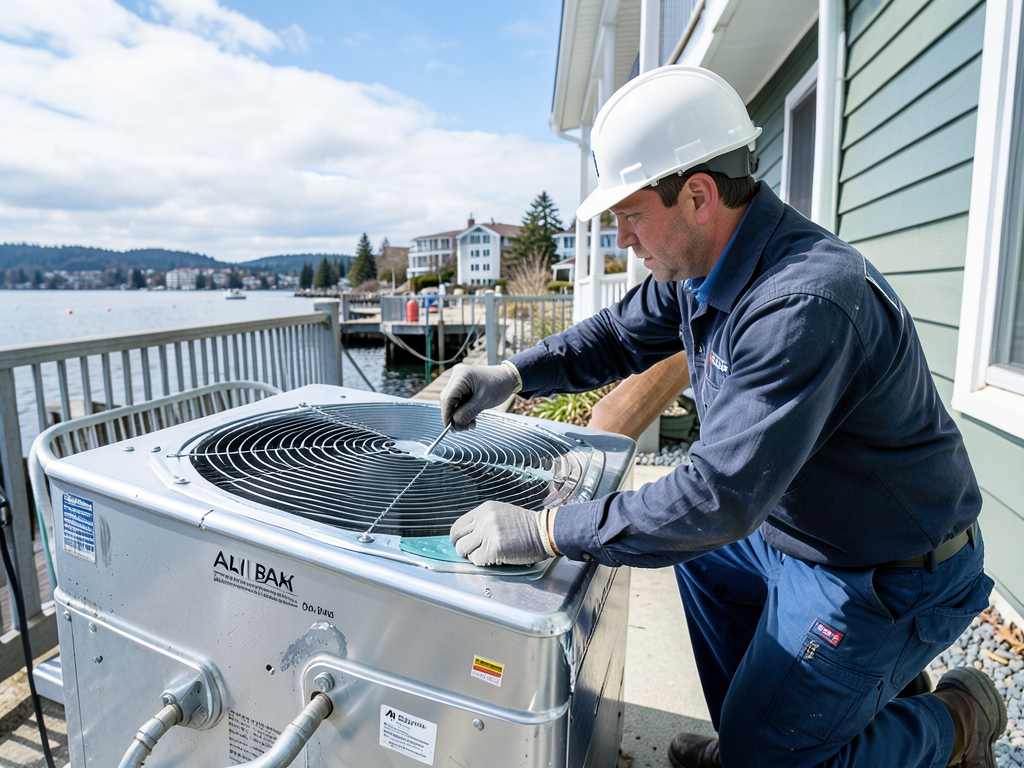
Protecting your Alki Beach HVAC system from salt air corrosion and rust
Living on Alki Beach means waking up to ocean breezes and stunning Puget Sound views. But those same salt-laden winds are silently attacking your HVAC system. Salt mist accelerates corrosion on aluminum coils and steel cabinets causing premature failure in as little as 3-5 years instead of the typical 15-20 year lifespan.
Alki Beach homeowners face a unique challenge. The combination of high humidity from Elliott Bay and constant salt spray creates the perfect environment for galvanic corrosion. This electrochemical reaction between dissimilar metals in your HVAC system breaks down protective coatings and eats through fins and tubing faster than anywhere else in Seattle.
How salt air destroys HVAC equipment in Seattle’s coastal zones
Salt air contains sodium chloride particles that act as electrolytes. When these particles settle on your outdoor condenser or heat pump they create tiny electrical cells between different metals in the system. Aluminum fins paired with copper tubing or steel cabinets become prime targets for accelerated corrosion.
The process works like this. Salt water attracts moisture from the humid Puget Sound air. This creates a thin film of saltwater on metal surfaces. The saltwater conducts electricity between different metals causing electrons to flow. This flow creates pits and holes in the protective coatings exposing raw metal to the elements.
Heat pumps are especially vulnerable because they run year-round. During winter operation the outdoor coil becomes extremely cold causing more condensation to form. This moisture mixed with salt creates a corrosive cocktail that eats through aluminum fins in months instead of years.
Seattle neighborhoods most at risk for HVAC salt damage
Alki Beach sits in the highest risk zone for salt air corrosion. Properties within 1/4 mile of Puget Sound face the most severe exposure. The constant onshore breeze carries salt particles that settle on outdoor equipment throughout the day.
Golden Gardens Park and the Ballard waterfront face similar challenges. The breakwater at Shilshole Bay Marina creates a wind tunnel effect that concentrates salt spray on nearby homes. Properties along the Magnolia Bluff experience slightly less exposure due to their elevation but still require protective measures. Why your Ballard home needs professional furnace repair before the first freeze.
West Seattle’s Duwamish Head area shows a clear pattern. Homes on the water side of Beach Drive need replacement heat pumps every 7-10 years while identical units just one block inland last 15-20 years. The difference is purely salt exposure.
Marine-grade coatings that stop corrosion before it starts
Standard factory coatings provide minimal protection against salt air. Marine-grade options create a barrier that prevents salt particles from reaching the metal surface. These specialized coatings use polyurethane or epoxy bases with ceramic additives for maximum durability. The best air conditioning options for bungalows and cottages around Green Lake.
Blygold Polibrid coating offers the highest protection level. This two-part epoxy system creates a 50-micron thick barrier that blocks salt penetration completely. The coating remains flexible enough to handle temperature changes without cracking. Installation requires professional application and adds $800-1200 to a new system.
Heresite P-413 provides excellent protection at a lower cost. This phenolic coating bonds directly to aluminum and copper surfaces creating a chemical seal. The 25-micron thickness offers 5-7 years of protection in harsh marine environments. Many Seattle HVAC contractors now offer this as a standard upgrade for coastal installations.
Sacrificial anodes protect your system like ships protect their hulls
Ships use sacrificial anodes to protect their steel hulls from saltwater corrosion. The same principle works for HVAC systems. A sacrificial anode is a piece of metal that corrodes preferentially protecting the more valuable components.
Magnesium anodes attach to the condenser cabinet or mounting brackets. When salt water contacts the system the magnesium corrodes instead of the steel or aluminum parts. This extends equipment life by 3-5 years in coastal environments. The anodes require replacement every 2-3 years as they slowly dissolve.
Zinc anodes work better in Puget Sound’s slightly alkaline water conditions. They corrode more slowly than magnesium providing longer protection between replacements. The trade-off is slightly less protection during the most corrosive conditions.
Aluminum versus copper tubing for coastal HVAC installations
Traditional HVAC systems use copper tubing for refrigerant lines. Copper resists corrosion well in most environments but struggles against salt air. The copper oxide that forms as a natural protective layer actually becomes more porous when exposed to salt creating channels for deeper corrosion.
Aluminum tubing offers better salt resistance. The natural aluminum oxide layer is denser and more impermeable to salt particles. Modern manufacturing techniques have improved aluminum’s reliability making it a viable alternative for coastal installations.
Many Seattle manufacturers now offer all-aluminum microchannel coils. These coils use flat aluminum tubes with tiny channels for refrigerant flow. The design increases surface area for heat transfer while reducing the amount of metal exposed to corrosive elements. The flat surfaces also shed salt deposits more effectively than traditional round tubes.
Heat pump efficiency losses from salt corrosion
Salt corrosion doesn’t just cause equipment failure. It reduces efficiency long before complete breakdown occurs. Corroded fins create air gaps that reduce heat transfer. This forces the compressor to run longer to achieve the same temperature change.
A new 18 SEER heat pump loses 2-3 SEER points in the first year near Alki Beach. By year three efficiency drops another 5-7 points. This means higher electricity bills and more frequent cycling. The compressor works harder wearing out bearings and electrical components faster.
Condenser fans also suffer. Salt deposits on fan blades create imbalance causing vibration. This vibration loosens electrical connections and stresses the motor. Fan motors in coastal units fail 2-3 times more often than inland installations.
Manufacturer warranties and salt air exposure
Standard HVAC warranties exclude damage from salt air corrosion. The fine print specifically lists “environmental corrosion” as a non-covered condition. This means homeowners pay full price for replacements caused by salt damage.
Some manufacturers offer coastal warranties for an additional fee. These extended warranties cover salt-related failures for 5-10 years. The cost ranges from $500-1500 depending on system size and location. For Alki Beach homes this protection often pays for itself within the warranty period.
Reading warranty terms carefully matters. Some manufacturers void all coverage if non-approved coatings are applied. Others require annual maintenance by certified technicians to maintain the coastal warranty. Understanding these requirements prevents expensive surprises. Preventative HVAC maintenance plans that actually save money for Redmond families.
Seattle’s specific salt air maintenance requirements
Seattle’s marine climate creates unique maintenance needs. The combination of salt spray and constant rain means equipment never fully dries. This perpetual moisture accelerates corrosion compared to drier coastal areas.
Rinsing your condenser monthly prevents salt buildup. Use a garden hose with moderate pressure. Avoid pressure washers which can damage fins. Rinse from the top down allowing water to flush salt deposits through the coil. This simple step can extend equipment life by 3-5 years.
Coil cleaning requires special consideration. Standard coil cleaners leave residues that attract salt. Use pH-neutral cleaners specifically formulated for marine environments. These cleaners break down salt deposits without leaving films that hold moisture against metal surfaces.
Professional maintenance schedules for coastal HVAC systems
Coastal HVAC systems need twice-yearly professional maintenance. Spring service prepares for summer cooling loads. Fall service protects against winter corrosion when systems run in heat mode. Weekend HVAC Service.
Spring maintenance includes coil cleaning with marine-grade cleaners. Technicians check for early signs of corrosion on fins and tubing. They tighten electrical connections loosened by vibration. Fan motors receive lubrication and balance checks.
Fall maintenance focuses on corrosion prevention. Technicians apply protective coatings to exposed metal surfaces. They check sacrificial anodes and replace them if more than 50% consumed. Electrical connections receive anti-corrosion treatment. The system undergoes performance testing to ensure efficiency hasn’t degraded.
Comparing coastal-grade HVAC units from major manufacturers
Several manufacturers now offer coastal-grade units designed specifically for salt air environments. These units feature enhanced coatings marine-grade hardware and corrosion-resistant components.
Trane Coastal units use a multi-layer coating system. The base layer bonds to metal. The middle layer provides flexibility. The top layer creates a slick surface that sheds salt deposits. These units carry 10-year coastal warranties when installed with approved accessories.
Carrier’s CoastalGuard series features stainless steel cabinets and copper tubing with enhanced oxide layers. The units include special fan motors with sealed bearings. Carrier offers 7-year coastal warranties but requires annual professional maintenance.
Lennox Elite Series units for coastal use include aluminum coils and composite cabinets. The units ship with factory-applied marine coatings. Lennox provides 5-year coastal coverage but only through authorized coastal dealers.
DIY maintenance mistakes that accelerate corrosion
Homeowners often damage their HVAC systems trying to protect them. Using the wrong cleaning products creates more problems than it solves. Acidic cleaners etch aluminum creating rough surfaces that trap salt. Alkaline cleaners can react with copper causing green deposits that hold moisture.
Covering units during rainy seasons seems logical but traps moisture inside. This creates a greenhouse effect where condensation forms on metal surfaces. The constant moisture without air circulation accelerates corrosion faster than leaving the unit exposed.
Painting units with household paint provides false security. Standard paints don’t flex with temperature changes. They crack and peel within months creating edges where salt and moisture collect. The paint actually accelerates corrosion at the edges of failed areas.
Cost comparison: Prevention versus replacement
Protecting your HVAC system costs significantly less than replacing it early. A new heat pump for an Alki Beach home costs $6000-9000 installed. This includes removal of the old unit and any necessary electrical upgrades.
Marine-grade protection adds $1200-2500 to the initial installation. Annual maintenance costs $150-250 per visit. Over 15 years the total protection cost reaches $4000-6000. This represents a 40-50% savings compared to replacing the unit at year 7.
Emergency replacements during summer heat waves cost even more. HVAC companies charge premium rates for immediate service. Parts availability becomes limited during peak season. Planning and prevention eliminates these emergency costs entirely. Who to call for 24 hour emergency furnace repair in West Seattle.
Energy savings from well-maintained coastal HVAC systems
Corrosion doesn’t just cause failures. It wastes energy every day. A heat pump operating at 10% below rated efficiency costs 15-20% more to run. For a typical Seattle home this means $200-400 extra per cooling season.
Clean coils transfer heat more efficiently. The compressor doesn’t work as hard maintaining temperatures. This reduces electricity consumption and extends component life. The energy savings often pay for annual maintenance within two years.
Variable-speed systems suffer more from corrosion. These high-efficiency units depend on optimal heat transfer for their advanced features to work. Corrosion reduces the benefits of variable-speed technology turning a premium system into an overpriced standard unit.
Installation considerations for new coastal HVAC systems
Proper installation prevents many salt air problems before they start. Unit placement matters more in coastal environments. Installing the condenser on the leeward side of the house provides natural protection from prevailing salt winds.
Mounting height affects exposure. Units installed 18 inches or higher above ground level avoid salt splash from streets and sidewalks. This simple adjustment can extend equipment life by 2-3 years in urban coastal areas.
Electrical connections require special attention. Use marine-grade connectors and anti-corrosion compound on all terminals. Install drip loops to prevent water from running along wires into electrical boxes. These details prevent the short circuits that often accompany corrosion-related failures.
Recognizing early signs of salt corrosion
Early detection prevents catastrophic failures. White powdery deposits on aluminum fins indicate beginning corrosion. These deposits are aluminum oxide forming as the metal breaks down. Catching this stage allows for cleaning and protective coating before permanent damage occurs.
Blue or green deposits on copper tubing signal advanced corrosion. These colors come from copper salts forming as the metal dissolves. This stage requires immediate professional attention. The tubing may have already developed pinhole leaks that will cause refrigerant loss.
Unusual noises often precede complete failure. A failing fan motor sounds different from normal operation. The bearings wear unevenly creating a high-pitched whine or grinding sound. This noise indicates the motor will fail soon requiring emergency replacement.
Seasonal challenges for Alki Beach HVAC systems
Each season brings different corrosion challenges. Summer brings the highest salt concentrations in the air. The combination of warm temperatures and onshore breezes creates ideal conditions for salt deposition on equipment.
Fall rains wash away accumulated salt but also create constant moisture. This wet-dry cycle accelerates corrosion as the metal expands and contracts with temperature changes. The expansion breaks down protective coatings at a microscopic level.
Winter operations create condensation problems. Heat pumps running in cold weather produce water vapor that freezes on cold surfaces. This ice traps salt against metal creating concentrated corrosive cells. The freeze-thaw cycle also damages protective coatings.
Commercial versus residential corrosion protection needs
Commercial buildings near Alki Beach face different challenges than homes. Larger rooftop units have more surface area exposed to salt spray. They also run more hours per day increasing cumulative exposure.
Commercial systems often use different materials. Many large units use galvanized steel cabinets which corrode differently than the aluminum used in residential units. The zinc coating provides initial protection but eventually fails creating rust-through problems.
Maintenance access affects protection strategies. Residential units are easier to rinse and inspect regularly. Commercial rooftop units may only receive attention during scheduled maintenance visits. This means commercial systems need more robust initial protection.
Future HVAC technologies for coastal environments
Manufacturers continue developing better protection for coastal installations. Self-cleaning coatings use hydrophobic technology to shed water and salt particles. These coatings mimic lotus leaf surfaces where water beads and rolls off carrying dirt and salt with it.
Nanocoatings represent the next generation of protection. These ultra-thin layers bond at the molecular level creating barriers that block salt penetration completely. Current nanocoatings add minimal weight or thickness while providing maximum protection.
Smart sensors can now detect corrosion in early stages. These sensors monitor electrical resistance across metal surfaces. Changes in resistance indicate corrosion beginning before visible damage appears. This allows for targeted maintenance before efficiency losses occur.
Local building codes and coastal HVAC installations
Seattle building codes don’t specifically address salt air corrosion. However the Seattle Energy Code requires minimum efficiency levels that corrosion can prevent achieving. This creates a conflict between code compliance and environmental reality.
The Washington State Mechanical Code requires equipment to be installed according to manufacturer specifications. Many manufacturers specify additional requirements for coastal installations. Following these specifications becomes mandatory for warranty compliance even if not required by local codes.
Electrical codes require specific protection for coastal installations. All outdoor electrical connections must use weatherproof boxes and connectors rated for marine environments. These requirements help prevent the short circuits that often accompany corrosion-related failures.
Financing options for coastal HVAC protection
Protecting your HVAC system represents a significant investment. Several financing options make protection more affordable. Many HVAC companies offer 12-18 month same-as-cash financing for equipment and protective coatings.
Utility rebates sometimes cover efficiency upgrades. Seattle City Light offers rebates for high-efficiency heat pumps. These rebates apply even when the efficiency improvement comes from better protection rather than higher SEER ratings.
Home equity loans provide another option. The interest may be tax-deductible and the repayment terms extend to 10-15 years. This spreads the cost while potentially increasing home value through better equipment protection.
Frequently Asked Questions
How far from Puget Sound does salt air become a problem?
Salt air affects properties within 1/4 mile of the water most severely. Effects diminish with distance but can still impact units up to 1 mile inland during onshore wind conditions. Alki Beach homes need protection while properties in Admiral or Fauntleroy may not.
Can I apply protective coatings myself?
DIY coatings provide minimal protection. Professional application requires specific surface preparation ambient temperature control and curing conditions. Improper application can void manufacturer warranties. Professional marine-grade coatings cost more initially but provide years of additional protection.
How often should I rinse my condenser?
Rinse monthly during summer months when salt concentrations peak. Reduce to every 6-8 weeks during winter. After major storms with onshore winds rinse immediately. Always rinse in the morning so the unit dries completely before evening moisture increases.
Does salt air affect indoor air quality?
Salt air primarily affects outdoor components. However corroded drain pans can harbor mold growth which affects indoor air. Salt particles can also accumulate in ductwork over years potentially irritating sensitive individuals. Regular duct cleaning helps maintain indoor air quality in coastal homes.
Are heat pumps or air conditioners better for coastal areas?
Heat pumps work harder in coastal areas because they run year-round. However modern heat pumps offer better corrosion protection options than standard air conditioners. The year-round protection and heating efficiency often outweigh the increased corrosion risk. Choose heat pumps with marine-grade coatings regardless.
What’s the typical lifespan reduction from salt air?
Standard HVAC units last 15-20 years inland. In Alki Beach and similar coastal areas lifespan drops to 7-10 years without protection. With proper marine-grade coatings and maintenance coastal units can achieve 12-15 years of service. The investment in protection typically pays for itself through extended life.
Should I replace my existing unit with a coastal-grade model?
If your current unit is over 5 years old and showing corrosion signs replacement often makes sense. The energy savings from a new efficient unit combined with better protection can offset replacement costs within 3-5 years. Consider replacement if major repairs approach 40% of new unit cost.
Take action before corrosion costs you thousands
Your Alki Beach HVAC system faces constant attack from salt air corrosion. Every day of delay means more damage and higher replacement costs. The salty breezes that make Alki Beach special are silently destroying your equipment.
Professional inspection reveals current corrosion levels and recommends specific protection strategies. Our technicians understand Seattle’s unique marine environment and know exactly what your system needs. We’ve protected hundreds of Alki Beach homes from premature HVAC failure.
Call (564) 220-5899 today to schedule your coastal HVAC inspection. Our technicians will evaluate your system’s condition recommend appropriate protection measures and provide clear pricing options. Don’t wait until your system fails during a summer heat wave or winter freeze.
Pick up the phone and call (564) 220-5899 before the next storm brings another wave of salt spray. Your HVAC system works hard to keep your Alki Beach home comfortable. Give it the protection it needs to serve you for years to come.
Additional Resources
For more information about protecting your home from Seattle’s unique environmental challenges visit these trusted sources:
- EPA Energy Efficient Products – Learn about high-efficiency HVAC options
- Seattle City Light – Heating and Cooling Programs – Available rebates and incentives
- ASHRAE Standards for Ventilation – Industry standards for indoor air quality
- Schedule Professional Inspection
Call (564) 220-5899 for a comprehensive evaluation of your current system’s corrosion status and efficiency levels.
- Choose Protection Strategy
Select from marine-grade coatings sacrificial anodes or complete coastal-grade unit replacement based on your system’s age and condition.
- Implement Maintenance Plan
Establish a twice-yearly maintenance schedule with our technicians to ensure ongoing protection and optimal efficiency.
- Monitor Performance
Track energy bills and system performance to verify the protection measures are working effectively.
You may also find this helpful. Neutralizing ferry exhaust and traffic odors in your Fauntleroy house.
{
“@context”: “https://schema.org”,
“@type”: “BlogPosting”,
“headline”: “Protecting your Alki Beach HVAC system from salt air corrosion and rust”,
“description”: “Learn how salt air corrodes HVAC systems in Alki Beach homes. Discover marine-grade coatings, sacrificial anodes, and maintenance tips to extend equipment life.”,
“wordCount”: 3210,
“datePublished”: “2026-04-23T13:46:00.000Z”,
“dateModified”: “2026-04-23T13:46:00.000Z”,
“inLanguage”: “en-US”,
“mainEntityOfPage”: {
“@type”: “WebPage”,
“@id”: “https://peakhvacseattle.com”
},
“publisher”: {
“@type”: “LocalBusiness”,
“name”: “Peak HVAC Seattle”,
“url”: “https://peakhvacseattle.com”
},
“author”: {
“@type”: “Organization”,
“name”: “Peak HVAC Seattle”,
“url”: “https://peakhvacseattle.com”
},
“image”: {
“@type”: “ImageObject”,
“url”: “https://peakhvacseattle.com/wp-content/uploads/2026/03/protecting-your-alki-beach-hvac-system-from-salt-a-1.png”
}
}
{
“@context”: “https://schema.org”,
“@type”: “HVACBusiness”,
“name”: “Peak HVAC Seattle”,
“url”: “https://peakhvacseattle.com”,
“address”: {
“@type”: “PostalAddress”,
“addressLocality”: “Seattle”
},
“areaServed”: {
“@type”: “City”,
“name”: “Seattle”
}
}
{
“@context”: “https://schema.org”,
“@type”: “FAQPage”,
“mainEntity”: [
{
“@type”: “Question”,
“name”: “How far from Puget Sound does salt air become a problem?”,
“acceptedAnswer”: {
“@type”: “Answer”,
“text”: “Salt air affects properties within 1/4 mile of the water most severely. Effects diminish with distance but can still impact units up to 1 mile inland during onshore wind conditions. Alki Beach homes need protection while properties in Admiral or Fauntleroy may not.”
}
},
{
“@type”: “Question”,
“name”: “Can I apply protective coatings myself?”,
“acceptedAnswer”: {
“@type”: “Answer”,
“text”: “DIY coatings provide minimal protection. Professional application requires specific surface preparation ambient temperature control and curing conditions. Improper application can void manufacturer warranties. Professional marine-grade coatings cost more initially but provide years of additional protection.”
}
},
{
“@type”: “Question”,
“name”: “How often should I rinse my condenser?”,
“acceptedAnswer”: {
“@type”: “Answer”,
“text”: “Rinse monthly during summer months when salt concentrations peak. Reduce to every 6-8 weeks during winter. After major storms with onshore winds rinse immediately. Always rinse in the morning so the unit dries completely before evening moisture increases.”
}
},
{
“@type”: “Question”,
“name”: “Does salt air affect indoor air quality?”,
“acceptedAnswer”: {
“@type”: “Answer”,
“text”: “Salt air primarily affects outdoor components. However corroded drain pans can harbor mold growth which affects indoor air. Salt particles can also accumulate in ductwork over years potentially irritating sensitive individuals. Regular duct cleaning helps maintain indoor air quality in coastal homes.”
}
},
{
“@type”: “Question”,
“name”: “Are heat pumps or air conditioners better for coastal areas?”,
“acceptedAnswer”: {
“@type”: “Answer”,
“text”: “Heat pumps work harder in coastal areas because they run year-round. However modern heat pumps offer better corrosion protection options than standard air conditioners. The year-round protection and heating efficiency often outweigh the increased corrosion risk. Choose heat pumps with marine-grade coatings regardless.”
}
},
{
“@type”: “Question”,
“name”: “What’s the typical lifespan reduction from salt air?”,
“acceptedAnswer”: {
“@type”: “Answer”,
“text”: “Standard HVAC units last 15-20 years inland. In Alki Beach and similar coastal areas lifespan drops to 7-10 years without protection. With proper marine-grade coatings and maintenance coastal units can achieve 12-15 years of service. The investment in protection typically pays for itself through extended life.”
}
},
{
“@type”: “Question”,
“name”: “Should I replace my existing unit with a coastal-grade model?”,
“acceptedAnswer”: {
“@type”: “Answer”,
“text”: “If your current unit is over 5 years old and showing corrosion signs replacement often makes sense. The energy savings from a new efficient unit combined with better protection can offset replacement costs within 3-5 years. Consider replacement if major repairs approach 40% of new unit cost.”
}
}
]
}
{
“@context”: “https://schema.org”,
“@type”: “HowTo”,
“name”: “How to Protect Your Coastal HVAC System”,
“step”: [
{
“@type”: “HowToStep”,
“position”: 1,
“name”: “Schedule Professional Inspection”,
“text”: “Call (564) 220-5899 for a comprehensive evaluation of your current system’s corrosion status and efficiency levels.”
},
{
“@type”: “HowToStep”,
“position”: 2,
“name”: “Choose Protection Strategy”,
“text”: “Select from marine-grade coatings sacrificial anodes or complete coastal-grade unit replacement based on your system’s age and condition.”
},
{
“@type”: “HowToStep”,
“position”: 3,
“name”: “Implement Maintenance Plan”,
“text”: “Establish a twice-yearly maintenance schedule with our technicians to ensure ongoing protection and optimal efficiency.”
},
{
“@type”: “HowToStep”,
“position”: 4,
“name”: “Monitor Performance”,
“text”: “Track energy bills and system performance to verify the protection measures are working effectively.”
}
],
“image”: “https://peakhvacseattle.com/wp-content/uploads/2026/03/protecting-your-alki-beach-hvac-system-from-salt-a-1.png”
}
{
“@context”: “https://schema.org”,
“@type”: “BreadcrumbList”,
“itemListElement”: [
{
“@type”: “ListItem”,
“position”: 1,
“name”: “Home”,
“item”: “https://peakhvacseattle.com”
},
{
“@type”: “ListItem”,
“position”: 2,
“name”: “Blog”,
“item”: “https://peakhvacseattle.com/blog”
},
{
“@type”: “ListItem”,
“position”: 3,
“name”: “Protecting your Alki Beach HVAC system from salt air corrosion and rust”
}
]
}
{
“@context”: “https://schema.org”,
“@type”: “Service”,
“serviceType”: “HVAC”,
“provider”: {
“@type”: “LocalBusiness”,
“name”: “Peak HVAC Seattle”,
“url”: “https://peakhvacseattle.com”
},
“areaServed”: {
“@type”: “City”,
“name”: “Seattle”
},
“description”: “Learn how salt air corrodes HVAC systems in Alki Beach homes. Discover marine-grade coatings, sacrificial anodes, and maintenance tips to extend equipment life.”
}