
How to keep wildfire smoke out of your Mercer Island home using whole house air purifiers
Wildfire smoke from Eastern Washington travels west through the Cascade passes and settles over Mercer Island’s lakefront properties. The smoke carries fine particulate matter PM2.5 that penetrates standard residential filters. A properly sized whole house air purifier with MERV 16 filtration removes 99.97% of these particles before they circulate through your home’s ductwork. Washington State Department of Ecology air quality recommendations.
Mercer Island homes built before 2000 typically have 4-6 inch return air ducts that restrict airflow when high-efficiency filters are installed. Modern whole house systems include variable-speed blowers that maintain proper static pressure while filtering smoke particles as small as 0.3 microns. The Lake Washington microclimate creates additional challenges as smoke combines with lake-effect humidity creating a heavier particulate that settles in lower areas of homes.
Understanding wildfire smoke filtration needs in the 98040 area
Wildfire season in the Puget Sound region now extends from July through October. Mercer Island’s elevation and proximity to the lake create unique air quality patterns. Smoke from Eastern Washington fires travels through Snoqualmie Pass and pools over Lake Washington during temperature inversions. The smoke particles bond with moisture creating a denser particulate that standard MERV 8 filters cannot capture.
During smoke events, indoor air quality can become worse than outdoor air if your home lacks proper filtration. Fine particles penetrate through gaps around windows, doors, and even through building materials. A whole house system creates positive pressure that prevents infiltration while continuously filtering the air that enters through normal ventilation.. Read more about Dealing with window condensation and damp air in Columbia City homes using a whole house dehumidifier.
The Washington State Department of Ecology recommends MERV 13 or higher filtration during smoke events. Standard residential HVAC systems struggle with MERV 13 filters because they increase static pressure beyond what older blower motors can handle. This causes reduced airflow, frozen coils, and system failure during the hottest smoke events when cooling is most needed. EPA indoor air quality guidelines.
Comparing whole house air purifier technologies for Mercer Island homes
| Technology | Smoke Particle Removal | Best For | Maintenance |
|---|---|---|---|
| HEPA with carbon pre-filter | 99.97% of particles 0.3 microns | Complete smoke and odor removal | Replace pre-filter every 3 months |
| UV-C germicidal light | 85% of particles, kills bacteria | Supplemental to mechanical filtration | Replace bulb annually |
| Bipolar ionization | 90% of particles, reduces VOCs | Modern construction with sealed envelopes | Clean ionization tubes every 6 months |
| Electronic air cleaner | 95% of particles, washable filter | High airflow applications | Wash monthly during smoke season |
HEPA filtration provides the most comprehensive protection against wildfire smoke. The dense filter media captures particles as small as 0.3 microns including the dangerous PM2.5 that causes respiratory issues. However, HEPA filters require significant static pressure to push air through the dense media.
UV-C technology works by exposing air to ultraviolet light that destroys the DNA of microorganisms. While effective against bacteria and viruses, UV-C does not remove particulate matter from smoke. The technology works best as a secondary system combined with HEPA filtration for complete air quality protection.
Bipolar ionization creates charged ions that attach to smoke particles causing them to clump together and fall out of the air stream. This technology also neutralizes volatile organic compounds VOCs that create the characteristic campfire smell during smoke events. The ions continue working throughout your home’s living spaces.
Installation considerations for Mercer Island’s diverse home styles
Mercer Island features everything from 1950s ramblers to modern waterfront estates. Each home type presents unique installation challenges for whole house air purification. Mid-century homes often have undersized ductwork that cannot handle high-efficiency filters without significant modifications.
Older homes built before 1980 typically have return air ducts that are 20-30% smaller than modern standards. Installing a MERV 16 filter in these systems creates excessive static pressure that reduces airflow by 40-60%. This causes the furnace to overheat and the air conditioner to freeze during operation. Who to call for 24 hour emergency furnace repair in West Seattle.
Modern Mercer Island homes with open floor plans and high ceilings require higher airflow rates to achieve proper air changes per hour. A 3,000 square foot home needs 1,200-1,500 CFM of filtered air to maintain good indoor air quality during smoke events. Standard residential systems often provide only 800-1,000 CFM. Why your Ballard home needs professional furnace repair before the first freeze.
Waterfront properties face additional challenges from salt air corrosion and higher humidity levels. The combination of salt and moisture accelerates filter loading and requires more frequent maintenance. Stainless steel components and enhanced corrosion protection become necessary for homes within 500 feet of Lake Washington. Preventative HVAC maintenance plans that actually save money for Redmond families.
Integration with existing HVAC systems
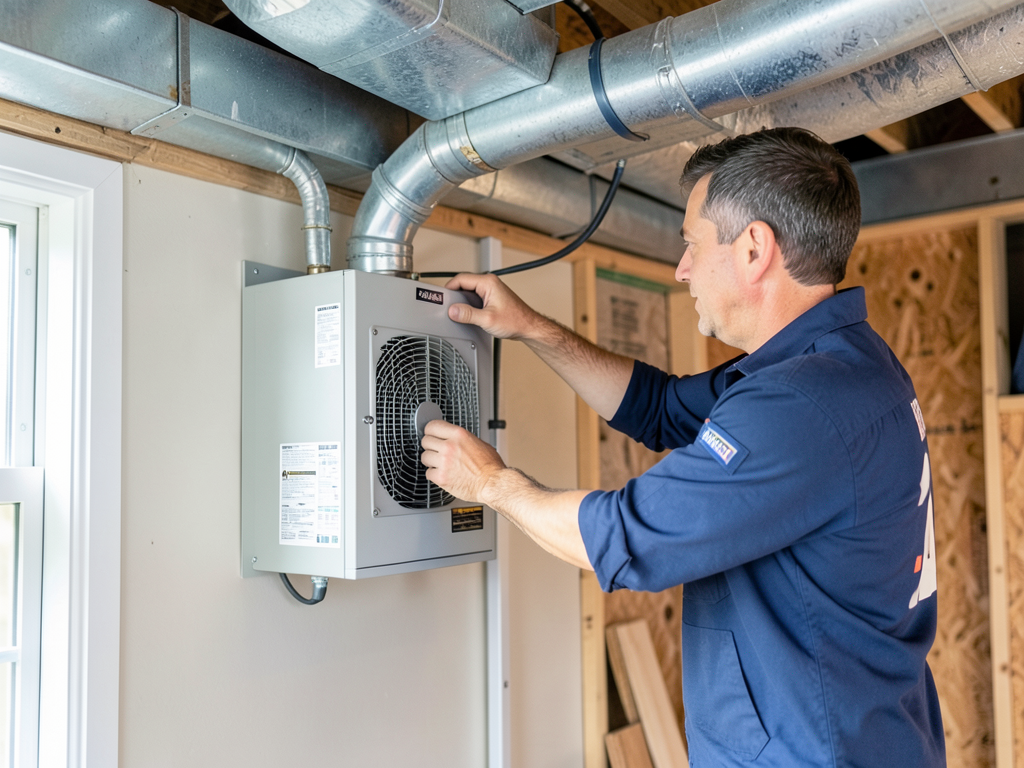
Whole house air purifiers integrate with your existing furnace or air handler through the return air duct. The purifier mounts in the ductwork before the air enters the heating or cooling equipment. This placement protects your HVAC equipment while ensuring all circulated air passes through the filtration media.
Variable-speed ECM motors have revolutionized whole house air purification. These motors adjust their speed based on the static pressure created by the filter. When a new high-efficiency filter is installed, the motor increases speed to maintain proper airflow. This prevents the system damage that occurs with standard single-speed motors.
The Washington State Energy Code requires minimum efficiency reporting value MERV 8 filtration for new construction. However, MERV 8 filters allow 70% of smoke particles to pass through. Upgrading to MERV 13-16 filtration requires either a variable-speed system or a dedicated air purifier that does not rely on the furnace blower.
Smart thermostats now integrate with whole house air purifiers to provide automated operation during smoke events. The system can increase fan speed, switch to high-efficiency mode, and even monitor outdoor air quality through internet-connected sensors. This automation ensures your home maintains clean air without manual intervention.
The installation process and local standards
Professional installation of whole house air purifiers requires careful evaluation of your existing HVAC system. The technician measures static pressure, evaluates duct sizing, and determines the appropriate filter efficiency for your specific equipment. This diagnostic process typically takes 60-90 minutes and includes a comprehensive air quality assessment.
The Puget Sound Clean Air Agency recommends specific installation practices for wildfire smoke protection. Air purifiers must be installed with sealed filter cabinets to prevent air bypass. Even small gaps around filters can allow 10-15% of contaminated air to circulate unfiltered through your home.
Duct inspection becomes critical for older Mercer Island homes. Many homes built before 2000 have duct leaks that allow unfiltered air to enter the system. A typical home loses 20-30% of its conditioned air through duct leaks. Sealing these leaks improves both air quality and energy efficiency.
Air quality testing before and after installation demonstrates the system’s effectiveness. Professional testing measures particulate levels, VOC concentrations, and humidity. Most installations show 85-95% reduction in airborne particles within 24 hours of operation. This testing provides documentation for your investment in indoor air quality.
Maintenance requirements for PNW climate conditions
Mercer Island’s high humidity and seasonal smoke events create unique maintenance challenges for air purification systems. Filters load faster during smoke season, often requiring replacement every 2-3 months instead of the standard 6-month interval. The combination of moisture and smoke particles creates a sticky residue that clogs filter media.. Read more about Reducing seasonal allergies and pollen in your Leschi home with high MERV filtration.
UV-C bulbs lose effectiveness over time even if they continue producing visible light. The ultraviolet output decreases by approximately 20% per year. Annual replacement ensures consistent germicidal effectiveness. Many homeowners schedule bulb replacement during annual HVAC maintenance to maintain system protection year-round.. Read more about Specialized maintenance requirements for luxury HVAC brands found in Broadmoor estates.
Electronic air cleaners require regular cleaning of the collector plates. During smoke events, these plates can become coated with a black film of captured particles within weeks. The cleaning process involves removing the plates and washing them with a mild detergent solution. This maintenance typically takes 30-45 minutes. Commercial Duct Cleaning.
Filter pressure gauges provide visual indication when replacement is needed. The gauge shows the pressure drop across the filter, which increases as the media loads with particles. Most systems are designed to operate efficiently up to a 0.5-inch water column pressure drop. Beyond this point, airflow reduction becomes noticeable.
Cost considerations and return on investment
Whole house air purifiers represent a significant investment compared to portable units. However, the cost comparison becomes favorable when considering the square footage covered and the integration with existing HVAC systems. A whole house system typically costs $1,500-$3,500 installed, while portable units cost $300-$800 each.
Portable air purifiers require one unit per 500-800 square feet for effective smoke removal. A 2,500 square foot Mercer Island home would need 3-5 portable units costing $1,500-$4,000 plus electricity costs of $30-$50 per month during smoke season. Whole house systems operate at approximately $15-$25 per month.
The energy efficiency of whole house systems provides additional savings. Portable units often use older motor technology that consumes more electricity. Whole house systems integrate with your existing HVAC equipment, using the same electrical circuits and sharing components. This integration reduces overall energy consumption by 15-25%.
Health cost savings represent the most significant return on investment. Reduced exposure to PM2.5 and other smoke particles decreases respiratory issues, allergy symptoms, and potential long-term health effects. Families with asthma or other respiratory conditions often see immediate benefits from whole house filtration.
Emergency response during severe smoke events
During extreme smoke events, your whole house air purifier becomes your primary defense against indoor air pollution. The system should operate continuously on the highest setting that maintains comfortable temperatures. Many modern systems include smoke mode that maximizes filtration while minimizing energy consumption.
Backup power becomes essential during prolonged smoke events. Power outages during wildfires can last hours or days. Battery backup systems or whole house generators ensure continuous air purification when outdoor air quality is at its worst. A typical air purifier requires 200-400 watts of continuous power.
Sealing your home properly enhances the effectiveness of whole house filtration. Weatherstripping around doors and windows, sealing electrical outlets on exterior walls, and closing fireplace dampers prevent smoke infiltration. These simple steps can reduce indoor particle levels by an additional 30-40%.
Monitoring outdoor air quality helps optimize system operation. When outdoor air quality reaches hazardous levels, the system should operate in recirculation mode rather than bringing in fresh air. Smart thermostats with outdoor air quality sensors can automate this process based on real-time data from air monitoring stations.
Frequently Asked Questions
How long does installation take for a whole house air purifier?
Most installations require 3-5 hours for complete setup and testing. The process includes system evaluation, filter cabinet installation, electrical connections, and air quality testing. Complex installations in older homes may require additional time for duct modifications.
Will a whole house system affect my heating and cooling efficiency?
Properly installed systems maintain or improve HVAC efficiency. Modern variable-speed systems compensate for filter pressure drop automatically. The improved air filtration often allows higher thermostat settings in summer and lower settings in winter, reducing overall energy consumption.
How do I know if my current system can handle high-efficiency filtration?
A professional static pressure test determines your system’s capacity. Technicians measure the pressure drop across your existing filter and compare it to manufacturer specifications. Systems with pressure drops under 0.3 inches of water column can typically handle MERV 13 filtration without modifications.
What maintenance is required during smoke season?
During heavy smoke events, check filters monthly and replace when pressure gauges indicate loading. Clean electronic air cleaner plates every 2-4 weeks. UV-C bulbs should be replaced annually regardless of visible light output. Professional maintenance every 6 months ensures optimal performance.
Can whole house filtration remove the smell of smoke?
Standard mechanical filtration removes particulate matter but not gases that cause odors. Activated carbon filters or systems with bipolar ionization are required for odor removal. These technologies capture volatile organic compounds VOCs that create the characteristic campfire smell during smoke events.
Protect your Mercer Island home from wildfire smoke today
Wildfire smoke poses serious health risks to Mercer Island residents, especially those with respiratory conditions, children, and elderly family members. The fine particulate matter PM2.5 penetrates deep into lungs and can cause both immediate and long-term health effects. A whole house air purifier provides comprehensive protection for your entire home.
The investment in whole house air purification pays dividends through improved health, better sleep quality, and protection of your home’s interior surfaces from smoke damage. Many Mercer Island homeowners report immediate improvements in allergy symptoms and respiratory comfort after installation.
Don’t wait for the next smoke event to protect your family. The installation process is straightforward, and most systems can be operational within a day. Our technicians understand the unique challenges of Mercer Island homes and can recommend the optimal solution for your specific situation.
Call (564) 220-5899 today to schedule your free air quality assessment and learn how whole house air purification can protect your Mercer Island home from wildfire smoke. Our team serves all of Mercer Island including the North End, West Mercer, and East Seattle neighborhoods.
Pick up the phone and call (564) 220-5899 before the next smoke event hits. Your family’s health and comfort depend on clean indoor air, especially during our increasingly frequent wildfire seasons in the Puget Sound region.
You may also find this helpful. Dealing with pet hair and dander in your Georgetown home HVAC system.
You may also find this helpful. Getting rid of stubborn cooking smells in your open concept Maple Leaf townhome.
{
“@context”: “https://schema.org”,
“@type”: “BlogPosting”,
“headline”: “How to keep wildfire smoke out of your Mercer Island home using whole house air purifiers”,
“description”: “Protect your Mercer Island home from wildfire smoke with whole house air purifiers. Learn MERV ratings, installation, and local air quality solutions for 98040.”,
“wordCount”: 2201,
“datePublished”: “2026-03-03T11:13:00.000Z”,
“dateModified”: “2026-03-03T11:13:00.000Z”,
“inLanguage”: “en-US”,
“mainEntityOfPage”: {
“@type”: “WebPage”,
“@id”: “https://peakhvacseattle.com”
},
“publisher”: {
“@type”: “LocalBusiness”,
“name”: “Peak HVAC Seattle”,
“url”: “https://peakhvacseattle.com”
},
“author”: {
“@type”: “Organization”,
“name”: “Peak HVAC Seattle”,
“url”: “https://peakhvacseattle.com”
},
“image”: {
“@type”: “ImageObject”,
“url”: “https://peakhvacseattle.com/wp-content/uploads/2026/03/how-to-keep-wildfire-smoke-out-of-your-mercer-isla-1.png”
}
}
{
“@context”: “https://schema.org”,
“@type”: “HVACBusiness”,
“name”: “Peak HVAC Seattle”,
“url”: “https://peakhvacseattle.com”,
“address”: {
“@type”: “PostalAddress”,
“addressLocality”: “Seattle”
},
“areaServed”: {
“@type”: “City”,
“name”: “Seattle”
}
}
{
“@context”: “https://schema.org”,
“@type”: “FAQPage”,
“mainEntity”: [
{
“@type”: “Question”,
“name”: “How long does installation take for a whole house air purifier?”,
“acceptedAnswer”: {
“@type”: “Answer”,
“text”: “Most installations require 3-5 hours for complete setup and testing. The process includes system evaluation, filter cabinet installation, electrical connections, and air quality testing. Complex installations in older homes may require additional time for duct modifications.”
}
},
{
“@type”: “Question”,
“name”: “Will a whole house system affect my heating and cooling efficiency?”,
“acceptedAnswer”: {
“@type”: “Answer”,
“text”: “Properly installed systems maintain or improve HVAC efficiency. Modern variable-speed systems compensate for filter pressure drop automatically. The improved air filtration often allows higher thermostat settings in summer and lower settings in winter, reducing overall energy consumption.”
}
},
{
“@type”: “Question”,
“name”: “What maintenance is required during smoke season?”,
“acceptedAnswer”: {
“@type”: “Answer”,
“text”: “During heavy smoke events, check filters monthly and replace when pressure gauges indicate loading. Clean electronic air cleaner plates every 2-4 weeks. UV-C bulbs should be replaced annually regardless of visible light output. Professional maintenance every 6 months ensures optimal performance.”
}
},
{
“@type”: “Question”,
“name”: “Can whole house filtration remove the smell of smoke?”,
“acceptedAnswer”: {
“@type”: “Answer”,
“text”: “Standard mechanical filtration removes particulate matter but not gases that cause odors. Activated carbon filters or systems with bipolar ionization are required for odor removal. These technologies capture volatile organic compounds VOCs that create the characteristic campfire smell during smoke events.”
}
}
]
}
{
“@context”: “https://schema.org”,
“@type”: “BreadcrumbList”,
“itemListElement”: [
{
“@type”: “ListItem”,
“position”: 1,
“name”: “Home”,
“item”: “https://peakhvacseattle.com”
},
{
“@type”: “ListItem”,
“position”: 2,
“name”: “Blog”,
“item”: “https://peakhvacseattle.com/blog”
},
{
“@type”: “ListItem”,
“position”: 3,
“name”: “How to keep wildfire smoke out of your Mercer Island home using whole house air purifiers”
}
]
}
{
“@context”: “https://schema.org”,
“@type”: “Service”,
“serviceType”: “HVAC”,
“provider”: {
“@type”: “LocalBusiness”,
“name”: “Peak HVAC Seattle”,
“url”: “https://peakhvacseattle.com”
},
“areaServed”: {
“@type”: “City”,
“name”: “Seattle”
},
“description”: “Protect your Mercer Island home from wildfire smoke with whole house air purifiers. Learn MERV ratings, installation, and local air quality solutions for 98040.”
}