
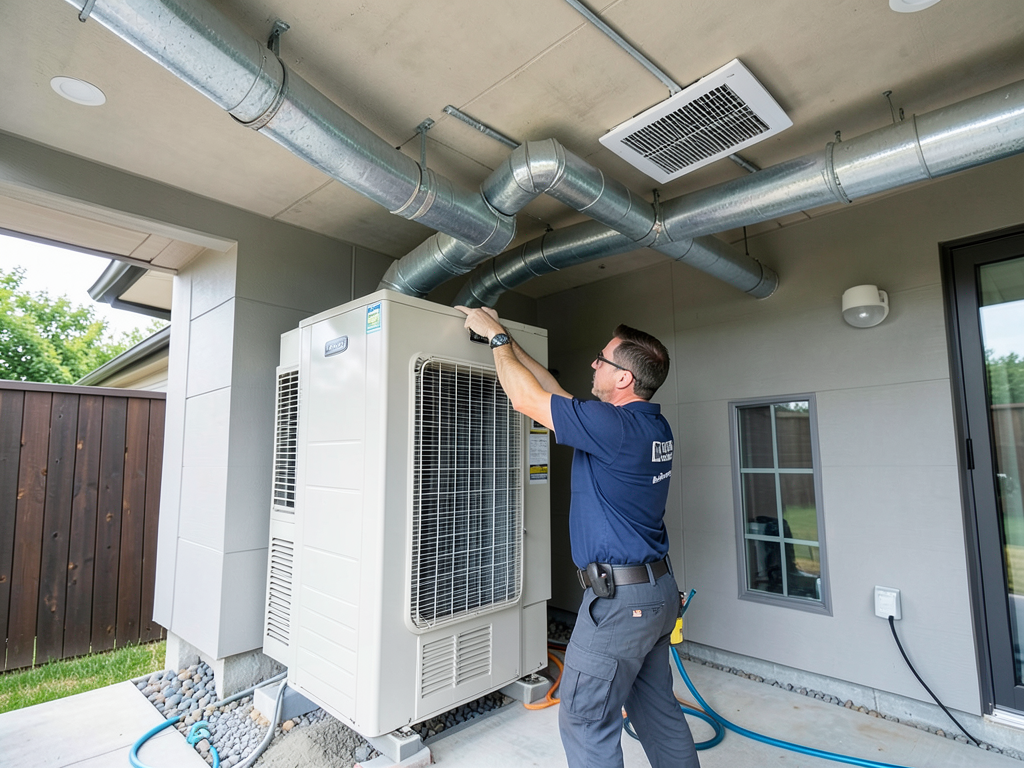
Choosing the right heating and cooling for a backyard DADU in Beacon Hill
Building a backyard DADU in Beacon Hill means navigating Seattle’s strict energy codes and damp climate. The right HVAC system keeps your small cottage comfortable year-round while meeting SDCI permitting requirements. Mini-split heat pumps offer the best balance of efficiency, zoning control, and installation flexibility for most Beacon Hill DADUs. Seattle Department of Construction and Inspections.
Why DADUs Require Specialized HVAC Systems
Standard home HVAC systems don’t work well in detached accessory dwelling units. DADUs typically range from 400 to 1,000 square feet with open floor plans that create unique heating and cooling challenges. The 2024 Seattle Energy Code mandates heat pump technology for most new ADUs, eliminating traditional gas furnaces from consideration. Seattle City Light heat pump rebates.
Beacon Hill’s location on Seattle’s south slope creates specific climate conditions. Marine air from Elliott Bay meets the hillside, producing higher humidity levels than surrounding neighborhoods. This moisture requires HVAC systems with dehumidification capabilities and corrosion-resistant components to prevent premature failure.
Top HVAC Options for Seattle Backyard Cottages: Mini-Splits vs. Forced Air
Ductless mini-split systems dominate the DADU market for good reason. These heat pumps provide both heating and cooling through wall-mounted indoor units connected to an outdoor condenser. A typical 500-square-foot DADU needs a 9,000 to 12,000 BTU system, while larger units up to 1,000 square feet require 18,000 BTU capacity. Why your Ballard home needs professional furnace repair before the first freeze.
Mini-splits offer zoning control that forced-air systems cannot match. Each indoor unit operates independently, allowing different temperature settings for sleeping and living areas. The inverter technology adjusts compressor speed based on demand, reducing energy consumption by up to 30% compared to traditional systems.
Small-duct high-velocity systems provide an alternative when aesthetics matter. These units use 2-inch flexible ducts that fit within 2×4 wall cavities, preserving interior space. However, they require professional installation and cost 20-30% more than mini-splits while offering less zoning flexibility.
| System Type | Installation Cost | Space Required | Energy Efficiency |
|---|---|---|---|
| Ductless Mini-Split | $3,500 – $6,000 | Minimal | SEER2 18-22, HSPF2 10-12 |
| Small-Duct High-Velocity | $5,000 – $8,000 | Wall cavity space | SEER2 16-18, HSPF2 9-10 |
| Packaged Terminal AC/Heat | $2,500 – $4,000 | Wall sleeve | SEER2 13-15, HSPF2 7-8 |
Navigating Seattle Energy Code (SEC) for Your DADU
The Seattle Energy Code requires all new residential construction to meet specific efficiency standards. For DADUs, this means minimum SEER2 ratings of 14 for cooling and HSPF2 ratings of 8.2 for heating. Most mini-split systems easily exceed these requirements with SEER2 ratings of 18-22.
Section 1132.2 of the Seattle Mechanical Code mandates proper condensate disposal for all cooling equipment. In Beacon Hill’s clay-rich soil, this means installing condensate pumps when gravity drainage isn’t feasible. The code also requires outdoor units to maintain specific setbacks from property lines based on decibel ratings.
Seattle City Light offers rebates for heat pump installations that meet or exceed efficiency thresholds. Current rebates range from $500 to $1,500 depending on system size and efficiency ratings. These incentives can offset 10-20% of installation costs for qualifying systems.
Cost Factors for DADU Heating and Cooling in King County
Installation costs vary significantly based on several factors specific to Beacon Hill properties. The neighborhood’s mix of flat lots near Jefferson Park and sloped terrain toward the I-5 corridor affects outdoor unit placement and line set routing. Steep slopes may require additional mounting hardware or longer line sets, increasing costs by $200-500.
Electrical panel capacity presents another cost consideration. Many older Beacon Hill homes have 100-amp service panels that cannot accommodate new HVAC circuits. Upgrading to a 200-amp panel adds $1,500-3,000 to project costs but may be necessary for proper system operation. Weekend HVAC Service.
Labor rates in Seattle’s construction market average $150-200 per hour for HVAC installation. A typical DADU installation requires 8-12 hours of labor, plus 2-4 hours for electrical connections and permitting inspections. Weather delays common to Seattle’s rainy season can extend project timelines by several days.. Read more about Why replacing electric baseboard heaters with a mini split is the best move for First Hill condos.
Our Recent DADU Projects in Seattle Neighborhoods
Peak HVAC Seattle has completed numerous DADU installations across the city, including several in Beacon Hill. One recent project involved a 750-square-foot DADU on South College Street where we installed a 15,000 BTU Mitsubishi mini-split system. The homeowner chose a ceiling cassette unit to maximize wall space for built-in shelving.
In the North Beacon area near Jefferson Park, we completed a multi-zone installation for a 900-square-foot DADU using two indoor units. The system allows separate temperature control for the bedroom and main living area, perfect for rental situations where tenants have different comfort preferences.
Sound transmission concerns led us to select ultra-quiet indoor units for a DADU near the Beacon Hill Library. These units operate at just 19 decibels on low speed, comparable to rustling leaves. The outdoor condenser was mounted on vibration isolators to prevent noise transmission to neighboring properties.. Read more about Designing a quiet home office with the right heating and cooling in Pinehurst.
Permitting and Installation Timeline
SDCI permitting for DADU mechanical systems typically takes 2-4 weeks in Seattle. The process requires submitting detailed mechanical plans showing equipment locations, line set routing, and electrical connections. Beacon Hill’s hillside properties often need additional structural engineering reviews for outdoor unit mounting.
Installation itself usually requires 1-2 days for a straightforward mini-split system. Complex installations involving electrical upgrades or difficult routing may extend to 3-4 days. Weather considerations affect outdoor work, with rain delays common during Seattle’s wet season.
Final inspections must be scheduled after installation completion. Seattle inspectors check for proper refrigerant line insulation, condensate drainage, and seismic strapping of outdoor units. Most inspections pass on the first attempt when working with experienced HVAC contractors familiar with local requirements.. Read more about What the R-410A refrigerant phase out means for Seattle homeowners in 2026.
Maintenance Tips for Seattle’s Damp Climate
Beacon Hill’s high humidity creates specific maintenance needs for DADU HVAC systems. The outdoor condenser coils collect moisture that can lead to corrosion if not addressed. Annual coil cleaning with anti-corrosion treatment extends equipment life by 3-5 years in marine environments. Preventative HVAC maintenance plans that actually save money for Redmond families.
Indoor units require regular filter changes every 2-3 months due to Seattle’s dust and pollen levels. The filters trap airborne particles that would otherwise accumulate on the evaporator coils, reducing efficiency by up to 15%. Some homeowners install washable filters to reduce replacement costs.
Condensate drain lines in Beacon Hill’s DADUs often experience algae growth due to constant moisture exposure. Annual cleaning with vinegar solution prevents clogs that could cause water damage. Some systems benefit from installing condensate pan tablets that inhibit biological growth. Commercial Duct Cleaning.
Multi-zone vs. Single-zone Configurations
Single-zone systems work well for DADUs with open floor plans where one temperature setting suffices. These systems cost less upfront and have fewer components to maintain. However, they cannot address temperature variations between sunny and shaded areas of the DADU.. Read more about Deciding between a tankless or traditional water heater for your Madison Park remodel.
Multi-zone systems provide individual temperature control for different areas. A typical DADU might use one indoor unit for the main living space and another for the bedroom. This configuration costs 30-40% more but offers superior comfort and potential energy savings through targeted heating and cooling.
The choice between single and multi-zone often depends on DADU usage. Rental properties benefit from multi-zone systems that allow tenants to control their environment. Owner-occupied DADUs might find single-zone systems adequate, especially when combined with ceiling fans for air circulation.
Integration with Seattle’s Fresh Air Requirements
Seattle’s energy codes require mechanical ventilation for airtight DADU construction. Heat Recovery Ventilators (HRVs) or Energy Recovery Ventilators (ERVs) exchange stale indoor air with fresh outdoor air while recovering heat energy. These systems integrate with HVAC equipment to maintain indoor air quality without sacrificing efficiency.
ERVs work better than HRVs in Beacon Hill’s climate because they transfer both heat and moisture. This prevents the indoor air from becoming too dry during winter heating season while still providing fresh air exchange. Installation costs for ERVs range from $1,500-3,000 depending on system size.
Proper ventilation integration requires careful duct design to avoid pressure imbalances. Negative pressure can draw moisture into wall cavities, while positive pressure can force conditioned air out through gaps. Professional design ensures balanced airflow that supports both ventilation and HVAC performance.
Sound Considerations for Urban Settings
Beacon Hill’s dense urban environment makes noise control critical for DADU HVAC systems. Outdoor condensers must operate below 65 decibels at the property line to comply with Seattle’s noise ordinances. Most modern mini-split systems achieve 50-60 decibels at full operation, well within acceptable limits.
Indoor unit placement affects both comfort and sound levels. Wall-mounted units provide the best airflow distribution but may interfere with furniture placement. Floor-mounted units offer quieter operation but require dedicated floor space. Ceiling cassette units maximize usable space but cost more and require attic access for service.
Sound barriers around outdoor units can reduce noise transmission to neighboring properties. These barriers must allow adequate airflow for proper condenser operation. Some homeowners install units on rubber isolation pads that reduce vibration transmission through the structure.
Energy Efficiency and Operating Costs
DADU HVAC operating costs in Seattle average $40-80 per month depending on system size and usage patterns. Mini-split heat pumps cost 30-50% less to operate than electric resistance heating or traditional air conditioning. The exact savings depend on local electricity rates and climate conditions. The best air conditioning options for bungalows and cottages around Green Lake.
Seattle City Light’s time-of-use rates create opportunities for cost savings. Running HVAC systems during off-peak hours (10 PM – 6 AM) can reduce electricity costs by 10-15%. Smart thermostats with scheduling capabilities automate this optimization without sacrificing comfort.
SEER2 and HSPF2 ratings directly impact operating costs. Each point increase in efficiency rating reduces annual energy consumption by approximately 5-7%. For a typical DADU, upgrading from a 16 SEER2 to a 20 SEER2 system saves $50-100 annually in electricity costs.
Future-Proofing Your DADU HVAC Investment
Technology advancements continue to improve HVAC efficiency and functionality. Wi-Fi enabled systems allow smartphone control and integration with home automation platforms. Some systems offer energy monitoring that tracks consumption patterns and suggests optimization strategies.
Climate change considerations affect HVAC sizing decisions. Seattle’s summer temperatures have increased by 2-3 degrees over the past decade, making cooling capacity more important than in previous decades. Oversizing systems by 10-15% provides headroom for future warming trends without sacrificing efficiency.
Refrigerant regulations evolve to address environmental concerns. Current systems use R-410A refrigerant, but future regulations may require different formulations. Choosing systems with easily replaceable components simplifies future upgrades as technology and regulations change.
Making the Right Choice for Your DADU
The ideal HVAC system for your Beacon Hill DADU depends on your specific needs, budget, and property characteristics. Mini-split heat pumps offer the best combination of efficiency, flexibility, and cost-effectiveness for most applications. However, unique situations may benefit from alternative approaches.
Consider your DADU’s primary use when selecting a system. Rental properties need reliable, easy-to-use systems with good temperature control. Owner-occupied spaces might prioritize quiet operation or aesthetic integration. Construction timing also matters, as HVAC installation works best during the rough-in phase.
Professional assessment helps avoid costly mistakes. HVAC contractors can evaluate your DADU’s insulation levels, window orientation, and local climate factors to recommend appropriately sized equipment. This analysis prevents both undersized systems that struggle to maintain comfort and oversized units that waste energy.
Ready to install the perfect HVAC system for your Beacon Hill DADU? Call (564) 220-5899 today to schedule your inspection. Our NATE-certified technicians understand Seattle’s unique requirements and can help you navigate the permitting process while ensuring your system meets all local codes and efficiency standards.
Frequently Asked Questions
What size HVAC system does my 500-square-foot DADU need?
A 500-square-foot DADU typically requires a 9,000 to 12,000 BTU mini-split system. Factors like ceiling height, insulation quality, and window area affect the exact sizing. Professional load calculations ensure proper sizing for Seattle’s climate conditions.
How long does DADU HVAC installation take in Seattle?
Standard mini-split installation requires 1-2 days for the equipment and another 1-2 days for electrical connections and inspections. Weather delays common to Seattle can extend timelines, especially for outdoor condenser mounting on hillside properties.
Are heat pumps effective in Seattle’s mild climate?
Heat pumps excel in Seattle’s climate, where winter temperatures rarely drop below freezing. Modern heat pumps provide efficient heating down to 20 degrees Fahrenheit and excellent cooling during summer heat waves. They’re actually more efficient here than in extreme climates.
What permits are required for DADU HVAC installation?
SDCI requires mechanical permits for all new HVAC installations in DADUs. The process includes submitting equipment specifications, location plans, and electrical diagrams. Beacon Hill’s hillside properties may need additional structural reviews for outdoor unit mounting.
How much does DADU HVAC installation cost in Beacon Hill?
Basic mini-split installation ranges from $3,500-6,000, while complex installations with electrical upgrades can reach $8,000-10,000. Factors like property slope, electrical capacity, and system size affect final costs. Most installations qualify for Seattle City Light rebates.
Can I install HVAC myself in my DADU?
Washington State law requires licensed HVAC contractors for system installation. DIY installation voids warranties, may not meet code requirements, and can create safety hazards. Professional installation ensures proper refrigerant handling, electrical connections, and permit compliance.
How often should I service my DADU HVAC system?
Annual professional maintenance keeps systems running efficiently. This includes coil cleaning, refrigerant level checks, and electrical component inspection. Between professional visits, change filters every 2-3 months and clean indoor unit filters monthly during heavy use periods.
You may also find this helpful. How to keep wildfire smoke out of your Mercer Island home using whole house air purifiers.
{
“@context”: “https://schema.org”,
“@type”: “BlogPosting”,
“headline”: “Choosing the right heating and cooling for a backyard DADU in Beacon Hill”,
“description”: “Find the perfect HVAC system for your Beacon Hill DADU. Learn about mini-splits, heat pumps, Seattle Energy Code compliance, and cost factors for small backyard cottages.”,
“wordCount”: 2228,
“datePublished”: “2026-03-06T12:18:00.000Z”,
“dateModified”: “2026-03-06T12:18:00.000Z”,
“inLanguage”: “en-US”,
“mainEntityOfPage”: {
“@type”: “WebPage”,
“@id”: “https://peakhvacseattle.com”
},
“publisher”: {
“@type”: “LocalBusiness”,
“name”: “Peak HVAC Seattle”,
“url”: “https://peakhvacseattle.com”
},
“author”: {
“@type”: “Organization”,
“name”: “Peak HVAC Seattle”,
“url”: “https://peakhvacseattle.com”
},
“image”: {
“@type”: “ImageObject”,
“url”: “https://peakhvacseattle.com/wp-content/uploads/2026/03/choosing-the-right-heating-and-cooling-for-a-backy-1.png”
}
}
{
“@context”: “https://schema.org”,
“@type”: “HVACBusiness”,
“name”: “Peak HVAC Seattle”,
“url”: “https://peakhvacseattle.com”,
“address”: {
“@type”: “PostalAddress”,
“addressLocality”: “Seattle”
},
“areaServed”: {
“@type”: “City”,
“name”: “Seattle”
}
}
{
“@context”: “https://schema.org”,
“@type”: “FAQPage”,
“mainEntity”: [
{
“@type”: “Question”,
“name”: “What size HVAC system does my 500-square-foot DADU need?”,
“acceptedAnswer”: {
“@type”: “Answer”,
“text”: “A 500-square-foot DADU typically requires a 9,000 to 12,000 BTU mini-split system. Factors like ceiling height, insulation quality, and window area affect the exact sizing. Professional load calculations ensure proper sizing for Seattle’s climate conditions.”
}
},
{
“@type”: “Question”,
“name”: “How long does DADU HVAC installation take in Seattle?”,
“acceptedAnswer”: {
“@type”: “Answer”,
“text”: “Standard mini-split installation requires 1-2 days for the equipment and another 1-2 days for electrical connections and inspections. Weather delays common to Seattle can extend timelines, especially for outdoor condenser mounting on hillside properties.”
}
},
{
“@type”: “Question”,
“name”: “Are heat pumps effective in Seattle’s mild climate?”,
“acceptedAnswer”: {
“@type”: “Answer”,
“text”: “Heat pumps excel in Seattle’s climate, where winter temperatures rarely drop below freezing. Modern heat pumps provide efficient heating down to 20 degrees Fahrenheit and excellent cooling during summer heat waves. They’re actually more efficient here than in extreme climates.”
}
},
{
“@type”: “Question”,
“name”: “What permits are required for DADU HVAC installation?”,
“acceptedAnswer”: {
“@type”: “Answer”,
“text”: “SDCI requires mechanical permits for all new HVAC installations in DADUs. The process includes submitting equipment specifications, location plans, and electrical diagrams. Beacon Hill’s hillside properties may need additional structural reviews for outdoor unit mounting.”
}
},
{
“@type”: “Question”,
“name”: “How much does DADU HVAC installation cost in Beacon Hill?”,
“acceptedAnswer”: {
“@type”: “Answer”,
“text”: “Basic mini-split installation ranges from $3,500-6,000, while complex installations with electrical upgrades can reach $8,000-10,000. Factors like property slope, electrical capacity, and system size affect final costs. Most installations qualify for Seattle City Light rebates.”
}
},
{
“@type”: “Question”,
“name”: “Can I install HVAC myself in my DADU?”,
“acceptedAnswer”: {
“@type”: “Answer”,
“text”: “Washington State law requires licensed HVAC contractors for system installation. DIY installation voids warranties, may not meet code requirements, and can create safety hazards. Professional installation ensures proper refrigerant handling, electrical connections, and permit compliance.”
}
},
{
“@type”: “Question”,
“name”: “How often should I service my DADU HVAC system?”,
“acceptedAnswer”: {
“@type”: “Answer”,
“text”: “Annual professional maintenance keeps systems running efficiently. This includes coil cleaning, refrigerant level checks, and electrical component inspection. Between professional visits, change filters every 2-3 months and clean indoor unit filters monthly during heavy use periods.”
}
}
]
}
{
“@context”: “https://schema.org”,
“@type”: “BreadcrumbList”,
“itemListElement”: [
{
“@type”: “ListItem”,
“position”: 1,
“name”: “Home”,
“item”: “https://peakhvacseattle.com”
},
{
“@type”: “ListItem”,
“position”: 2,
“name”: “Blog”,
“item”: “https://peakhvacseattle.com/blog”
},
{
“@type”: “ListItem”,
“position”: 3,
“name”: “Choosing the right heating and cooling for a backyard DADU in Beacon Hill”
}
]
}
{
“@context”: “https://schema.org”,
“@type”: “Service”,
“serviceType”: “HVAC”,
“provider”: {
“@type”: “LocalBusiness”,
“name”: “Peak HVAC Seattle”,
“url”: “https://peakhvacseattle.com”
},
“areaServed”: {
“@type”: “City”,
“name”: “Seattle”
},
“description”: “Find the perfect HVAC system for your Beacon Hill DADU. Learn about mini-splits, heat pumps, Seattle Energy Code compliance, and cost factors for small backyard cottages.”
}