
Why your high ceiling loft in Ballard is so hard to keep warm and how to fix it
Your Ballard loft feels cold no matter how high you set the thermostat. The problem isn’t your heating system—it’s physics. Heat rises and in spaces with 12-foot or higher ceilings, warm air accumulates near the ceiling while you freeze at floor level. This thermal stratification is especially problematic in Ballard’s historic warehouse conversions and modern industrial lofts where exposed ductwork and concrete floors amplify the chill. Keeping your historic Queen Anne home cool with ductless AC options.
Ballard’s unique microclimate makes this worse. The neighborhood sits between Puget Sound and Lake Washington, creating higher humidity levels that make cold air feel even colder. When you combine tall ceilings with Seattle’s damp winters, you get a perfect storm of discomfort. The good news is that targeted solutions exist that work with your loft’s architecture rather than against it. Seattle City Light rebates.
Call (564) 220-5899 today to schedule your inspection and stop wasting energy on heating the ceiling.
The science of heat stratification: why your tall ceilings feel cold
Heat stratification occurs when warm air rises and creates distinct temperature layers in a room. In a standard 8-foot ceiling room, this effect is minimal. But in your Ballard loft with 15-foot ceilings, you might have a 10-degree difference between floor and ceiling. That warm air at the top isn’t doing you any good. Why your Ballard home needs professional furnace repair before the first freeze.
The problem compounds in industrial-style spaces. Exposed brick and concrete have high thermal mass—they absorb heat slowly and release it slowly. Your heating system might be working fine, but the materials in your loft are fighting back. Add in single-pane factory windows common in warehouse conversions and you’ve got a heat loss nightmare.
Ballard’s older industrial buildings often lack proper insulation in exterior walls. Even if your ceiling is insulated, the side walls can be thermal sieves. The Washington State Energy Code requires R-21 insulation in walls for new construction, but many Ballard lofts predate these requirements by decades.
Thermal imaging diagram showing temperature stratification in a high-ceiling room with color gradients from cold floor (blue) to warm ceiling (red).
Best HVAC systems for homes with vaulted ceilings
Standard forced-air systems struggle in tall spaces because they’re designed for cubic footage, not cubic volume. A 1,000 square foot loft with 15-foot ceilings has 50% more air to heat than the same footprint with standard ceilings. You need equipment that can handle this extra load.
Ductless mini-split heat pumps excel in high-ceiling applications. They provide both heating and cooling, operate at whisper-quiet levels, and can be mounted high on walls where they push warm air downward. The inverter technology adjusts output based on demand, preventing the temperature swings common with traditional systems.. Read more about Designing a silent cooling system for your Ballard home recording studio or podcast room.
For ultimate comfort, consider a zoned HVAC system. This allows you to heat occupied areas while maintaining cooler temperatures in unused spaces. Smart thermostats with remote sensors can detect cold spots and adjust output accordingly. Some models even learn your loft’s unique thermal patterns over time.
Zoned systems require careful ductwork design. Undersized ducts create pressure imbalances that reduce efficiency. Oversized ducts waste energy. A Manual J calculation—the industry standard for HVAC sizing—must account for your loft’s cubic footage, not just square footage.

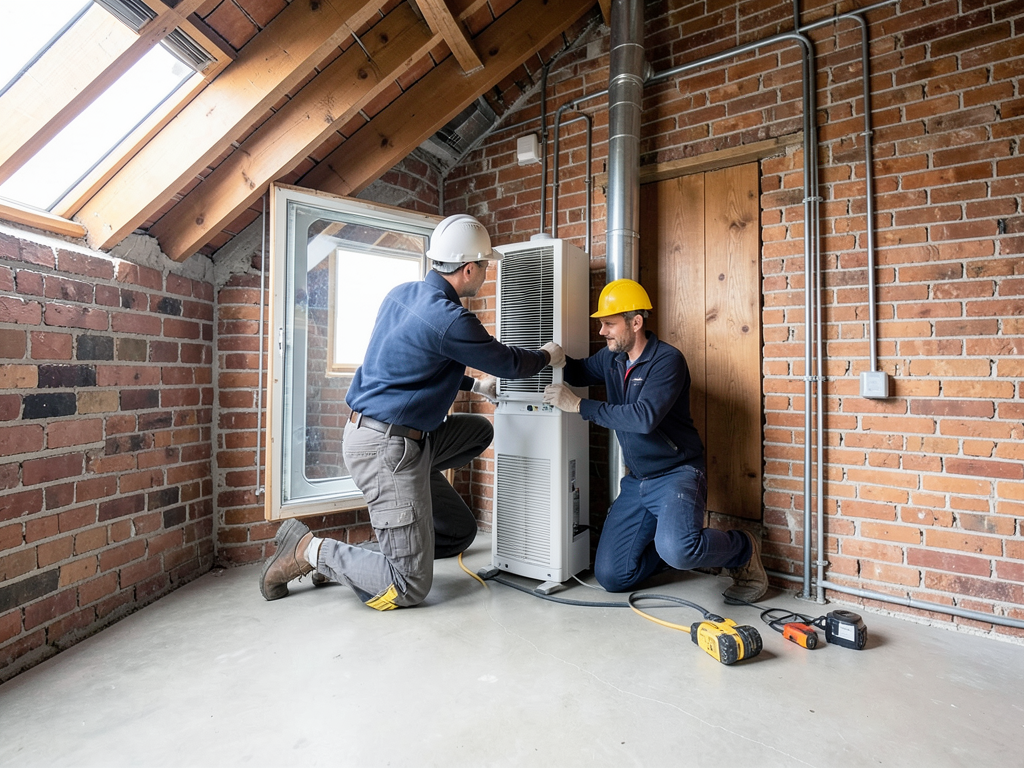
Technician installing a high-wall mounted ductless mini-split unit in a Ballard loft, showing proper mounting height and condensate line routing.
Strategic solutions: beyond the furnace
Destratification fans are game-changers for high-ceiling spaces. These ceiling-mounted units gently push warm air down without creating drafts. They operate at low RPMs, using minimal electricity while dramatically improving comfort. In industrial applications, they can reduce heating costs by up to 30%.
Radiant floor heating works exceptionally well in lofts with concrete floors. Unlike forced air, radiant heat warms objects and people directly. No drafts, no noise, and no lost heat rising to the ceiling. Modern hydronic systems are highly efficient and can be zoned for different areas of your loft.
Smart vent systems automatically open and close registers based on room temperature and occupancy. They prevent heating unused bedrooms while ensuring your living area stays warm. Some systems integrate with your smartphone, allowing you to adjust settings remotely when you’re running late from work.
Window treatments matter more than you think. Heavy thermal curtains can reduce heat loss through windows by up to 25%. Cellular shades add an extra insulation layer. In Ballard’s older buildings, even interior storm windows can make a noticeable difference.
The role of destratification fans
Destratification fans work by creating gentle air circulation that breaks up temperature layers. Unlike ceiling fans that create noticeable breezes, these units move air so slowly you barely feel it. The key is consistency—they run continuously at low speed rather than cycling on and off.
Installation requires strategic placement. Fans should be mounted at least 8 feet high to avoid head clearance issues. In lofts with exposed ductwork, they can be integrated into the ceiling grid for a clean look. Some models include built-in lighting, eliminating the need for separate fixtures.
The energy savings are real. By redistributing warm air that would otherwise collect at the ceiling, you can lower your thermostat by 2-3 degrees without sacrificing comfort. In Ballard’s climate, that translates to significant savings over a heating season.
Ductwork modifications and vent placement
Traditional HVAC design places supply vents near the ceiling and returns near the floor. In high-ceiling spaces, this actually works against you—it’s literally moving warm air from where you want it to where you don’t. Reverse this configuration for better results.
Supply vents should be low on walls or even in the floor if possible. This pushes warm air upward through the occupied zone. Return vents go high on walls to capture rising warm air and send it back to the furnace for reheating. This creates a beneficial circulation pattern. Who to call for 24 hour emergency furnace repair in West Seattle.
Duct sizing becomes critical in tall spaces. Standard calculations underestimate the static pressure required to move air through increased vertical distance. Your system might be sized correctly for square footage but undersized for the actual cubic volume. A professional load calculation catches these issues.
Consider linear diffusers instead of standard round vents. They provide wider air distribution patterns that reduce hot and cold spots. In open loft layouts, they can be integrated into architectural features for a seamless look.
Energy efficiency and Seattle utility rebates
Seattle City Light and Puget Sound Energy offer substantial rebates for high-efficiency HVAC upgrades. Current programs provide up to $1,500 for heat pump conversions and $500 for smart thermostat installations. These rebates change annually, so timing your upgrade can save significant money.
Energy Star certified equipment qualifies for the best rebates. Look for units with a Heating Seasonal Performance Factor (HSPF) of 8.2 or higher for heat pumps. The Seasonal Energy Efficiency Ratio (SEER) matters for cooling, but in Seattle’s climate, heating efficiency is more important.
Proper insulation is your first defense against heat loss. The Seattle Energy Code requires R-38 in ceilings for new construction. If your loft has less than this, adding insulation is often more cost-effective than upgrading your heating system. Air sealing comes first—even the best insulation can’t stop air leaks.
Smart thermostats with occupancy sensors prevent heating empty spaces. Some models integrate with your phone’s location services to automatically adjust temperatures when you’re away. The energy savings typically pay for the thermostat within two heating seasons. Weekend HVAC Service.
Case study: heating a loft in downtown Seattle
A recent project in Ballard’s historic district involved a 1,200 square foot loft with 16-foot ceilings. The original radiant heating system couldn’t maintain comfortable temperatures, especially near the massive factory windows. The solution combined several approaches for maximum effectiveness.. Read more about What every University District renter needs to know about Seattle heating laws and landlord responsibilities.
First, we installed a high-efficiency ductless mini-split system with a 12,000 BTU capacity—larger than standard calculations suggested because of the cubic volume. Next, we added two destratification fans strategically placed to circulate air throughout the open space. The fans cost $800 but reduced heating bills by 22% in the first year.
We also addressed the windows with interior storm panels that added an extra insulation layer without altering the historic exterior. Finally, we installed smart vents that automatically adjusted airflow based on room temperature sensors. The total investment was $8,200, but the owner reports the space is now comfortable even on the coldest Seattle nights.
The key takeaway: no single solution works best. Combining targeted heating, air circulation, and insulation improvements creates a system greater than the sum of its parts.
Before and after thermal images of a Ballard loft showing improved heat distribution after installing destratification fans and a zoned HVAC system.
Frequently Asked Questions
How much more does it cost to heat a high-ceiling space?
High-ceiling spaces typically cost 30-50% more to heat than standard-ceiling spaces of the same square footage. The exact increase depends on your ceiling height, insulation levels, and local climate. In Ballard’s damp climate, the perceived temperature difference makes it feel even colder.
Can I just use space heaters instead of upgrading my HVAC?
Space heaters can provide supplemental warmth but aren’t cost-effective for whole-space heating. They typically cost 2-3 times more per BTU than central heating systems. Plus, they create fire hazards and electrical circuit overloads in older buildings common in Ballard.
What’s the most energy-efficient solution for my loft?
A combination approach works best: a high-efficiency heat pump for primary heating, destratification fans for air circulation, and smart thermostats for precise control. Add insulation and air sealing for maximum efficiency. This integrated solution typically cuts energy costs by 30-40% compared to standard systems.
How long does a high-ceiling HVAC installation take?
Most installations take 1-2 days for standard replacements. Complex zoning systems or extensive ductwork modifications might require 3-5 days. We work around your schedule and can often complete noisy work while you’re at work to minimize disruption.
Are there any Ballard-specific building code requirements?
Ballard falls under Seattle’s building codes, which require permits for most HVAC modifications. The Seattle Energy Code mandates specific insulation levels and efficiency standards. Historic district properties may have additional restrictions on exterior modifications. We handle all permitting and ensure code compliance.
Stop suffering in your cold Ballard loft. The physics of heat stratification isn’t going to change, but your comfort can. Modern HVAC solutions specifically designed for high-ceiling spaces can transform your living experience while reducing energy costs.
Don’t wait until the next cold snap leaves you shivering. Call (564) 220-5899 today to schedule your consultation. We’ll assess your specific situation, explain your options in plain language, and provide a clear path to year-round comfort. Your loft should be your sanctuary, not a constant battle against the cold. The best air conditioning options for bungalows and cottages around Green Lake.
Pick up the phone and call (564) 220-5899 before the next storm hits. Your comfort can’t wait, and neither should you. For more information, visit Energy.gov heat pump guide.
{
“@context”: “https://schema.org”,
“@type”: “BlogPosting”,
“headline”: “Why your high ceiling loft in Ballard is so hard to keep warm and how to fix it”,
“description”: “High ceilings in Ballard lofts create heat stratification problems. Learn why your space feels cold and discover targeted HVAC solutions from Seattle’s heating experts.”,
“wordCount”: 1844,
“datePublished”: “2026-05-30T08:15:00.000Z”,
“dateModified”: “2026-05-30T08:15:00.000Z”,
“inLanguage”: “en-US”,
“mainEntityOfPage”: {
“@type”: “WebPage”,
“@id”: “https://peakhvacseattle.com”
},
“publisher”: {
“@type”: “LocalBusiness”,
“name”: “Peak HVAC Seattle”,
“url”: “https://peakhvacseattle.com”
},
“author”: {
“@type”: “Organization”,
“name”: “Peak HVAC Seattle”,
“url”: “https://peakhvacseattle.com”
},
“image”: {
“@type”: “ImageObject”,
“url”: “https://peakhvacseattle.com/wp-content/uploads/2026/03/why-your-high-ceiling-loft-in-ballard-is-so-hard-t-1.png”
}
}
{
“@context”: “https://schema.org”,
“@type”: “HVACBusiness”,
“name”: “Peak HVAC Seattle”,
“url”: “https://peakhvacseattle.com”,
“address”: {
“@type”: “PostalAddress”,
“addressLocality”: “Seattle”
},
“areaServed”: {
“@type”: “City”,
“name”: “Seattle”
}
}
{
“@context”: “https://schema.org”,
“@type”: “FAQPage”,
“mainEntity”: [
{
“@type”: “Question”,
“name”: “How much more does it cost to heat a high-ceiling space?”,
“acceptedAnswer”: {
“@type”: “Answer”,
“text”: “High-ceiling spaces typically cost 30-50% more to heat than standard-ceiling spaces of the same square footage. The exact increase depends on your ceiling height, insulation levels, and local climate. In Ballard’s damp climate, the perceived temperature difference makes it feel even colder.”
}
},
{
“@type”: “Question”,
“name”: “Can I just use space heaters instead of upgrading my HVAC?”,
“acceptedAnswer”: {
“@type”: “Answer”,
“text”: “Space heaters can provide supplemental warmth but aren’t cost-effective for whole-space heating. They typically cost 2-3 times more per BTU than central heating systems. Plus, they create fire hazards and electrical circuit overloads in older buildings common in Ballard.”
}
},
{
“@type”: “Question”,
“name”: “What’s the most energy-efficient solution for my loft?”,
“acceptedAnswer”: {
“@type”: “Answer”,
“text”: “A combination approach works best: a high-efficiency heat pump for primary heating, destratification fans for air circulation, and smart thermostats for precise control. Add insulation and air sealing for maximum efficiency. This integrated solution typically cuts energy costs by 30-40% compared to standard systems.”
}
},
{
“@type”: “Question”,
“name”: “How long does a high-ceiling HVAC installation take?”,
“acceptedAnswer”: {
“@type”: “Answer”,
“text”: “Most installations take 1-2 days for standard replacements. Complex zoning systems or extensive ductwork modifications might require 3-5 days. We work around your schedule and can often complete noisy work while you’re at work to minimize disruption.”
}
},
{
“@type”: “Question”,
“name”: “Are there any Ballard-specific building code requirements?”,
“acceptedAnswer”: {
“@type”: “Answer”,
“text”: “Ballard falls under Seattle’s building codes, which require permits for most HVAC modifications. The Seattle Energy Code mandates specific insulation levels and efficiency standards. Historic district properties may have additional restrictions on exterior modifications. We handle all permitting and ensure code compliance.”
}
}
]
}
{
“@context”: “https://schema.org”,
“@type”: “BreadcrumbList”,
“itemListElement”: [
{
“@type”: “ListItem”,
“position”: 1,
“name”: “Home”,
“item”: “https://peakhvacseattle.com”
},
{
“@type”: “ListItem”,
“position”: 2,
“name”: “Blog”,
“item”: “https://peakhvacseattle.com/blog”
},
{
“@type”: “ListItem”,
“position”: 3,
“name”: “Why your high ceiling loft in Ballard is so hard to keep warm and how to fix it”
}
]
}
{
“@context”: “https://schema.org”,
“@type”: “Service”,
“serviceType”: “HVAC”,
“provider”: {
“@type”: “LocalBusiness”,
“name”: “Peak HVAC Seattle”,
“url”: “https://peakhvacseattle.com”
},
“areaServed”: {
“@type”: “City”,
“name”: “Seattle”
},
“description”: “High ceilings in Ballard lofts create heat stratification problems. Learn why your space feels cold and discover targeted HVAC solutions from Seattle’s heating experts.”
}