
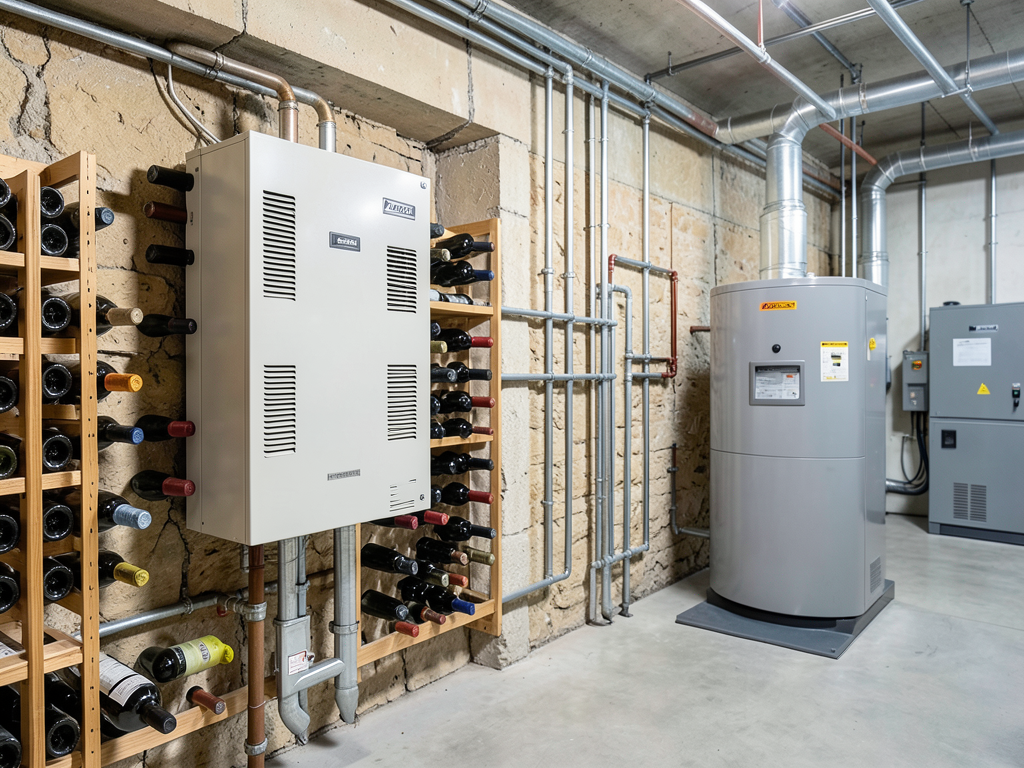
How to design a climate-controlled wine cellar for your Medina estate
Designing a wine cellar for your Medina estate requires precision engineering and climate control expertise that goes far beyond standard HVAC systems. The Pacific Northwest’s marine climate creates unique challenges for wine preservation, with Medina’s specific microclimate experiencing higher humidity levels and temperature fluctuations than many other Seattle suburbs. Your wine collection represents a significant investment that demands specialized cooling technology, proper vapor barriers, and precise humidity regulation to maintain optimal aging conditions. Wine Cellar Cooling Basics.
Medina homeowners understand that wine storage isn’t simply about keeping bottles cold. The science of wine preservation requires maintaining temperatures between 55-58°F with relative humidity levels of 50-70%, conditions that standard residential cooling systems cannot achieve. The combination of Medina’s proximity to Lake Washington, its elevation changes, and the region’s seasonal weather patterns creates a complex environment where even minor temperature swings can compromise your wine’s quality and value. Keeping your historic Queen Anne home cool with ductless AC options.
Understanding Medina’s unique climate challenges for wine storage
The Eastside’s microclimate presents specific challenges that generic wine cellar designs fail to address. Medina experiences higher humidity levels than downtown Seattle due to its location along the Lake Washington shoreline and its position in the rain shadow of the Cascade foothills. During summer months, the area can see temperature variations of up to 15 degrees between day and night, while winter brings consistent moisture that can penetrate poorly designed cellar envelopes.
Local building patterns in Medina often feature modern construction with large glass facades and open floor plans that create thermal bridging issues. These architectural elements, combined with the area’s glacial till soil composition that affects basement temperature stability, require specialized cooling solutions that account for both the external climate and the internal building envelope performance.. Read more about Designing a silent cooling system for your Ballard home recording studio or podcast room.
Specialized cooling systems for Medina wine cellars
Wine cellar cooling systems differ fundamentally from standard air conditioning units. While residential AC systems prioritize air movement and cooling capacity, wine cellar units focus on maintaining stable temperatures with minimal air circulation to prevent bottle agitation and label damage. The cooling load calculations for wine cellars must account for thermal mass, insulation quality, and the specific heat generated by lighting and equipment. Insulation Guidelines.
Self-contained through-the-wall units offer the most cost-effective solution for smaller collections under 500 bottles. These systems mount directly through an exterior wall and provide reliable temperature control without requiring extensive ductwork. However, they produce more vibration than split systems and may not suit luxury installations where noise reduction is critical.
Split system wine coolers separate the condensing unit from the evaporator, allowing for quieter operation and more flexible installation. The condensing unit can be placed up to 50 feet away from the cellar, making these ideal for Medina estates where the wine room might be located in a finished basement or converted space. Split systems also provide better temperature stability and lower vibration levels than self-contained units.
Water-cooled systems represent the premium solution for large collections or architecturally sensitive installations. These units use water instead of air to dissipate heat, eliminating the need for exterior wall penetrations and reducing noise levels to near-silent operation. Water-cooled systems excel in Medina’s climate where summer temperatures can exceed 85°F, providing consistent cooling even during heat dome events that have become more frequent in recent years.
Critical wine preservation factors: temperature and humidity control
Temperature stability represents the single most important factor in wine preservation. The ideal range of 55-58°F isn’t arbitrary—it matches the temperature of natural wine caves in Europe where wine has been successfully aged for centuries. This range slows chemical reactions that cause wine to age prematurely while preventing the expansion and contraction of liquid that can push corks out or allow air to enter bottles.
Humidity control proves equally critical but often misunderstood. Relative humidity between 50-70% prevents corks from drying out while avoiding mold growth on labels and walls. Many Medina homeowners discover that their existing basements hover around 60-65% humidity naturally, but this level fluctuates dramatically with seasonal changes and household activities. A dedicated wine cellar cooling system must include integrated humidity control to maintain consistent levels year-round.
The relationship between temperature and humidity creates a dynamic that requires sophisticated control systems. As temperature drops, relative humidity increases if moisture content remains constant. This means a system set to maintain 55°F might see humidity levels spike to 75% without active dehumidification. Premium wine cellar units include both heating and cooling capabilities, allowing them to maintain precise temperature and humidity regardless of external conditions.
The importance of vapor barriers and insulation for wine cellars
Standard residential construction methods fail completely when applied to wine cellars. The vapor barrier requirements for wine storage exceed those of typical home insulation projects because the cellar must maintain a different climate than the surrounding structure. Without proper vapor barriers, moisture migrates through walls and ceilings, creating condensation that leads to mold growth and temperature instability.
Wine cellar vapor barriers must achieve a perm rating below 0.1, significantly more restrictive than standard building vapor barriers. The barrier installation requires continuous coverage with sealed seams and penetrations, extending from the floor to the ceiling and around all mechanical penetrations. In Medina’s climate, where winter humidity can reach 85% and summer temperatures exceed 90°F, inadequate vapor barriers allow moisture migration that compromises cooling efficiency and wine quality.
Insulation requirements for wine cellars exceed standard building codes. While Washington State Energy Code requires R-21 walls for basements, wine cellars need R-30 to R-38 insulation depending on the cellar’s location and size. The insulation must be closed-cell foam or foil-faced polyisocyanurate to prevent moisture absorption. Many Medina estates feature wine cellars in converted spaces where existing walls cannot accommodate the required insulation depth, necessitating interior wall build-outs that reduce usable space but ensure proper climate control.
Wine Guardian and WhisperKOOL: premium cooling solutions for Medina estates
Wine Guardian systems dominate the premium wine cellar market with their commercial-grade components and precise temperature control. These units feature digital scroll compressors that maintain temperature within ±1°F, significantly better than standard residential HVAC systems. Wine Guardian’s split system configurations prove particularly popular in Medina’s luxury homes, where the condensing unit can be concealed in mechanical rooms while the evaporator remains hidden within the cellar’s design.
WhisperKOOL units offer excellent value for mid-range installations while maintaining the precision required for serious wine collections. Their self-contained units provide reliable cooling for collections up to 1,500 bottles, while their split systems accommodate larger installations. WhisperKOOL’s unique selling point is their low-vibration compressor technology, which reduces the agitation that can disturb wine sediment and affect aging.
Both brands offer units specifically designed for the Pacific Northwest’s climate challenges. Their systems include enhanced dehumidification capabilities to handle Medina’s high humidity levels and heating elements for temperature maintenance during cold snaps. The units also feature alarm systems that alert homeowners to temperature or humidity deviations, providing peace of mind for valuable collections. Preventative HVAC maintenance plans that actually save money for Redmond families.
Custom wine cellar construction requirements for Medina homes
Building a wine cellar in a Medina estate requires coordination between HVAC specialists, architects, and builders from the project’s inception. The cellar’s location significantly impacts both construction costs and long-term performance. North-facing basement locations provide natural temperature stability, while above-ground installations require additional insulation and vapor barrier measures.
Floor construction proves critical for wine cellar performance. Concrete slabs require vapor barrier installation beneath the slab, while wood-framed floors need specialized moisture barriers and insulation. Many Medina homes feature radiant floor heating that must be completely isolated from the wine cellar to prevent temperature interference. The floor surface should be non-porous and easy to clean, with tile or sealed concrete being the most popular choices.
Ceiling considerations often get overlooked in wine cellar design. The ceiling must support the weight of bottles and racking while maintaining the vapor barrier continuity. In multi-story Medina estates, the cellar ceiling often doubles as the floor for the level above, requiring structural reinforcement and careful coordination with the home’s architectural design. Lighting choices also impact temperature control, with LED fixtures preferred over incandescent or halogen options that generate heat. The best air conditioning options for bungalows and cottages around Green Lake.
Maintenance and emergency repair services for wine cooling units
Wine cellar cooling systems require specialized maintenance that differs significantly from standard HVAC service. The precision components in wine cooling units need annual calibration to maintain their accuracy, while the condensate management systems require regular cleaning to prevent mold growth. Medina’s high humidity levels mean condensate lines can become clogged more frequently than in drier climates, potentially causing system failures. Weekend HVAC Service.
Emergency repair services for wine cooling units must prioritize rapid response due to the critical nature of temperature maintenance. A wine cellar without cooling can reach unsafe temperatures within 24-48 hours, potentially ruining thousands of dollars in wine. Peak HVAC Seattle offers 24/7 emergency service specifically for wine cellar systems, with technicians trained in the unique requirements of wine preservation cooling. Who to call for 24 hour emergency furnace repair in West Seattle.
Preventative maintenance programs for wine cellars include quarterly filter changes, annual refrigerant level checks, and bi-annual system calibration. These programs help identify potential issues before they cause system failures, protecting your investment in both the cooling equipment and your wine collection. The maintenance schedule also includes checking door seals, inspecting vapor barriers for damage, and testing alarm systems to ensure they function correctly.
Medina service area coverage and local expertise
Peak HVAC Seattle serves the entire Medina area, including the 98039 zip code and surrounding Eastside communities. Our technicians understand the specific challenges of Medina’s luxury homes, from the architectural requirements of waterfront properties to the soil conditions that affect basement construction. We’ve completed wine cellar installations in Medina’s most prestigious neighborhoods, working with both modern estates and historic properties that require special consideration.
Our local expertise extends beyond simple installation. We understand how Medina’s proximity to Lake Washington affects humidity levels, how the area’s elevation changes impact temperature stability, and how local building codes influence cellar construction. This knowledge allows us to design systems that perform optimally in Medina’s specific conditions rather than applying generic solutions that might work in other regions.
Medina’s wine cellar projects often involve coordination with other luxury home systems, including whole-house dehumidification, smart home integration, and backup power systems. Our technicians work seamlessly with electricians, builders, and homeowners to ensure the wine cellar integrates perfectly with the home’s existing infrastructure while maintaining the precise climate control required for wine preservation.
Frequently Asked Questions
How much does it cost to install a wine cellar cooling system in Medina?
Wine cellar cooling system costs in Medina typically range from $3,500 to $15,000 depending on the system size, type, and installation complexity. Self-contained units for smaller collections start around $3,500, while premium split systems for large collections can exceed $12,000. Additional costs include vapor barrier installation, insulation upgrades, and electrical work, which can add $2,000 to $5,000 to the total project cost.
How long does wine cellar HVAC installation take?
Wine cellar HVAC installation typically requires 2-4 days for the mechanical work, plus additional time for any necessary construction modifications. Self-contained units can often be installed in a single day, while split systems require more time for refrigerant line installation and system commissioning. The entire project, including any required construction work, usually takes 1-2 weeks from start to finish.
What size wine cellar cooling system do I need?
Wine cellar cooling system sizing depends on the cellar’s volume, insulation quality, and desired temperature differential from the surrounding space. A general rule is 10-15 BTU per cubic foot of cellar space, but this varies significantly based on construction factors. Professional heat load calculations should be performed to determine the exact system size needed for your specific installation.
Can I use my existing HVAC system for wine storage?
Standard residential HVAC systems cannot provide the precise temperature and humidity control required for wine storage. While they might maintain a general temperature range, they lack the accuracy, humidity control, and vibration reduction that wine cellar units provide. Using your existing HVAC system risks temperature fluctuations that can damage your wine collection.
How often should wine cellar cooling systems be serviced?
Wine cellar cooling systems should receive professional maintenance annually, with quarterly filter changes and monthly visual inspections recommended. The high humidity levels in Medina can cause condensate lines to clog more frequently, potentially requiring more frequent service visits. Regular maintenance ensures optimal performance and prevents unexpected system failures that could damage your wine collection.
- Assess your collection and space requirements
Determine the number of bottles you plan to store and measure the available space. Consider future collection growth and ensure adequate room for racking, aisles, and climate control equipment.
- Perform heat load calculations
Calculate the thermal load based on cellar volume, insulation quality, and desired temperature differential. This determines the cooling capacity needed for your specific installation.
- Design the vapor barrier system
Plan continuous vapor barrier installation with sealed seams and penetrations. Choose appropriate materials based on your cellar’s location and local climate conditions.
- Select the appropriate cooling system
Choose between self-contained, split, or water-cooled systems based on your collection size, budget, and installation requirements. Consider noise levels and vibration for luxury installations.
- Install proper insulation
Install insulation exceeding standard building codes, typically R-30 to R-38 for wine cellars. Use closed-cell foam or foil-faced polyisocyanurate to prevent moisture absorption.
- Commission and calibrate the system
Test the installed system thoroughly, calibrate temperature and humidity controls, and verify all alarm systems function correctly before loading your wine collection.
Protect your wine investment with professional wine cellar HVAC design
Your wine collection represents both a financial investment and a passion that deserves professional climate control solutions. The unique challenges of Medina’s Eastside microclimate, combined with the precision requirements of wine preservation, make specialized wine cellar HVAC design essential for protecting your investment. From vapor barrier installation to system calibration, every aspect of wine cellar construction requires expertise that goes far beyond standard HVAC installation.
Don’t risk your valuable wine collection to amateur installations or generic cooling solutions. The cost of proper wine cellar design and installation pales in comparison to the potential loss of rare wines or the disappointment of opening bottles that have been compromised by improper storage conditions. Whether you’re building a new wine cellar or upgrading an existing space, professional design ensures your collection ages perfectly while maintaining the value and quality you expect.
Ready to protect your wine collection with professional wine cellar HVAC design? Call (564) 220-5899 today to schedule your consultation. Our Medina wine cellar specialists will assess your space, design a custom cooling solution, and ensure your collection receives the precise climate control it deserves. Don’t wait until temperature fluctuations damage your investment—call (564) 220-5899 now and let our experts create the perfect environment for your wine to mature beautifully for years to come.
{
“@context”: “https://schema.org”,
“@type”: “BlogPosting”,
“headline”: “How to design a climate-controlled wine cellar for your Medina estate”,
“description”: “Learn expert wine cellar HVAC design for Medina estates. Discover humidity control, vapor barriers, and luxury cooling systems to protect your wine collection.”,
“wordCount”: 2505,
“datePublished”: “2026-05-13T07:04:00.000Z”,
“dateModified”: “2026-05-13T07:04:00.000Z”,
“inLanguage”: “en-US”,
“mainEntityOfPage”: {
“@type”: “WebPage”,
“@id”: “https://peakhvacseattle.com”
},
“publisher”: {
“@type”: “LocalBusiness”,
“name”: “Peak HVAC Seattle”,
“url”: “https://peakhvacseattle.com”
},
“author”: {
“@type”: “Organization”,
“name”: “Peak HVAC Seattle”,
“url”: “https://peakhvacseattle.com”
},
“image”: {
“@type”: “ImageObject”,
“url”: “https://peakhvacseattle.com/wp-content/uploads/2026/03/how-to-design-a-climate-controlled-wine-cellar-for-1.png”
}
}
{
“@context”: “https://schema.org”,
“@type”: “HVACBusiness”,
“name”: “Peak HVAC Seattle”,
“url”: “https://peakhvacseattle.com”,
“address”: {
“@type”: “PostalAddress”,
“addressLocality”: “Seattle”
},
“areaServed”: {
“@type”: “City”,
“name”: “Seattle”
}
}
{
“@context”: “https://schema.org”,
“@type”: “FAQPage”,
“mainEntity”: [
{
“@type”: “Question”,
“name”: “How much does it cost to install a wine cellar cooling system in Medina?”,
“acceptedAnswer”: {
“@type”: “Answer”,
“text”: “Wine cellar cooling system costs in Medina typically range from $3,500 to $15,000 depending on the system size, type, and installation complexity. Self-contained units for smaller collections start around $3,500, while premium split systems for large collections can exceed $12,000. Additional costs include vapor barrier installation, insulation upgrades, and electrical work, which can add $2,000 to $5,000 to the total project cost.”
}
},
{
“@type”: “Question”,
“name”: “How long does wine cellar HVAC installation take?”,
“acceptedAnswer”: {
“@type”: “Answer”,
“text”: “Wine cellar HVAC installation typically requires 2-4 days for the mechanical work, plus additional time for any necessary construction modifications. Self-contained units can often be installed in a single day, while split systems require more time for refrigerant line installation and system commissioning. The entire project, including any required construction work, usually takes 1-2 weeks from start to finish.”
}
},
{
“@type”: “Question”,
“name”: “What size wine cellar cooling system do I need?”,
“acceptedAnswer”: {
“@type”: “Answer”,
“text”: “Wine cellar cooling system sizing depends on the cellar’s volume, insulation quality, and desired temperature differential from the surrounding space. A general rule is 10-15 BTU per cubic foot of cellar space, but this varies significantly based on construction factors. Professional heat load calculations should be performed to determine the exact system size needed for your specific installation.”
}
},
{
“@type”: “Question”,
“name”: “Can I use my existing HVAC system for wine storage?”,
“acceptedAnswer”: {
“@type”: “Answer”,
“text”: “Standard residential HVAC systems cannot provide the precise temperature and humidity control required for wine storage. While they might maintain a general temperature range, they lack the accuracy, humidity control, and vibration reduction that wine cellar units provide. Using your existing HVAC system risks temperature fluctuations that can damage your wine collection.”
}
},
{
“@type”: “Question”,
“name”: “How often should wine cellar cooling systems be serviced?”,
“acceptedAnswer”: {
“@type”: “Answer”,
“text”: “Wine cellar cooling systems should receive professional maintenance annually, with quarterly filter changes and monthly visual inspections recommended. The high humidity levels in Medina can cause condensate lines to clog more frequently, potentially requiring more frequent service visits. Regular maintenance ensures optimal performance and prevents unexpected system failures that could damage your wine collection.”
}
}
]
}
{
“@context”: “https://schema.org”,
“@type”: “HowTo”,
“name”: “How to design a climate-controlled wine cellar for your Medina estate”,
“step”: [
{
“@type”: “HowToStep”,
“position”: 1,
“name”: “Assess your collection and space requirements”,
“text”: “Determine the number of bottles you plan to store and measure the available space. Consider future collection growth and ensure adequate room for racking, aisles, and climate control equipment.”
},
{
“@type”: “HowToStep”,
“position”: 2,
“name”: “Perform heat load calculations”,
“text”: “Calculate the thermal load based on cellar volume, insulation quality, and desired temperature differential. This determines the cooling capacity needed for your specific installation.”
},
{
“@type”: “HowToStep”,
“position”: 3,
“name”: “Design the vapor barrier system”,
“text”: “Plan continuous vapor barrier installation with sealed seams and penetrations. Choose appropriate materials based on your cellar’s location and local climate conditions.”
},
{
“@type”: “HowToStep”,
“position”: 4,
“name”: “Select the appropriate cooling system”,
“text”: “Choose between self-contained, split, or water-cooled systems based on your collection size, budget, and installation requirements. Consider noise levels and vibration for luxury installations.”
},
{
“@type”: “HowToStep”,
“position”: 5,
“name”: “Install proper insulation”,
“text”: “Install insulation exceeding standard building codes, typically R-30 to R-38 for wine cellars. Use closed-cell foam or foil-faced polyisocyanurate to prevent moisture absorption.”
},
{
“@type”: “HowToStep”,
“position”: 6,
“name”: “Commission and calibrate the system”,
“text”: “Test the installed system thoroughly, calibrate temperature and humidity controls, and verify all alarm systems function correctly before loading your wine collection.”
}
],
“image”: “https://peakhvacseattle.com/wp-content/uploads/2026/03/how-to-design-a-climate-controlled-wine-cellar-for-1.png”
}
{
“@context”: “https://schema.org”,
“@type”: “BreadcrumbList”,
“itemListElement”: [
{
“@type”: “ListItem”,
“position”: 1,
“name”: “Home”,
“item”: “https://peakhvacseattle.com”
},
{
“@type”: “ListItem”,
“position”: 2,
“name”: “Blog”,
“item”: “https://peakhvacseattle.com/blog”
},
{
“@type”: “ListItem”,
“position”: 3,
“name”: “How to design a climate-controlled wine cellar for your Medina estate”
}
]
}
{
“@context”: “https://schema.org”,
“@type”: “Service”,
“serviceType”: “HVAC”,
“provider”: {
“@type”: “LocalBusiness”,
“name”: “Peak HVAC Seattle”,
“url”: “https://peakhvacseattle.com”
},
“areaServed”: {
“@type”: “City”,
“name”: “Seattle”
},
“description”: “Learn expert wine cellar HVAC design for Medina estates. Discover humidity control, vapor barriers, and luxury cooling systems to protect your wine collection.”
}