
Fresh air without the chill (How HRV and ERV systems work for new Bothell builds)
Bothell homeowners building new homes face a common challenge: how to bring fresh outdoor air inside without watching your heating bill skyrocket. The damp Pacific Northwest climate makes this even trickier. Heat Recovery Ventilators (HRVs) and Energy Recovery Ventilators (ERVs) solve this by capturing heat from outgoing stale air and transferring it to incoming fresh air. This means you get fresh air without the chill and without wasting energy.
In Bothell’s climate, where winter humidity often hovers above 80%, ERVs provide an extra benefit. They transfer both heat and moisture between air streams, helping maintain comfortable indoor humidity levels. This prevents the dry air problems common with standard ventilation while still filtering out wildfire smoke that increasingly affects our region during late summer months.
Modern building codes now require mechanical ventilation in new construction. The Washington State Energy Code Section 405 mandates specific ventilation rates based on home size and occupancy. ERVs and HRVs meet these requirements while cutting heating costs by 15-20% compared to opening windows. For new builds in Canyon Park or North Creek neighborhoods, these systems represent a smart investment in both comfort and efficiency. Washington State Energy Code Section 405.
Why Bothell’s climate demands specialized ventilation
Bothell experiences unique weather patterns that affect ventilation choices. Our location between Lake Washington and the Cascade foothills creates consistent moisture problems. Winter brings average humidity levels of 85-90%, while summer wildfire season introduces fine particulate matter that standard filters cannot capture.
The 2021 heat dome and subsequent wildfire seasons proved that Bothell needs year-round air quality protection. ERVs with MERV 13 filtration remove 90% of smoke particles while maintaining indoor humidity between 30-50%. This range prevents mold growth in wall cavities while avoiding the nosebleeds and static electricity caused by overly dry air. Why your Ballard home needs professional furnace repair before the first freeze.
Local building inspectors report that homes without proper ventilation in Bothell’s North Creek area show signs of moisture damage within two years. Condensation on windows, musty odors, and visible mold in corners indicate inadequate air exchange. ERVs prevent these problems by continuously replacing stale indoor air with filtered outdoor air while recovering most of the energy that would otherwise be lost.
ERV vs HRV: Making the right choice for Seattle’s weather
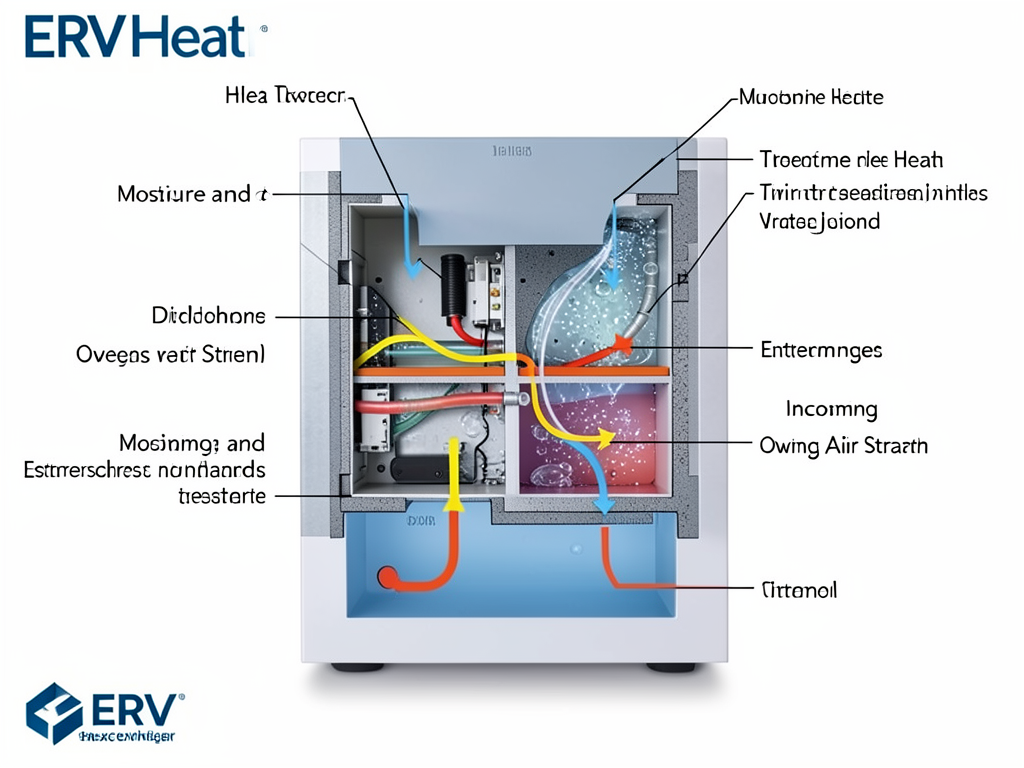
Understanding the difference between ERVs and HRVs helps you make the right choice. HRVs transfer only heat between air streams using a cross-flow heat exchanger. They work well in dry climates but struggle in Bothell’s humid conditions. ERVs transfer both heat and moisture using a permeable membrane core.
The key technical difference lies in latent heat transfer. ERVs handle the moisture content in air, while HRVs only manage sensible heat. In Bothell’s climate, this means ERVs maintain more stable indoor humidity levels. During winter, they transfer excess indoor moisture to incoming dry air. During summer, they prevent outdoor humidity from entering your home.
Energy efficiency comparisons show ERVs typically recover 70-80% of both heat and moisture energy. HRVs recover 80-90% of heat but none of the moisture energy. For Bothell homes, the moisture recovery often provides greater comfort benefits than the slightly higher heat recovery of HRVs. Most new construction in the Sammamish River Valley now specifies ERVs for this reason.
Professional installation process for new Bothell homes
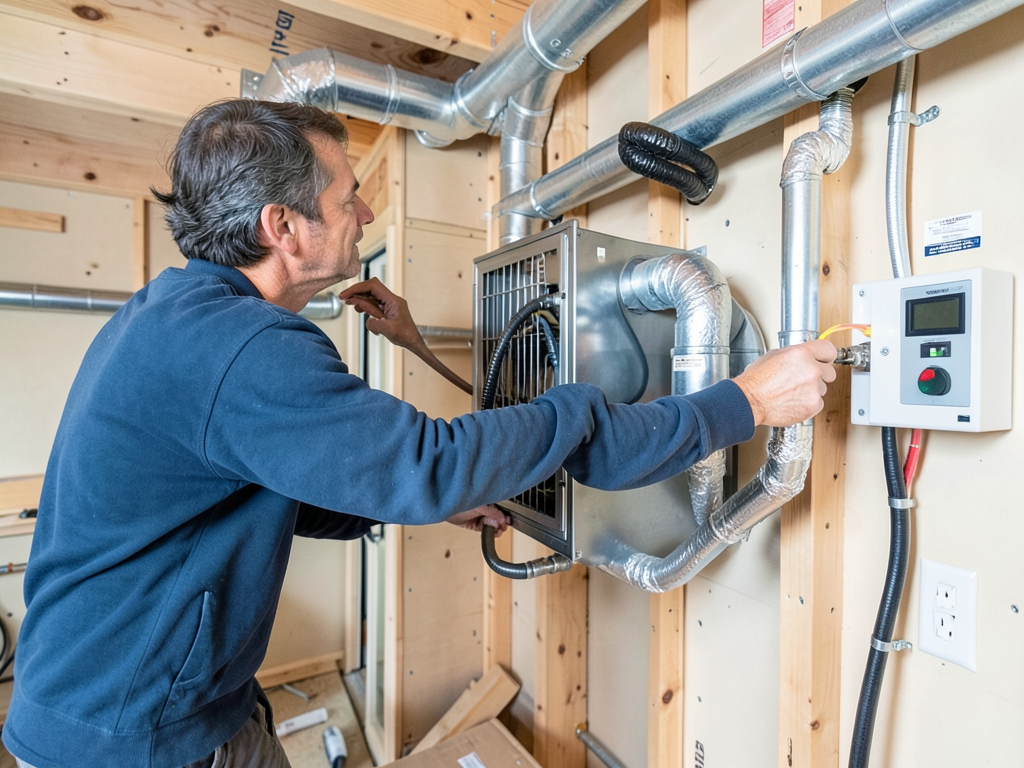
Installing an ERV system requires careful planning and execution. The process begins with a Manual J load calculation to determine ventilation requirements based on your home’s size and occupancy. Washington State Energy Code Section 405.2 specifies minimum ventilation rates of 0.35 air changes per hour or 15 cubic feet per minute per person, whichever is greater.
Next technicians map out ductwork integration. ERVs need dedicated supply and exhaust ducts that run from the unit to strategic locations throughout your home. Supply ducts typically serve bedrooms and living areas, while exhaust ducts remove air from kitchens, bathrooms, and laundry rooms. The duct layout affects system balance and efficiency.
During installation, technicians use a manometer to test duct pressure and ensure proper airflow balance. The goal is equal supply and exhaust flow rates to prevent positive or negative pressure in your home. Imbalanced systems can cause backdrafting in gas appliances or draw moisture into wall cavities. After mechanical connections, the controller is programmed for optimal operation based on your schedule and climate conditions.
Energy savings and indoor air quality benefits
ERV systems deliver measurable energy savings in Bothell homes. A typical 2,500 square foot home with an ERV saves $200-300 annually on heating costs compared to exhaust-only ventilation. The system reduces HVAC runtime by 15-20% since it pre-conditions incoming air using energy from exhaust air.
Indoor air quality improvements extend beyond temperature control. ERVs with MERV 13 filters remove pollen, dust, and smoke particles as small as 1 micron. This protects family members with allergies or asthma. The continuous air exchange also eliminates volatile organic compounds (VOCs) from new furniture, flooring, and cleaning products. Commercial Duct Cleaning.
Humidity control represents another major benefit. ERVs maintain indoor humidity between 30-50%, the optimal range for comfort and health. This prevents the window condensation that leads to mold growth and wood rot. For Bothell’s damp climate, this moisture management often proves more valuable than the energy savings alone.
Maintenance requirements for Pacific Northwest conditions
ERV maintenance in Bothell requires attention to our specific climate challenges. The heat exchanger core collects dust and pollen that must be cleaned every six months. In wildfire season, this interval shortens to every three months. Most cores are washable with mild soap and water, though some require specialized cleaning solutions. Preventative HVAC maintenance plans that actually save money for Redmond families.
Filters need replacement annually or more frequently during smoke events. MERV 13 filters cost $30-50 each but provide superior protection against fine particulates. Some homeowners upgrade to HEPA filtration for maximum protection during severe smoke events. The pre-filter, which captures larger particles, should be cleaned monthly.
Drain pans and condensate lines require inspection twice yearly. Bothell’s high humidity means these systems produce more condensate than in drier climates. Clogged drains cause water damage and create mold growth opportunities. Technicians check for proper slope and clear any blockages during routine maintenance visits.
Local building codes and permit requirements
Bothell building permits require mechanical ventilation compliance with Washington State Energy Code. Section 405 mandates specific ventilation rates and requires commissioning reports showing system performance. The city requires permits for all ERV installations, including new construction and retrofits.
King County Environmental Health oversees ventilation standards for homes near sensitive areas like the Sammamish River. These standards may require higher filtration levels or additional make-up air provisions. Commercial buildings in Bothell’s business districts face stricter requirements under ASHRAE Standard 62.1. ASHRAE Standard 62.1.
Inspectors verify ERV installation meets National Fire Protection Association (NFPA) 90B standards for duct construction and fire safety. This includes proper clearance from heat sources, fire-rated duct penetrations, and smoke detector integration. Non-compliant installations can delay occupancy permits and require costly rework.
Cost considerations and return on investment
ERV system costs for new Bothell construction typically range from $3,500 to $6,000 installed. Factors affecting price include home size, number of zones, filtration level, and control features. High-end systems with smartphone controls and multiple zones cost more but offer greater flexibility and efficiency.
Energy savings provide the primary return on investment. At $0.12 per kilowatt-hour, a typical Bothell home saves $200-300 annually on heating costs. Over a 15-year system life, this equals $3,000-4,500 in energy savings. Additional benefits include improved health, protected building materials, and increased home value.
Utility rebates can offset installation costs. Snohomish PUD and Puget Sound Energy offer rebates of $300-500 for high-efficiency ventilation systems. Federal tax credits through the Inflation Reduction Act provide up to 30% of installation costs, capped at $600. These incentives can reduce net costs by 25-40%.
Frequently Asked Questions
How long does ERV installation take in a new build?
Installation typically requires 2-3 days for a standard home. This includes rough-in during framing, final connections before drywall, and system commissioning. Complex installations with multiple zones or integration with existing HVAC systems may require additional time.
Can I install an ERV in my existing Bothell home?
Yes, ERVs retrofit into most existing homes. Installation is more complex than in new construction since it requires running new ductwork through finished walls and ceilings. Costs range from $4,000 to $8,000 depending on home layout and accessibility.
Do ERVs work during power outages?
Standard ERVs require electricity to operate fans and controls. Battery backup systems can maintain ventilation during short outages. For extended outages, natural air exchange through the building envelope provides minimal ventilation, though without heat recovery or filtration.
How do I know if my ERV is working properly?
Proper operation shows as consistent indoor temperatures, minimal window condensation, and fresh air smell. Many units include digital displays showing airflow rates and energy recovery efficiency. Professional testing with a duct blaster or airflow hood provides definitive performance verification.
What maintenance can I do myself?
Homeowners can clean or replace filters, vacuum accessible duct grilles, and clean the core every six months. More complex tasks like checking fan performance, refrigerant levels, and control calibration require professional service. Annual professional maintenance ensures optimal performance and longevity. Weekend HVAC Service.
Fresh air without the chill is possible in your new Bothell home. ERV systems provide year-round comfort while protecting your family’s health and your investment. The technology has matured to handle our specific climate challenges, from winter moisture to summer smoke.
Call (564) 220-5899 today to schedule your ERV consultation. Our technicians understand Bothell’s unique ventilation needs and can design a system that delivers optimal performance for your specific home. Don’t wait until moisture problems or poor air quality affect your family’s comfort.. Read more about Improving the air quality in your Tukwila basement or garden-level apartment.
Pick up the phone and call (564) 220-5899 before the next smoke event or damp season hits. Your family deserves fresh, healthy air without the energy waste of opening windows. We’ll help you breathe easier while saving money on heating costs.
{
“@context”: “https://schema.org”,
“@type”: “BlogPosting”,
“headline”: “Fresh air without the chill (How HRV and ERV systems work for new Bothell builds)”,
“description”: “Learn how HRV and ERV systems provide fresh air without losing heat in Bothell’s climate. Expert installation for new builds with moisture control and energy savings.”,
“wordCount”: 1681,
“datePublished”: “2026-03-17T16:11:00.000Z”,
“dateModified”: “2026-03-17T16:11:00.000Z”,
“inLanguage”: “en-US”,
“mainEntityOfPage”: {
“@type”: “WebPage”,
“@id”: “https://peakhvacseattle.com”
},
“publisher”: {
“@type”: “LocalBusiness”,
“name”: “Peak HVAC Seattle”,
“url”: “https://peakhvacseattle.com”
},
“author”: {
“@type”: “Organization”,
“name”: “Peak HVAC Seattle”,
“url”: “https://peakhvacseattle.com”
},
“image”: {
“@type”: “ImageObject”,
“url”: “https://peakhvacseattle.com/wp-content/uploads/2026/03/fresh-air-without-the-chill-how-hrv-and-erv-system-1.png”
}
}
{
“@context”: “https://schema.org”,
“@type”: “HVACBusiness”,
“name”: “Peak HVAC Seattle”,
“url”: “https://peakhvacseattle.com”,
“address”: {
“@type”: “PostalAddress”,
“addressLocality”: “Seattle”
},
“areaServed”: {
“@type”: “City”,
“name”: “Seattle”
}
}
{
“@context”: “https://schema.org”,
“@type”: “FAQPage”,
“mainEntity”: [
{
“@type”: “Question”,
“name”: “How long does ERV installation take in a new build?”,
“acceptedAnswer”: {
“@type”: “Answer”,
“text”: “Installation typically requires 2-3 days for a standard home. This includes rough-in during framing, final connections before drywall, and system commissioning. Complex installations with multiple zones or integration with existing HVAC systems may require additional time.”
}
},
{
“@type”: “Question”,
“name”: “Can I install an ERV in my existing Bothell home?”,
“acceptedAnswer”: {
“@type”: “Answer”,
“text”: “Yes, ERVs retrofit into most existing homes. Installation is more complex than in new construction since it requires running new ductwork through finished walls and ceilings. Costs range from $4,000 to $8,000 depending on home layout and accessibility.”
}
},
{
“@type”: “Question”,
“name”: “Do ERVs work during power outages?”,
“acceptedAnswer”: {
“@type”: “Answer”,
“text”: “Standard ERVs require electricity to operate fans and controls. Battery backup systems can maintain ventilation during short outages. For extended outages, natural air exchange through the building envelope provides minimal ventilation, though without heat recovery or filtration.”
}
},
{
“@type”: “Question”,
“name”: “How do I know if my ERV is working properly?”,
“acceptedAnswer”: {
“@type”: “Answer”,
“text”: “Proper operation shows as consistent indoor temperatures, minimal window condensation, and fresh air smell. Many units include digital displays showing airflow rates and energy recovery efficiency. Professional testing with a duct blaster or airflow hood provides definitive performance verification.”
}
},
{
“@type”: “Question”,
“name”: “What maintenance can I do myself?”,
“acceptedAnswer”: {
“@type”: “Answer”,
“text”: “Homeowners can clean or replace filters, vacuum accessible duct grilles, and clean the core every six months. More complex tasks like checking fan performance, refrigerant levels, and control calibration require professional service. Annual professional maintenance ensures optimal performance and longevity. Weekend HVAC Service.”
}
}
]
}
{
“@context”: “https://schema.org”,
“@type”: “BreadcrumbList”,
“itemListElement”: [
{
“@type”: “ListItem”,
“position”: 1,
“name”: “Home”,
“item”: “https://peakhvacseattle.com”
},
{
“@type”: “ListItem”,
“position”: 2,
“name”: “Blog”,
“item”: “https://peakhvacseattle.com/blog”
},
{
“@type”: “ListItem”,
“position”: 3,
“name”: “Fresh air without the chill (How HRV and ERV systems work for new Bothell builds)”
}
]
}
{
“@context”: “https://schema.org”,
“@type”: “Service”,
“serviceType”: “HVAC”,
“provider”: {
“@type”: “LocalBusiness”,
“name”: “Peak HVAC Seattle”,
“url”: “https://peakhvacseattle.com”
},
“areaServed”: {
“@type”: “City”,
“name”: “Seattle”
},
“description”: “Learn how HRV and ERV systems provide fresh air without losing heat in Bothell’s climate. Expert installation for new builds with moisture control and energy savings.”
}