
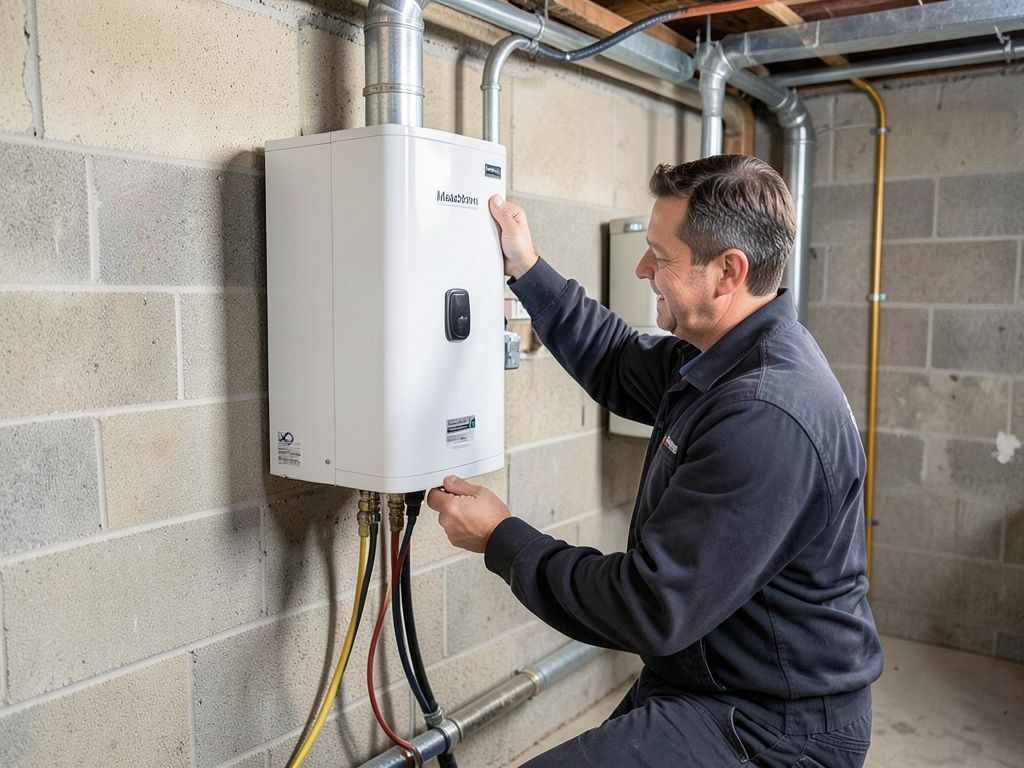
Deciding between a tankless or traditional water heater for your Madison Park remodel
Choosing the right water heater for your Madison Park home remodel means balancing efficiency with upfront costs. Tankless systems heat water on demand using high-powered burners or electric coils while traditional tank models store and continuously heat 40 to 80 gallons of water. For Seattle’s climate and Madison Park’s mix of historic and modern homes the decision hinges on your household’s hot water needs available space and long-term energy goals. Seattle Department of Construction and Inspections.
Tankless units can deliver up to 9.8 gallons per minute enough for multiple showers and appliances running simultaneously. Traditional tanks typically provide 7 to 10 gallons per minute until the stored supply runs out. In Madison Park’s older homes along East Madison Street retrofitting for a tankless system may require gas line upgrades or electrical panel modifications. However the compact wall-mounted design frees up valuable floor space in finished basements or utility closets.
Energy efficiency is where tankless models shine. They can reduce water heating costs by 24 to 34 percent for homes using less than 41 gallons daily. Traditional tanks lose heat through standby energy loss keeping water hot even when unused. For Madison Park residents near Washington Park Arboretum who value sustainability this difference matters. PSE offers rebates up to $300 for qualifying tankless conversions while Seattle City Light provides credits for high-efficiency electric models. Keeping your historic Queen Anne home cool with ductless AC options.
Installation complexity varies significantly. Tankless systems require proper venting and may need Category III stainless steel venting pipes to handle high combustion temperatures. Traditional tanks use simpler venting but require more floor space and structural support. In Madison Park’s historic districts local building codes may restrict exterior modifications making indoor tankless installation more challenging. The Seattle Department of Construction and Inspections requires permits for both types with tankless conversions needing additional inspections for gas line sizing and venting compliance.
Lifespan and maintenance differ between technologies. Tankless units typically last 20 years with proper maintenance while traditional tanks average 10 to 15 years. Madison Park’s soft water reduces mineral buildup but annual descaling is still recommended for tankless systems to maintain efficiency. Traditional tanks need anode rod replacement every 3 to 5 years to prevent corrosion. The City of Seattle’s water quality report shows low hardness levels which benefits both technologies but doesn’t eliminate maintenance needs. Preventative HVAC maintenance plans that actually save money for Redmond families.
Cost considerations extend beyond purchase price. Tankless units range from $1000 to $3000 with installation adding $1500 to $3000 depending on retrofitting needs. Traditional tanks cost $300 to $800 for the unit with installation between $500 and $1500. Over a 20-year period tankless systems often prove more economical through energy savings and longer replacement intervals. Madison Park homeowners planning to stay in their homes long-term may find the higher upfront investment worthwhile. Why your Ballard home needs professional furnace repair before the first freeze.
Performance in Seattle’s climate affects both options. Tankless systems may struggle during simultaneous high-demand periods such as morning routines in larger households. Traditional tanks provide consistent flow until depleted. For Madison Park’s many multi-generational homes near the waterfront sizing becomes critical. A family of four typically needs a 50-gallon traditional tank or a tankless unit rated for at least 8 GPM. Homes with luxury features like spa showers or multiple bathrooms may require larger systems. The best air conditioning options for bungalows and cottages around Green Lake.
Environmental impact considerations favor tankless technology. They produce fewer greenhouse gas emissions when properly sized and maintained. Traditional tanks contribute to higher energy consumption through constant heating cycles. For Madison Park residents concerned about their carbon footprint especially those near the environmentally sensitive Arboretum area this factor carries significant weight. PSE’s renewable energy mix includes hydroelectric power making electric tankless options more attractive for some homeowners.
Emergency preparedness differs between systems. Traditional tanks provide a buffer during power outages if gas-powered while tankless units require electricity for controls and ignition. Madison Park’s occasional winter storms can cause brief outages making this consideration relevant for households prioritizing reliability. Some tankless models include battery backup options though these add to the overall cost. Who to call for 24 hour emergency furnace repair in West Seattle.
Resale value impact varies by market segment. High-end Madison Park homes often feature modern efficient systems that appeal to buyers. Tankless installations can be a selling point for energy-conscious buyers while traditional tanks may deter those seeking updated systems. Real estate agents report that homes with tankless water heaters in Seattle’s luxury markets often command slightly higher prices due to perceived modernity and efficiency.
Space utilization becomes crucial in Madison Park’s many finished basement remodels. Tankless units mount on walls freeing floor space for storage or living areas. Traditional tanks require dedicated floor space often in utility rooms or garages. For homes along Lake Washington Boulevard with limited utility space this difference can be decisive. The compact size also allows for more flexible installation locations potentially closer to point-of-use areas for faster hot water delivery.
Water quality affects both technologies differently. Madison Park’s soft water reduces scale buildup in tankless heat exchangers extending their lifespan. Traditional tanks benefit from reduced sediment accumulation but still require periodic flushing. The Seattle Public Utilities water quality report indicates pH levels between 7.2 and 7.8 which is ideal for both systems. However homes with older galvanized pipes may experience reduced flow regardless of water heater type.
Noise levels vary between options. Tankless units produce operational noise from burners and fans typically 40 to 60 decibels. Traditional tanks operate more quietly but may produce occasional popping sounds from sediment. For Madison Park’s many historic homes with open floor plans noise considerations matter. Modern tankless units often include sound-dampening features while traditional tanks operate silently during standby periods.
Installation timeline affects remodeling schedules. Tankless conversions typically require 6 to 8 hours for a straightforward swap extending to 2 days for complex retrofits. Traditional tank replacements often complete in 2 to 4 hours. For Madison Park homeowners working with tight remodel deadlines this difference impacts overall project timing. Contractors recommend scheduling water heater work early in remodels to avoid delays from unexpected complications.
Madison Park Water Heater Installation Considerations
Madison Park’s unique housing stock presents specific challenges for water heater installations. Many homes built between 1920 and 1950 feature original plumbing that may not support modern high-efficiency systems. Gas line sizing becomes critical for tankless conversions as older homes often have undersized lines that cannot deliver the required BTU output. A typical tankless unit needs 150000 to 200000 BTU while many older homes have 100000 BTU service lines.
The neighborhood’s proximity to Lake Washington affects installation decisions. Homes near the water often experience higher humidity levels which can impact venting and combustion air requirements. Tankless units need dedicated combustion air which may be challenging in finished basements common to Madison Park remodels. Traditional tanks offer more flexibility in these spaces but still require proper ventilation to prevent moisture-related issues.
Madison Park’s mature tree canopy and established landscaping can complicate outdoor venting for tankless systems. Local building codes restrict vent terminations near windows doors and property lines. The Seattle Municipal Code Section 22900D160 requires specific clearances for mechanical equipment which may limit venting options for corner lots or homes with limited exterior wall space.
Electrical capacity becomes a limiting factor for electric tankless conversions. Many Madison Park homes have 100-amp service panels insufficient for whole-house electric tankless units that can draw 120 to 150 amps. Upgrading to 200-amp service adds $1500 to $3000 to project costs but may be necessary for electric conversions. Gas tankless units avoid this issue but require proper gas line sizing and venting.
The neighborhood’s historic character influences installation approaches. Homes in designated historic districts may face additional restrictions on exterior modifications. Tankless venting pipes while efficient may not align with historic preservation guidelines. Traditional tanks offer more discrete installation options but sacrifice the space-saving benefits that attract many homeowners to tankless technology.
Comparing Water Heater Performance in Seattle’s Climate
Seattle’s climate creates unique performance considerations for both water heater types. Incoming water temperatures average 47 degrees Fahrenheit in winter requiring more energy to reach typical 120-degree output temperatures. Tankless units must work harder during peak demand periods potentially reducing flow rates when multiple fixtures operate simultaneously. Traditional tanks maintain consistent output until depleted then recover more slowly in cold conditions.
Madison Park’s microclimate influenced by Lake Washington experiences slightly milder temperatures than other Seattle neighborhoods. This benefits both technologies by reducing extreme cold-weather performance degradation. However the area’s higher humidity levels can affect venting performance and combustion air quality. Proper venting material selection becomes critical with Category III stainless steel recommended for high-efficiency gas units to prevent corrosion from acidic condensate.
Energy cost comparisons reveal significant differences. PSE’s current natural gas rates average $1.03 per therm while electricity costs approximately $0.11 per kilowatt-hour. Tankless gas units typically cost $150 to $200 annually to operate while electric tankless units may cost $300 to $400. Traditional tanks range from $250 to $350 annually for gas and $400 to $500 for electric. Madison Park’s PSE service area benefits from relatively stable energy pricing compared to other regions.
Recovery time differences impact daily usage patterns. Traditional tanks typically recover 30 to 40 gallons per hour while tankless units provide continuous hot water. For Madison Park families with teenagers or those who entertain frequently this difference affects morning routines and guest accommodations. A properly sized tankless system eliminates the running out of hot water concern but may struggle with simultaneous high-demand applications like running a dishwasher while someone showers.
Space heating integration opportunities exist for both technologies. Madison Park’s many finished basements and home offices create demand for supplemental heating. Tankless units can support hydronic heating systems while traditional tanks cannot. This integration potential adds value for homeowners considering whole-home efficiency upgrades during their remodel.
Installation Costs and ROI Analysis
Installation costs vary significantly based on home characteristics and chosen technology. Tankless conversions in Madison Park typically range from $2500 to $5500 including necessary upgrades. Traditional tank replacements cost $1000 to $2500 for straightforward swaps. The wide range reflects the complexity of retrofitting older homes with some requiring extensive modifications to accommodate modern systems.
Return on investment calculations depend on usage patterns and energy costs. A family of four using 60 gallons daily might save $100 to $150 annually with a tankless system. Over a 15-year period this equals $1500 to $2250 in energy savings potentially offsetting the higher initial cost. Madison Park’s higher-than-average energy rates make efficiency gains more valuable than in other regions.
Permit costs add to project expenses. Seattle requires permits for both water heater types with tankless conversions needing additional inspections. Permit fees range from $150 to $300 with inspection costs of $100 to $200. The total permit process typically takes 2 to 3 weeks affecting remodel timelines. Some homeowners attempt to avoid permits but this risks fines and insurance complications if problems arise.
Financing options vary by technology. PSE offers zero-interest loans for energy-efficient upgrades including tankless water heaters. Traditional tanks rarely qualify for such programs. Madison Park residents may also qualify for Seattle’s HomeWise program which provides low-interest financing for energy improvements in qualifying homes. These programs can make tankless systems more accessible despite higher upfront costs.
Maintenance costs differ between technologies. Tankless units require annual descaling costing $150 to $300 per service. Traditional tanks need less frequent but similar maintenance averaging $100 to $200 every 2 to 3 years. Over a 15-year period tankless maintenance may cost $2250 to $4500 while traditional tanks might cost $500 to $1000. These costs should factor into long-term ownership calculations.
Making the Right Choice for Your Madison Park Home
Household size and usage patterns should drive your decision. Single occupants or couples may find tankless systems ideal while larger families might prefer traditional tanks for their consistent flow rates. Madison Park’s many multi-generational homes require careful sizing analysis. A family of five needs at least an 8 GPM tankless unit or a 75-gallon traditional tank to avoid hot water shortages during peak usage.
Available space significantly influences the decision. Tankless units free up 16 to 20 square feet of floor space valuable in Madison Park’s many finished basement remodels. Traditional tanks require dedicated floor space but offer simpler installation in confined areas. For homes along East Madison Street with limited utility space the space-saving benefit of tankless systems often proves decisive.
Long-term plans affect the investment calculation. Homeowners planning to stay 10+ years typically benefit more from tankless efficiency gains. Those planning shorter stays might prefer traditional tanks for lower upfront costs. Madison Park’s stable real estate market means energy-efficient upgrades often provide good returns but the timeline matters for maximizing those returns.
Environmental priorities influence technology selection. Tankless systems produce fewer emissions and consume less energy over their lifetime. For Madison Park residents near Washington Park Arboretum who prioritize sustainability this factor carries significant weight. Traditional tanks contribute to higher energy consumption through constant heating cycles though modern units offer improved insulation and efficiency compared to older models.
Budget constraints affect immediate decisions. While tankless systems offer long-term savings the $1500 to $3000 price difference can be prohibitive for some remodels. Traditional tanks provide reliable hot water at lower initial costs. Some Madison Park homeowners choose traditional tanks initially planning to upgrade to tankless systems later when budget allows.
Professional assessment proves invaluable for making the right choice. A qualified technician can evaluate your home’s gas lines electrical capacity venting options and hot water needs. Many Madison Park homes require upgrades regardless of chosen technology making professional guidance essential for accurate cost estimates. The initial consultation typically costs $100 to $200 but prevents costly mistakes during installation.
Future-proofing considerations matter for long-term satisfaction. Tankless technology continues advancing with newer models offering improved efficiency and smart controls. Traditional tanks have matured as a technology with limited future improvements expected. For Madison Park homeowners planning extensive remodels choosing technology that aligns with future home automation and efficiency goals makes sense.
Frequently Asked Questions
How long does a tankless water heater last compared to a traditional tank?
Tankless water heaters typically last 20 years with proper maintenance while traditional tanks average 10 to 15 years. Madison Park’s soft water helps both systems but doesn’t eliminate the need for annual descaling of tankless units or anode rod replacement in traditional tanks.
Can I install a tankless water heater myself to save money?
DIY installation is not recommended due to safety risks and code compliance requirements. Seattle requires permits and inspections for water heater installations. Improper venting or gas line connections can create serious hazards. Professional installation ensures proper sizing venting and code compliance for both tankless and traditional systems.
Will a tankless water heater provide enough hot water for my family?
Properly sized tankless units can provide continuous hot water for most households. A family of four typically needs an 8 GPM unit. However simultaneous high-demand applications like running multiple showers and appliances may strain undersized systems. Professional sizing analysis prevents performance issues.
Are there rebates available for tankless water heater installations in Madison Park?
Yes PSE offers rebates up to $300 for qualifying tankless conversions. Seattle City Light provides credits for high-efficiency electric models. These rebates can offset 10 to 15 percent of installation costs. Check current program requirements as eligibility criteria and rebate amounts change annually.
How much space will I save with a tankless water heater?
Tankless units free up 16 to 20 square feet of floor space compared to traditional tanks. They mount on walls typically requiring only 2 to 3 square feet of wall space. This space savings proves valuable in Madison Park’s many finished basements and utility closets.
What maintenance do tankless water heaters require?
Tankless units need annual descaling to remove mineral buildup costing $150 to $300 per service. Madison Park’s soft water reduces but doesn’t eliminate this need. Traditional tanks require less frequent maintenance typically anode rod replacement every 3 to 5 years and periodic flushing.
How do I know if my home can support a tankless water heater?
A professional assessment evaluates your home’s gas lines electrical capacity and venting options. Many Madison Park homes need gas line upgrades or electrical panel modifications for tankless conversions. Homes with 100-amp service often require 200-amp upgrades for electric tankless units.
What’s the typical installation time for each type?
Traditional tank replacements typically complete in 2 to 4 hours. Tankless conversions require 6 to 8 hours for straightforward swaps but may extend to 2 days for complex retrofits. Installation complexity affects both types but more significantly impacts tankless conversions in older homes.
Will a tankless water heater increase my home’s value?
Tankless systems can increase appeal to energy-conscious buyers particularly in Madison Park’s high-end market. However the value impact varies by buyer priorities. Traditional tanks may deter some buyers seeking modern efficient systems. The energy savings and space benefits often prove more valuable than direct resale value increases.
What happens during a power outage with each type?
Traditional gas tanks continue operating during power outages providing a hot water buffer. Tankless units require electricity for controls and ignition ceasing operation during outages. Some tankless models offer battery backup options though these add to overall costs. This reliability difference matters for Madison Park’s occasional winter storms.
Next Steps for Your Madison Park Remodel
Ready to upgrade your water heater for your Madison Park remodel Professional assessment determines the best option for your home’s specific needs. Our technicians evaluate your existing system assess necessary upgrades and provide detailed cost estimates. We handle permits inspections and ensure code compliance for both tankless and traditional installations.
Call (564) 220-5899 today to schedule your free Madison Park water heater consultation. We’ll help you choose the right system for your remodel budget and long-term goals. Don’t wait until your old unit fails – plan your upgrade now for a smoother remodel process.
Madison Park homeowners trust our team for expert water heater installations. We understand the unique challenges of the neighborhood’s historic homes and modern remodels. Whether you choose tankless efficiency or traditional reliability we ensure professional installation that meets Seattle codes and your family’s hot water needs.
Pick up the phone and call (564) 220-5899 before the next cold snap hits. Our team provides emergency service when needed but proactive planning prevents emergency situations. Let us help you make the right water heater choice for your Madison Park remodel. For more information, visit Puget Sound Energy rebates.
{
“@context”: “https://schema.org”,
“@type”: “BlogPosting”,
“headline”: “Deciding between a tankless or traditional water heater for your Madison Park remodel”,
“description”: “Compare tankless vs traditional water heaters for Madison Park homes. Learn about installation costs, efficiency, and local requirements for your remodel project.”,
“wordCount”: 3114,
“datePublished”: “2026-03-07T08:23:00.000Z”,
“dateModified”: “2026-03-07T08:23:00.000Z”,
“inLanguage”: “en-US”,
“mainEntityOfPage”: {
“@type”: “WebPage”,
“@id”: “https://peakhvacseattle.com”
},
“publisher”: {
“@type”: “LocalBusiness”,
“name”: “Peak HVAC Seattle”,
“url”: “https://peakhvacseattle.com”
},
“author”: {
“@type”: “Organization”,
“name”: “Peak HVAC Seattle”,
“url”: “https://peakhvacseattle.com”
},
“image”: {
“@type”: “ImageObject”,
“url”: “https://peakhvacseattle.com/wp-content/uploads/2026/03/deciding-between-a-tankless-or-traditional-water-h-1.png”
}
}
{
“@context”: “https://schema.org”,
“@type”: “HVACBusiness”,
“name”: “Peak HVAC Seattle”,
“url”: “https://peakhvacseattle.com”,
“address”: {
“@type”: “PostalAddress”,
“addressLocality”: “Seattle”
},
“areaServed”: {
“@type”: “City”,
“name”: “Seattle”
}
}
{
“@context”: “https://schema.org”,
“@type”: “FAQPage”,
“mainEntity”: [
{
“@type”: “Question”,
“name”: “How long does a tankless water heater last compared to a traditional tank?”,
“acceptedAnswer”: {
“@type”: “Answer”,
“text”: “Tankless water heaters typically last 20 years with proper maintenance while traditional tanks average 10 to 15 years. Madison Park’s soft water helps both systems but doesn’t eliminate the need for annual descaling of tankless units or anode rod replacement in traditional tanks.”
}
},
{
“@type”: “Question”,
“name”: “Can I install a tankless water heater myself to save money?”,
“acceptedAnswer”: {
“@type”: “Answer”,
“text”: “DIY installation is not recommended due to safety risks and code compliance requirements. Seattle requires permits and inspections for water heater installations. Improper venting or gas line connections can create serious hazards. Professional installation ensures proper sizing venting and code compliance for both tankless and traditional systems.”
}
},
{
“@type”: “Question”,
“name”: “Will a tankless water heater provide enough hot water for my family?”,
“acceptedAnswer”: {
“@type”: “Answer”,
“text”: “Properly sized tankless units can provide continuous hot water for most households. A family of four typically needs an 8 GPM unit. However simultaneous high-demand applications like running multiple showers and appliances may strain undersized systems. Professional sizing analysis prevents performance issues.”
}
},
{
“@type”: “Question”,
“name”: “Are there rebates available for tankless water heater installations in Madison Park?”,
“acceptedAnswer”: {
“@type”: “Answer”,
“text”: “Yes PSE offers rebates up to $300 for qualifying tankless conversions. Seattle City Light provides credits for high-efficiency electric models. These rebates can offset 10 to 15 percent of installation costs. Check current program requirements as eligibility criteria and rebate amounts change annually.”
}
},
{
“@type”: “Question”,
“name”: “How much space will I save with a tankless water heater?”,
“acceptedAnswer”: {
“@type”: “Answer”,
“text”: “Tankless units free up 16 to 20 square feet of floor space compared to traditional tanks. They mount on walls typically requiring only 2 to 3 square feet of wall space. This space savings proves valuable in Madison Park’s many finished basements and utility closets.”
}
},
{
“@type”: “Question”,
“name”: “What maintenance do tankless water heaters require?”,
“acceptedAnswer”: {
“@type”: “Answer”,
“text”: “Tankless units need annual descaling to remove mineral buildup costing $150 to $300 per service. Madison Park’s soft water reduces but doesn’t eliminate this need. Traditional tanks require less frequent maintenance typically anode rod replacement every 3 to 5 years and periodic flushing.”
}
},
{
“@type”: “Question”,
“name”: “How do I know if my home can support a tankless water heater?”,
“acceptedAnswer”: {
“@type”: “Answer”,
“text”: “A professional assessment evaluates your home’s gas lines electrical capacity and venting options. Many Madison Park homes need gas line upgrades or electrical panel modifications for tankless conversions. Homes with 100-amp service often require 200-amp upgrades for electric tankless units.”
}
},
{
“@type”: “Question”,
“name”: “What’s the typical installation time for each type?”,
“acceptedAnswer”: {
“@type”: “Answer”,
“text”: “Traditional tank replacements typically complete in 2 to 4 hours. Tankless conversions require 6 to 8 hours for straightforward swaps but may extend to 2 days for complex retrofits. Installation complexity affects both types but more significantly impacts tankless conversions in older homes.”
}
},
{
“@type”: “Question”,
“name”: “Will a tankless water heater increase my home’s value?”,
“acceptedAnswer”: {
“@type”: “Answer”,
“text”: “Tankless systems can increase appeal to energy-conscious buyers particularly in Madison Park’s high-end market. However the value impact varies by buyer priorities. Traditional tanks may deter some buyers seeking modern efficient systems. The energy savings and space benefits often prove more valuable than direct resale value increases.”
}
},
{
“@type”: “Question”,
“name”: “What happens during a power outage with each type?”,
“acceptedAnswer”: {
“@type”: “Answer”,
“text”: “Traditional gas tanks continue operating during power outages providing a hot water buffer. Tankless units require electricity for controls and ignition ceasing operation during outages. Some tankless models offer battery backup options though these add to overall costs. This reliability difference matters for Madison Park’s occasional winter storms.”
}
}
]
}
{
“@context”: “https://schema.org”,
“@type”: “BreadcrumbList”,
“itemListElement”: [
{
“@type”: “ListItem”,
“position”: 1,
“name”: “Home”,
“item”: “https://peakhvacseattle.com”
},
{
“@type”: “ListItem”,
“position”: 2,
“name”: “Blog”,
“item”: “https://peakhvacseattle.com/blog”
},
{
“@type”: “ListItem”,
“position”: 3,
“name”: “Deciding between a tankless or traditional water heater for your Madison Park remodel”
}
]
}
{
“@context”: “https://schema.org”,
“@type”: “Service”,
“serviceType”: “HVAC”,
“provider”: {
“@type”: “LocalBusiness”,
“name”: “Peak HVAC Seattle”,
“url”: “https://peakhvacseattle.com”
},
“areaServed”: {
“@type”: “City”,
“name”: “Seattle”
},
“description”: “Compare tankless vs traditional water heaters for Madison Park homes. Learn about installation costs, efficiency, and local requirements for your remodel project.”
}